

Part 4 of the HistorianSpeaks Black Britain series and a free preview of Black Thread. This installment follows the community struggles and policing debates of Part 3 into 1990–2026, with earlier history recalled where it explains the present.
Black Britons have compiled a stellar record of achievement in the face of obstacles that have never been evenly distributed. They have entered the Cabinet, transformed literature and film, carried Caribbean musical memory into concert halls, and built institutions that make Black experience visible on its own terms. Their accomplishments have changed Britain and reached far beyond it. Yet the same country that celebrates a Black musician, novelist, or minister can leave Black families contending with discriminatory workplaces, disproportionate police scrutiny, insecure belonging, and unequal care. Achievement is real; the conditions under which it is won remain troubling.
The final installment of this series holds those truths together. From roughly 1990 to 2026, Black Britain has become more prominent, more diverse, and more influential without becoming free of the old pressure to prove its right to belong. Resilience should name the creativity and collective labor through which people confront that pressure—not become an excuse for leaving it in place. The question is not whether Black Britons have contributed enough. It is whether Britain’s institutions will offer ordinary people the security, opportunity, and respect that celebration too often reserves for exceptional individuals.
Black Britain today: politics and culture
Patrick Vernon and Angelina Osborne’s 100 Great Black Britons (2020) provides an illuminating starting point. The project makes visible a record running across generations and professions: public service, science, literature, sport, activism, and art. Its importance is not that a list can contain an entire people. It is that recognition itself has been contested. A national story that leaves Black people out cannot explain the country they helped make. Celebrating accomplishment corrects that omission, but it also invites a harder question: whose achievements become familiar, and whose everyday contributions remain unseen?
The modern political trajectory grew from the 1987 election of Diane Abbott, Bernie Grant, and Paul Boateng, discussed against the earlier struggles in this series. David Lammy entered Parliament for Tottenham in 2000, aged twenty-seven. Boateng became Britain’s first Black Cabinet minister in 2002. Lammy subsequently led the 2017 review of racial disparities in criminal justice and pressed the Windrush cause in 2018. He served as foreign secretary from July 2024 to September 2025, then as justice secretary, lord chancellor, and deputy prime minister until July 20, 2026. His appointment as Britain’s first Black deputy prime minister was a significant milestone; it should not be mistaken for a description of his current office. Kemi Badenoch’s election as Conservative leader in November 2024 likewise demonstrates both a breakthrough and the range of Black British political convictions. Representation is not a single ideology or a guarantee of agreement over racial justice.
Other institutions changed, too. Uganda-born John Sentamu served as Archbishop of York from 2005 to 2020, the Church of England’s first Black archbishop. His prominence, like that of Black parliamentarians, challenged an old equation between British authority and whiteness. But a person entering an institution does not automatically transform how that institution treats everyone else. The meaning of a milestone lies partly in the opportunities and protections that follow it.
Culture has made the global reach of Black Britain unmistakable. Steve McQueen’s 12 Years a Slave won the Academy Award for Best Picture in 2014; his Small Axe films (2020) then brought West Indian life in London, the Mangrove struggle, education, and policing to a broad audience. Bernardine Evaristo became the first Black woman to win the Booker Prize in 2019, sharing the award for Girl, Woman, Other. Its interwoven lives resist the notion that Black British womanhood has one voice or one history. Daniel Kaluuya’s 2021 Oscar for Judas and the Black Messiah exemplifies a further transatlantic exchange: a British performer interpreting an American Black political history.
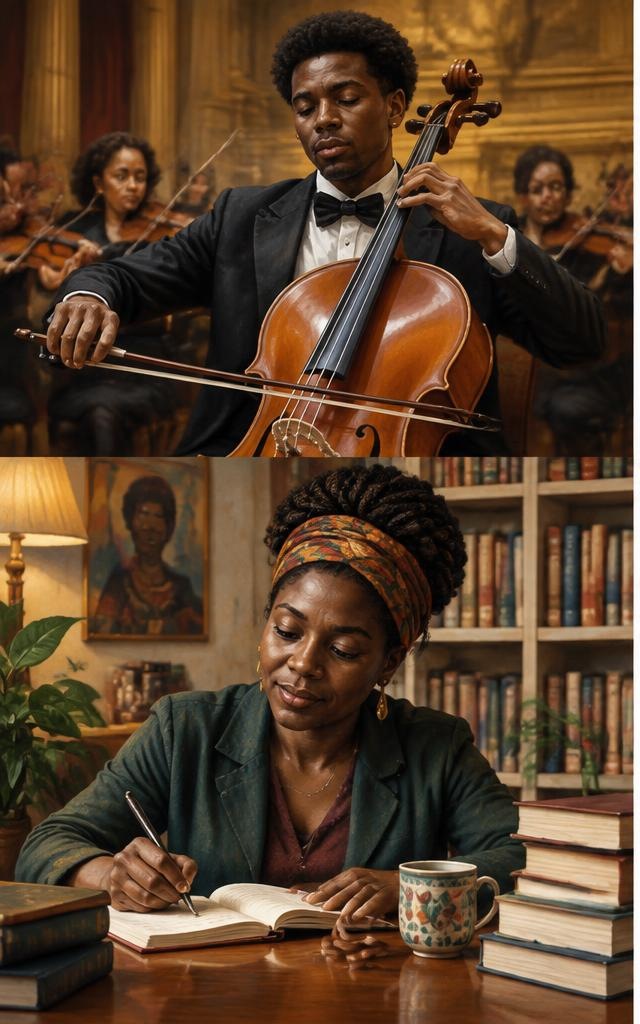
Sheku Kanneh-Mason became the first Black winner of BBC Young Musician in 2016 and performed at the royal wedding in 2018. His cello arrangement of Bob Marley’s “No Woman, No Cry,” on Inspiration (2018), carries a Jamaican song of endurance into the concert hall. That movement is more than a charming crossover. It shows how Caribbean memory inhabits contemporary British culture without relinquishing its own meaning. Idris Elba’s international career, Marianne Jean-Baptiste’s and Cynthia Erivo’s performances, and the work of David Harewood and Lennie James make the same point through different artistic routes. American-born Clarke Peters, whose London career included Five Guys Named Moe, reminds us that Black cultural Britain has also been made through arrival and exchange.
None of these accomplishments needs to be diminished to take discrimination seriously. The danger lies in treating a prize or appointment as proof that structural barriers no longer matter. The stage and the Cabinet room are part of Black Britain; so are the school gate, the workplace, the maternity ward, and the street.
After recognition: the barriers that remain

The 1990s supplied a stark test of institutional accountability. Stephen Lawrence was murdered in a racist attack in southeast London in 1993. The inquiry led by Sir William Macpherson, published in 1999, identified institutional racism in the Metropolitan Police. Coming after the Scarman debates examined in Part 3, this was not simply a new phrase for individual prejudice. It directed attention to an organization’s routines, assumptions, and failures. The distinction remains central: discrimination can persist without every participant admitting a racist intention.
In 2021, the government’s Commission on Race and Ethnic Disparities, chaired by Tony Sewell, offered a much more optimistic interpretation of Britain’s progress. It acknowledged racism and disparities but resisted using institutional racism as a general explanation, emphasizing differences among ethnic groups and the effects of class, family circumstances, and geography. Those factors matter. They do not make race disappear. Critics, including the Runnymede Trust and United Nations human-rights experts, challenged the commission’s framing and its treatment of structural racism. Its conclusions are a contested official assessment, not a settled finding that British institutions are racially fair.
The Black British Voices report, published in 2023 by Cambridge researchers working with The Voice and I-Cubed, approached the question from another direction. More than 10,000 Black people completed its survey, supplemented by in-depth interviews. This was a self-selected survey, not a random national sample: its percentages describe participants’ responses, not precise prevalence across every Black person in Britain. That limitation matters, but it does not justify dismissing a large body of testimony. Nor should this report be merged with the government commission or BLAM UK’s education report; each asks different questions and uses different evidence.
The contrast is instructive. Statistical improvement in one area does not tell us how a person is treated in another. A school can report strong examination results while making pupils feel their history is absent. A workplace can recruit more Black employees while giving them fewer routes to advancement. Institutions must be assessed through outcomes, decision-making, and the experiences of those who depend on them—not simply through declarations of diversity.
Employment, advancement, and the cost of fitting in
Official data for 2022 put unemployment at 7 percent for the Black ethnic group and 3 percent for the white group, against 4 percent overall. These are dated labor-market estimates, not 2026 rates. They nonetheless show why prominent professional success cannot stand in for equal access to work. Employment is only the first threshold: promotion, pay, security, and the freedom to be oneself also matter.
In Black British Voices, 88 percent of respondents reported racial discrimination at work, and 98 percent said they had compromised self-expression or identity to fit workplace expectations, including through speech or hairstyles. Interviewees described pressure to justify their positions or become the office’s default spokesperson on race. These accounts reveal an additional burden beyond getting the job: workers can be included on paper while still expected to edit themselves for institutional comfort. The appropriate response is not to diagnose a supposed defect in Black confidence, but to examine the environment that makes such adaptation feel necessary.
Policing: stop and search, suspicion, and citizenship
Stop and search belongs in this discussion because it reaches beyond any single encounter. The government’s published ethnicity tables for the year ending March 2023 record 24.5 searches per 1,000 Black people, compared with 5.9 per 1,000 white people in England and Wales. Ethnicity was unreported in 20.5 percent of searches. These are search rates, not the percentage of people searched, and repeat encounters, local policing patterns, and the population baseline affect interpretation. They cannot be treated as a measure of criminality.
British stop and search and American stop and frisk share a familiar pattern: police stop people in public, question them, and search them, with Black communities bearing disproportionate scrutiny. Such encounters can make an ordinary journey through a neighborhood feel like a demand to prove one’s right to be there. The parallels connect Black British experiences of suspicion, dignity, and belonging with stories American readers know from their own streets. In Britain, the Police and Criminal Evidence Act 1984 governs important search powers, while Section 60 of the Criminal Justice and Public Order Act 1994 permits searches without individualized suspicion in authorized circumstances.
Some 79 percent of Black British Voices respondents believed police used stop and search unfairly against Black people; 87 percent expressed little or no trust in the criminal justice system. Those are perceptions within the survey, not official search counts. Read together with the official figures and the history of Scarman and Macpherson, they help explain why distrust cannot simply be dismissed as misunderstanding.
Education: achievement without equal recognition
Education presents a similar tension. Treating all Black pupils as one statistical group obscures important differences between African and Caribbean backgrounds, gender, class, and local circumstances. Yet success by some groups does not negate exclusions, stereotyping, or curricular absence experienced by others. In Black British Voices, 95 percent of respondents believed the curriculum neglected Black lives and experiences, and fewer than 2 percent thought educational institutions took racism seriously.
BLAM UK’s Eradicating Anti-Blackness in the UK Education System (publicized in 2025 and supplied for this essay) argues for curriculum and policy reform through legal accountability. It addresses colorism, Eurocentric teaching, and the treatment of Black children, including the policing of appearance and identity. Its evidence includes an ICM survey of 2,500 adults aged eighteen to thirty in England, weighted to that age group’s population profile, alongside qualitative research. The report states that 84 percent of Black respondents experienced forms of racism and colorism in the English school system. These are retrospective survey findings, not a government count of current pupils or a UK-wide estimate. Its significance lies in connecting curricular exclusion to lived experience and proposing remedies under equality and human-rights obligations. A curriculum that recognizes Black people only as enslaved victims, or only as exceptional celebrities, offers children an impoverished account of themselves and their country.
Healthcare and mental health: being heard before crisis
Healthcare disparities sharpen the distinction between representation and security. In Black British Voices, 87 percent of respondents expected substandard care because of race, while only 7 percent felt Black people received fair treatment from healthcare professionals. These are reported expectations and judgments, not clinical outcome rates. The clinical evidence must be considered separately.
The MBRRACE-UK maternal mortality brief for 2022–24, updated in September 2026, identifies a nearly threefold difference in maternal death rates for Black women compared with white women. The risk of death was also higher in the most deprived areas. It demands attention to listening, timely intervention, access, and the interaction between racial inequality and deprivation. Pride in the NHS cannot substitute for examining whether every patient receives equal protection.
Mental health requires the same care. Racialized stress, stigma, access to trusted support, and encounters with coercive services are related questions, not interchangeable explanations. NHS figures for 2024–25 show a detention rate under the Mental Health Act of 262.4 per 100,000 for the broad Black or Black British group, compared with 65.8 for the white group in England. The government’s December 18, 2025 announcement of Royal Assent for Mental Health Act reform explicitly identified disproportionate Black detention as a problem. Legislation is an important opening, not evidence that unequal treatment has already ended. Implementation, community-based support, and accountability will determine whether that opening produces a different experience.
The cumulative burden is social as well as institutional: needing to explain oneself repeatedly, anticipating disbelief, or deciding where it feels safe to raise children. Resilience is visible in how people respond, but it should not be romanticized into an obligation to endure indefinitely.
Reparations: repairing the imperial relationship
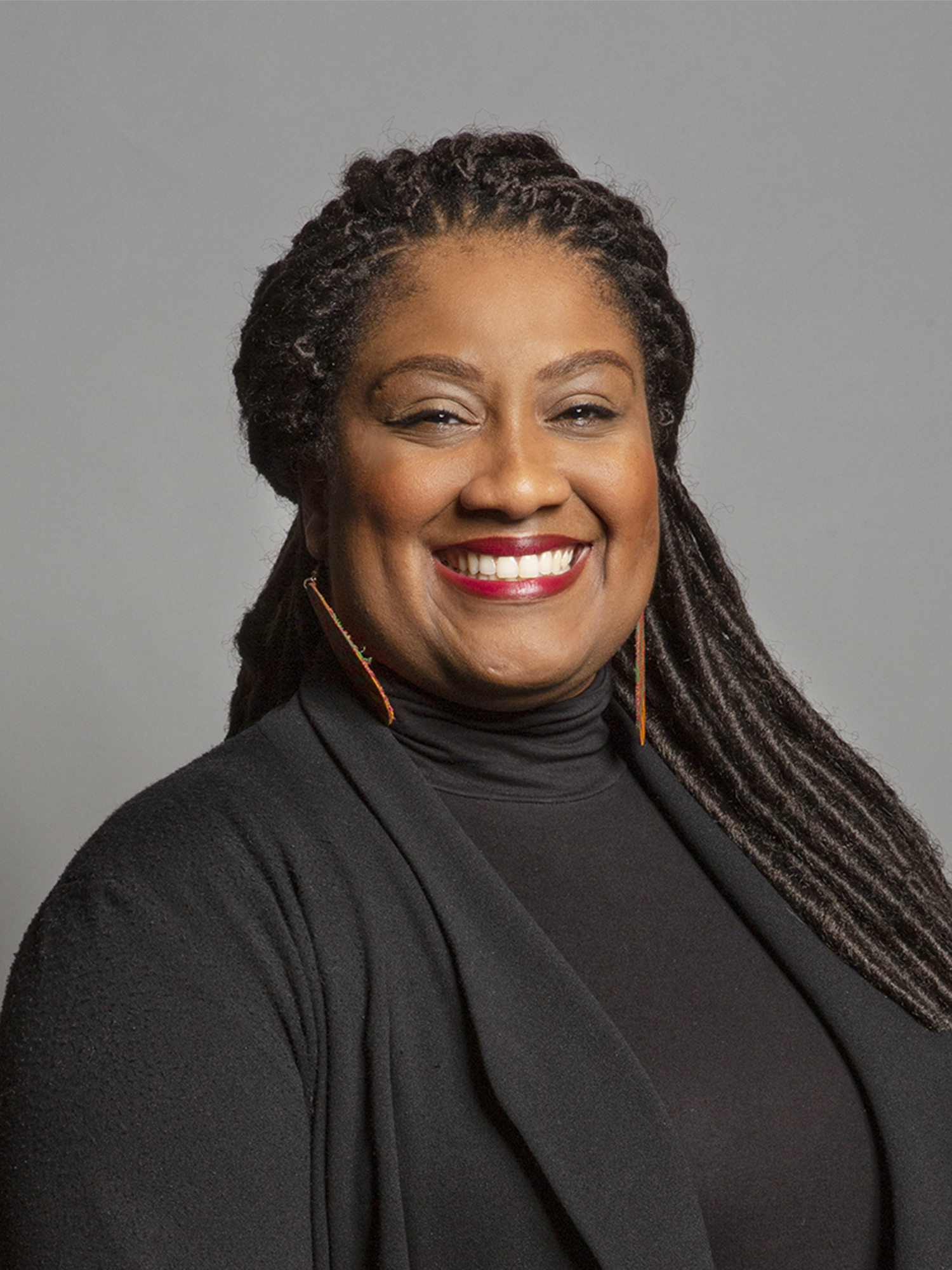
Demands for reparations in the Caribbean have deep roots. When Britain abolished slavery in 1834, it paid £20 million—about 40 percent of the national budget—to compensate enslavers for the loss of their “property,” while the formerly enslaved received nothing and were forced into years of unpaid “apprenticeship.” Marcus Garvey’s movement, Rastafari calls for repatriation, and the 2001 United Nations conference in Durban, South Africa, which described slavery and the slave trade as crimes against humanity, all helped shape the modern campaign.
In 2013, the Caribbean Community (CARICOM) created a Reparations Commission chaired by Sir Hilary Beckles, the Barbadian historian who later became vice-chancellor of the University of the West Indies. Beckles’s book Britain’s Black Debt (2013) argued that the wealth Britain extracted from Caribbean slavery created debts that remain unpaid. In 2014, CARICOM adopted a Ten-Point Plan for reparatory justice that seeks a full formal apology, debt cancellation, support for public health and education, cultural institutions, and technology transfer—not simply individual cash payments.
Barbados has become the movement’s most prominent voice. Prime Minister Mia Mottley led the island to become a republic in November 2021, removing the British monarch as head of state, and has pressed reparations alongside her broader campaign to reform global finance for climate-vulnerable nations. In June 2026, she announced an updated Caribbean manifesto on reparations that emphasizes the harm done to enslaved African women. The campaign connects Caribbean demands for repair to the British institutions through which imperial wealth and authority were sustained.
Jamaica took the campaign into the legal realm. On September 7, 2026, a delegation led by culture minister Olivia Grange lodged a petition with King Charles, who remains Jamaica’s head of state, asking him to refer questions about Britain’s responsibility for slavery to the Judicial Committee of the Privy Council. The filing was timed to the anniversary of the 1781 voyage of the Zong, whose crew threw more than 130 captive Africans overboard to claim insurance. The King acts on the advice of his ministers, and the government has not advised an apology or reparations. A February 2025 parliamentary debate recorded the British government’s opposition to cash reparations. That dated position is distinct from the petition’s request for legal consideration. In Britain, campaigners including Bell Ribeiro-Addy have pressed for a serious response. The debate is far from settled: it remains a contest over responsibility, historical memory, and the forms repair might take.
This earlier history belongs here as an explanation of a modern remedy, not as a return to Part 1’s chronology. The 1990–2026 infographic therefore begins with contemporary institution-building, not abolition. CARICOM’s commission was formed in 2013; the Ten-Point Plan was adopted in 2014. Those dates should not be conflated.
For Black Britain, reparatory justice also asks who controls the public account of empire. Caribbean-descended Britons inherit a relationship in which the country they inhabit benefited from colonial extraction while often treating their families’ arrival as an outside intrusion. Repair need not reduce people to inherited injury. Public health, education, cultural institutions, historical knowledge, and material development are investments in agency. The campaign is therefore one form of resilience directed toward changing the terms of the relationship, rather than accepting them.
The Black intellectual tradition: challenging the national story
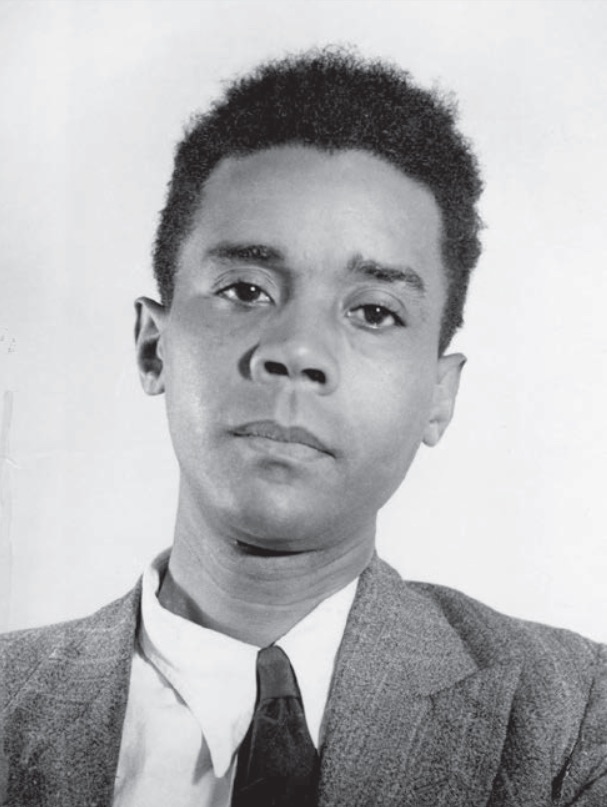
Black British intellectual life is not an appendix to American debates. It has produced its own powerful ways of understanding empire, race, culture, and freedom.
Trinidad-born C. L. R. James placed enslaved people at the center of revolutionary history in The Black Jacobins (1938), his account of the Haitian Revolution. In Beyond a Boundary (1963), he used cricket to explore society, colonialism, and culture. These were not separate interests: history and sport both revealed how power operated and how people challenged it. His later association with Brixton also connects intellectual life to the neighborhoods in which Black Britain was made.
Jamaica-born Stuart Hall helped shape the New Left and became a major force in Birmingham’s Centre for Contemporary Cultural Studies. He examined how media, politics, and everyday culture organize ideas about race and belonging. His work offered tools for understanding why Britishness could appear universal while excluding people whose labor and histories helped constitute it.
Paul Gilroy carried that inquiry in new directions. There Ain’t No Black in the Union Jack (1987) challenged nationalism’s racial boundaries. The Black Atlantic (1993) explored the movement of people, music, and ideas across Africa, Europe, the Caribbean, and the Americas. Together, these thinkers show why Black history cannot be contained within one nation’s borders—or treated as an optional supplement to the national story.
Claudia Jones and John La Rose belong to this wider tradition as well: journalism, publishing, cultural organizing, and community education made Black ideas circulate beyond universities. This was not merely a sequence of distinguished thinkers waiting for academic admission. It was an infrastructure of argument and self-definition. People created places in which colonial subjects could become historical actors, culture could be understood as political, and Britishness could be questioned without surrendering the right to belong.
That work laid intellectual and practical foundations for Black Studies. If mainstream institutions treated Black voices as marginal, Black Studies asked different starting questions: whose knowledge counts, whose archives survive, and how do institutions reproduce exclusion? The connection to reparatory justice is direct. One seeks material and political repair for empire’s legacies; the other challenges the distribution of knowledge and authority that made those legacies seem normal.
Black Studies: recognition and institutional fragility
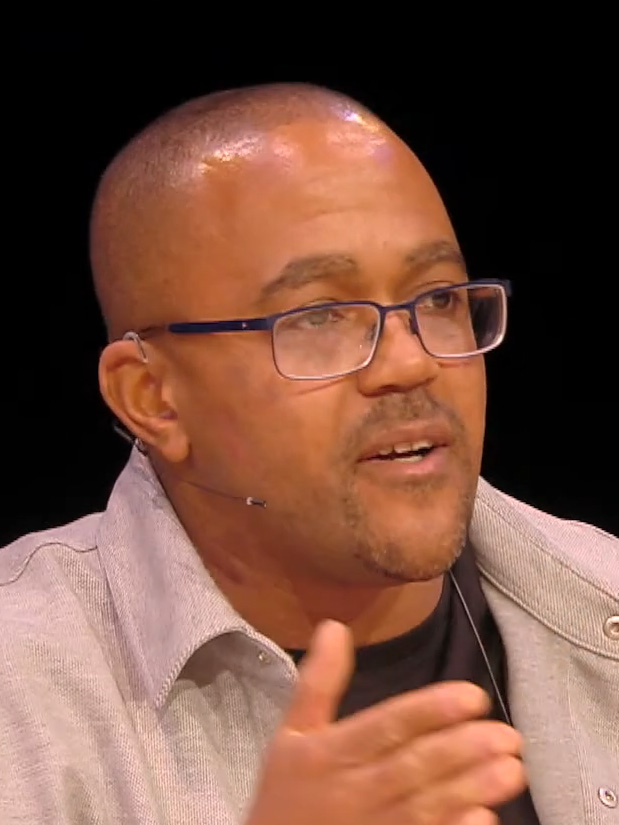
Birmingham City University announced Europe’s first undergraduate Black Studies degree in 2016, and teaching began in 2017. Led by Kehinde Andrews and colleagues, it brought community-centered inquiry into an institution long shaped by other priorities. The breakthrough mattered because Black knowledge was being organized as a field, not simply added as an occasional topic. The struggle for recognition also concerns the durability of that institutional place. Black communities have generated knowledge for centuries, yet institutions can celebrate diversity while offering few secure places for Black scholarship. HESA figures for 2023–24, reported by Research Professional News in January 2025, put Black professors at 0.97 percent of 25,670 professors across UK higher education.
At Chichester, the 2023 suspension of recruitment to the MRes in the History of Africa and the African Diaspora and Hakim Adi’s subsequent redundancy provoked opposition from students, historians, and campaigners. The university cited recruitment and financial considerations; critics challenged both the support given to the course and the damage done to Black historical study.
Birmingham City University’s cancellation of its undergraduate Black Studies course drew similar criticism in 2024. Kehinde Andrews argued that the course’s purpose included work beneficial to communities, not simply adding another subject label. Adi described such losses as attacks that disproportionately affected Black subjects, students, and scholars. Those are their assessments, and the university disputed the implication that it had abandoned the field: it cited low sustained demand and announced plans for a Black Studies MA. By 2026, BCU’s own promotion of an MA in Black Studies provides evidence of continuing provision. The loss of the undergraduate course should not be rewritten as evidence that every form of Black Studies in Britain has disappeared; neither does replacement at a different level erase the questions raised by that loss.
Jason Arday’s situation requires separate, careful treatment. Cambridge publicized his 2023 appointment as its youngest Black professor. He resigned on August 5, 2026, amid allegations of plagiarism and inconsistencies in accounts of his career, and died on August 14. Cambridge subsequently announced an independent review. On October 6, the Guardian reported academics’ concerns about whether the review would fully examine institutional decisions and his treatment. These are distinct facts and unresolved questions; they do not justify assuming a cause of death or treating allegations as completed findings. They do raise urgent questions about institutional responsibility and the difference between celebrating representation and sustaining people.
The distinction is essential to this essay’s balance. Black Studies has achieved recognition, created courses, and widened public debate. At the same time, recognition can remain precarious when budgets contract or institutional priorities change. A university’s financial explanation deserves to be reported accurately; so does the unequal consequence of losing a field with few comparable homes. Sustaining Black scholarship requires more than applauding a first appointment. It requires secure provision, transparent decisions, and support that survives a difficult news cycle.
Protest in the New Century
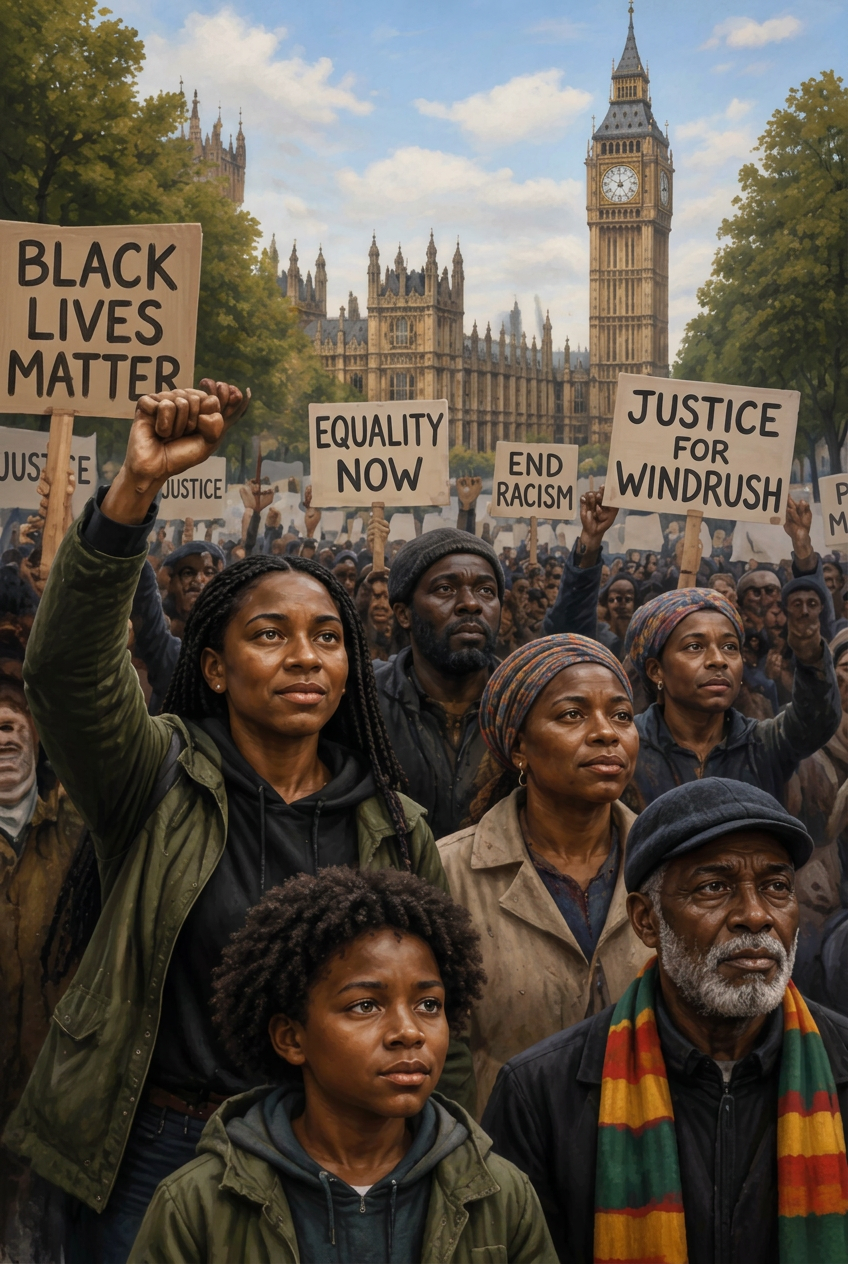
The modern chronology includes both protest and the pressures that make protest necessary. In 2011, the police killing of Mark Duggan in Tottenham was followed by a protest and then disorder that spread across English cities. These were not all the same activity: peaceful demands for answers should not be conflated with every subsequent act of violence. The episode nevertheless exposed the distance between public authority and communities whose experience of it was often shaped by suspicion and neglect.
The Windrush scandal, exposed nationally in 2018, made that distance unmistakable. People with long-established rights to live in Britain were wrongly treated as unlawfully present; some lost work, housing, access to care, or the ability to return home. Part 2 explains the postwar settlement and later immigration rules behind the scandal. Here its significance is contemporary: citizenship and contribution did not protect people when administrative systems demanded documentation they could not supply. Compensation and institutional learning cannot be measured only by the existence of a scheme or a public monument.
In 2020, George Floyd’s murder in Minneapolis helped ignite Black Lives Matter demonstrations across Britain. The protests were connected to an American event but addressed British histories of policing, racism, and empire. In Bristol, demonstrators toppled Edward Colston’s statue on June 7, forcing a national argument over whether public honor should continue to obscure the slave trade. This was not an importation of a race problem into an otherwise innocent society. It was a transatlantic language of protest applied to local institutions and memory.
The racist and anti-immigrant disorder of summer 2024 belongs in a different category. Following the Southport killings and the circulation of false claims online, far-right crowds attacked mosques and hotels housing asylum seekers. The targets included Muslim and migrant communities; not every victim or participant should be labeled Black. For Black Britons, the violence nonetheless revealed how fragile the public promise of belonging can become when racialized hostility is mobilized. Anti-racist counter-demonstrations, community repair, and prosecutions offered an important opposing picture. Britain contained both the danger and the people determined to resist it.
Across these episodes, protest is neither proof that nothing has changed nor an interruption of an otherwise harmonious national story. It is one of the means by which Black Britons and their allies have made institutions answerable. The collective demand for dignity is itself an accomplishment, even when the conditions that provoke it remain unresolved.
Numbers, identity, and the right to belong
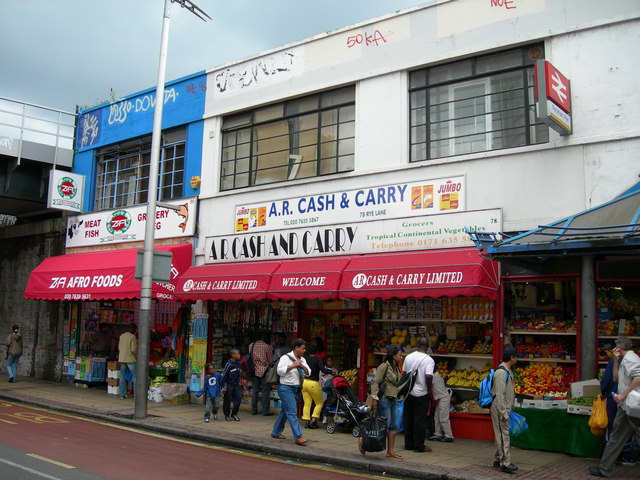
Modern Black Britain is not one community with a single migration story. It includes African and Caribbean communities, people whose families have lived in Britain for generations, newer arrivals, and people of mixed Black and white heritage. These identities can overlap: an African or Caribbean ethnic identity does not make someone less British, and ethnicity does not establish a person’s nationality, citizenship, or birthplace. The census categories help describe this diversity, but they cannot capture every family’s history or an individual’s preferred identity.
The 2021 census offers a clearer picture of that diversity in England and Wales. Approximately 2.4 million residents—4.0 percent of the population—identified within the broad “Black, Black British, Black Welsh, Caribbean or African” category. Within it, approximately 1.49 million identified as African (2.5 percent of all residents), 623,000 as Caribbean (1.0 percent), and 298,000 within the other Black category (0.5 percent). African identification was therefore the largest of these census groups; Black Britain cannot be understood as exclusively Caribbean or reduced to the Windrush story.
Mixed heritage adds another important dimension. Approximately 513,000 residents of England and Wales identified as White and Black Caribbean (0.9 percent), and 250,000 as White and Black African (0.4 percent). The census records these within its separate mixed-ethnicity category, not within the 2.4 million Black-category total. Recognizing their lives does not require assigning every mixed-heritage person a racial identity they have not chosen.
London remains a major center: the broad Black category accounted for 13.5 percent of its population, approximately 1.19 million people. For England alone, the corresponding share was 4.2 percent. Yet neither London nor one South London street stands for all Black communities. A borough’s ethnic profile does not establish the exact composition of one neighborhood. All these figures describe the 2021 census, not an estimate of the population in 2026; they cover England and Wales, or the narrower places specified, not Scotland or Northern Ireland. Their value is to make visible the varied communities whose access to opportunity, safety, and recognition must be examined without treating ethnicity as a destiny.
These distinctions matter to the social argument. A statistic for a broad Black group cannot tell us whether a Caribbean family, a recent African migrant, or a mixed-heritage child encounters the same barriers in the same way. Nationality, legal status, gender, class, and place influence experience; none makes racial discrimination irrelevant. The right to identify oneself must coexist with institutions’ obligation to identify unequal treatment.
Belonging is also more than a census box. In Black British Voices, 49 percent of respondents expressed at least some pride in being British, while 45 percent felt little or none. The published survey appendix records 39 percent of respondents as aspiring to live elsewhere, with 45 percent regarding Britain as their permanent home. These are aspirations in a self-selected survey, not evidence that 39 percent will emigrate, and not a diagnosis of why every individual might leave. Work, family, cost of living, adventure, and racial exclusion can overlap. The larger point is that British attachment and dissatisfaction can exist together. Wanting a life elsewhere does not negate a person’s contribution here; staying does not require silence about unequal conditions.
Still rising—and entitled to more than endurance
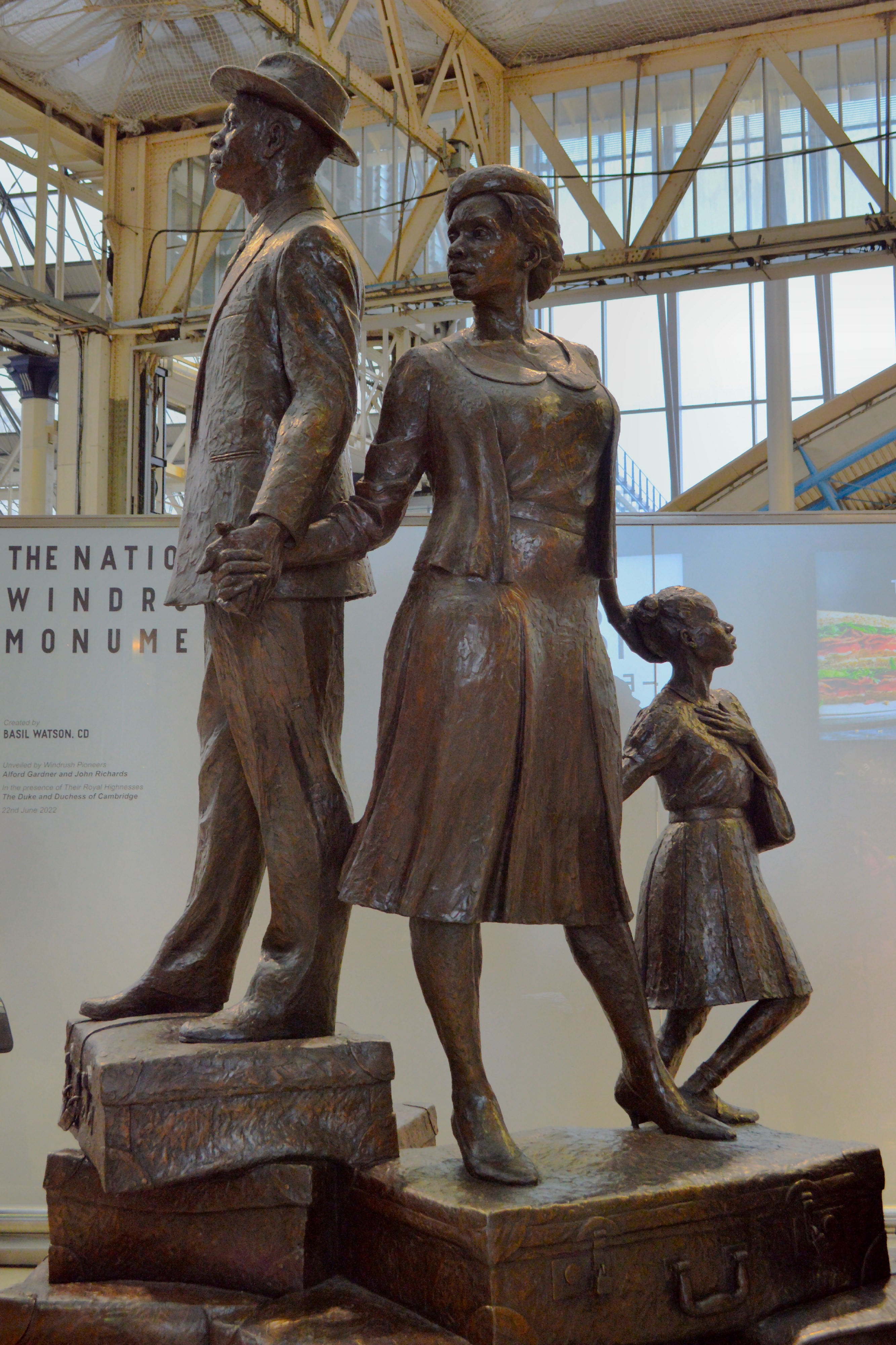
This series began before Windrush because Black presence in Britain did not begin with a ship in 1948. Part 1 traced the earlier record; Part 2 examined migration, labor, citizenship, and the betrayal of postwar promises; Part 3 followed community-building and confrontation in Brixton and Peckham and the limits of the Scarman response. The final installment carries that history into a period of remarkable political, cultural, and intellectual achievement. Together, the four parts describe people making Britain, not outsiders asking to be appended to its story.
The continuity is not sameness. Black Britain in 2026 is more diverse than the communities foregrounded in many Windrush narratives. It has different forms of authority, new institutions, and a global cultural reach that earlier generations could scarcely have imagined. A Black Cabinet minister, an award-winning novelist, a concert soloist, or a university course represents meaningful change. To deny that progress would erase labor, talent, organization, and the victories that communities worked to secure.
But to celebrate progress without examining its conditions would erase something else: the daily cost of success within a socially restrictive environment. Repeated suspicion, unequal opportunity, racialized ideas of professionalism, inadequate recognition in education, and fear of not being heard in care can make belonging conditional long after it is affirmed in law. An institution can praise a community’s resilience while continuing to demand it. That is why accomplishment and barriers must be held together rather than made to cancel each other out.
For Black Britons today, the balance concerns the future as much as the past. Will children learn that their histories are constitutive of Britain? Will professional advancement require less self-erasure? Will care arrive before crisis, and public protection without disproportionate suspicion? Will scholarship and community institutions receive durable support? Reparatory justice, Black Studies, policy reform, and protest offer different answers to different forms of harm. None should be presented as a single cure; all insist that recognition must acquire institutional substance.
“Still rising” therefore names both an achievement and an unfinished demand. Black Britons should be able to flourish without continually overcoming barriers that others are not asked to face. The measure of Britain’s progress is not only how many exceptional Black people it honors. It is whether ordinary Black lives can be lived with dignity, security, and the freedom to imagine a future that does not depend on endless endurance.
Keep the thread unbroken
This essay is a free preview of Black Thread, the new magazine from HistorianSpeaks. Independent Black history depends on readers. Here are three ways to help:
- Become a founding member. Join before November 1 and pay $9.99 a month for life. Join here.
- Give a one-time gift. Any amount, by PayPal, Venmo, or card. Support HistorianSpeaks.
- Subscribe free and spread the word. Get our newsletter at no cost, and share this series with someone who should read it. Subscribe free.
Further Reading: Black Britain from Rome to the present
Long histories, early presence, and the eighteenth century
- Hakim Adi, African and Caribbean People in Britain: A History (2022). A broad history by a major Black British historian, connecting early presence to modern organizing.
- David Olusoga, Black and British: A Forgotten History (2016). A readable account spanning Roman Britain, empire, slavery, and the modern nation.
- Onyeka Nubia, Blackamoores: Africans in Tudor England, Their Presence, Status and Origins (2013). Black lives and status in Tudor England.
- Gretchen Gerzina, Black London: Life Before Emancipation (1995), also published as Black England. Eighteenth-century people, networks, and ideas of belonging.
- Olaudah Equiano, The Interesting Narrative of the Life of Olaudah Equiano (1789); Ignatius Sancho, Letters of the Late Ignatius Sancho, an African (1782); Mary Seacole, Wonderful Adventures of Mrs. Seacole in Many Lands (1857). First-person voices to read alongside later interpretations.
- Peter Fryer, Staying Power: The History of Black People in Britain (1984). A foundational long history by a white historian; its value complements rather than substitutes for Black-authored accounts.
- Yorkshire Museum and Leach and colleagues, “A Lady of York” (2010). Roman migration and the Ivory Bangle Lady; archaeological ancestry is not identical to modern racial identity. For the changing interpretation of another individual, consult the Natural History Museum’s December 2025 account of Beachy Head Woman, rather than repeating superseded ancestry claims.
Migration, citizenship, communities, and Black women’s organizing
- Kennetta Hammond Perry, London Is the Place for Me: Black Britons, Citizenship, and the Politics of Race (2015).
- Beverley Bryan, Stella Dadzie, and Suzanne Scafe, The Heart of the Race: Black Women’s Lives in Britain (1985; reissued 2018).
- Mike Phillips and Trevor Phillips, Windrush: The Irresistible Rise of Multi-Racial Britain (1998).
- Hakim Adi, editor, Black British History: New Perspectives (2019).
- Bernard Coard, How the West Indian Child Is Made Educationally Sub-Normal in the British School System (1971). A foundational intervention to read in its historical language and context.
Ideas, identity, culture, and remedies
- C. L. R. James, The Black Jacobins (1938) and Beyond a Boundary (1963).
- Stuart Hall, Selected Writings on Race and Difference, edited by Paul Gilroy and Ruth Wilson Gilmore (2021).
- Paul Gilroy, There Ain’t No Black in the Union Jack (1987) and The Black Atlantic: Modernity and Double Consciousness (1993).
- Patrick Vernon and Angelina Osborne, 100 Great Black Britons (2020).
- Reni Eddo-Lodge, Why I’m No Longer Talking to White People About Race (2017); Afua Hirsch, Brit(ish): On Race, Identity and Belonging (2018).
- Bernardine Evaristo, Girl, Woman, Other (2019). Fiction, not a statistical account, but a powerful exploration of interconnected lives.
- Hilary McD. Beckles, Britain’s Black Debt: Reparations for Caribbean Slavery and Native Genocide (2013), alongside the CARICOM Ten-Point Plan.
Government, university, and organizational reports
- The Stephen Lawrence Inquiry / Macpherson report (1999), alongside Lord Scarman’s The Brixton Disorders, 10–12 April 1981 (1981).
- The Lammy Review (2017): treatment and outcomes in the criminal justice system.
- Windrush Lessons Learned Review (2020).
- Commission on Race and Ethnic Disparities report (2021), read alongside the Runnymede Trust and House of Commons Library’s account of the debate.
- Black British Voices report and Cambridge summary (2023), with the survey appendix.
- BLAM UK, *Eradicating Anti-Blackness in the UK Education System* (supplied 2025 PDF).
- ONS, Census 2021 ethnicity bulletin; Ethnicity Facts and Figures. Keep the territory and statistical period of each table distinct.
- MBRRACE-UK, maternal mortality 2022–24, September 2026 update; NHS Mental Health Act statistics, 2024–25.
Archives, cultural institutions, and continuing research
Why your support matters
Follow the global Black story. One dispatch a week, free.
HistorianSpeaks is independent and reader-supported. No corporate owners, no paywall on the daily history. Every member keeps stories like this one coming.
Free
Newsletter
The weekly dispatch in your inbox.
Founding member
$9.99/month
Price locked for life, founder recognition and full Black Thread magazine access.
Become a founderAsk the Historian
Have a question about this story, or an idea for a future post? Send it here.