
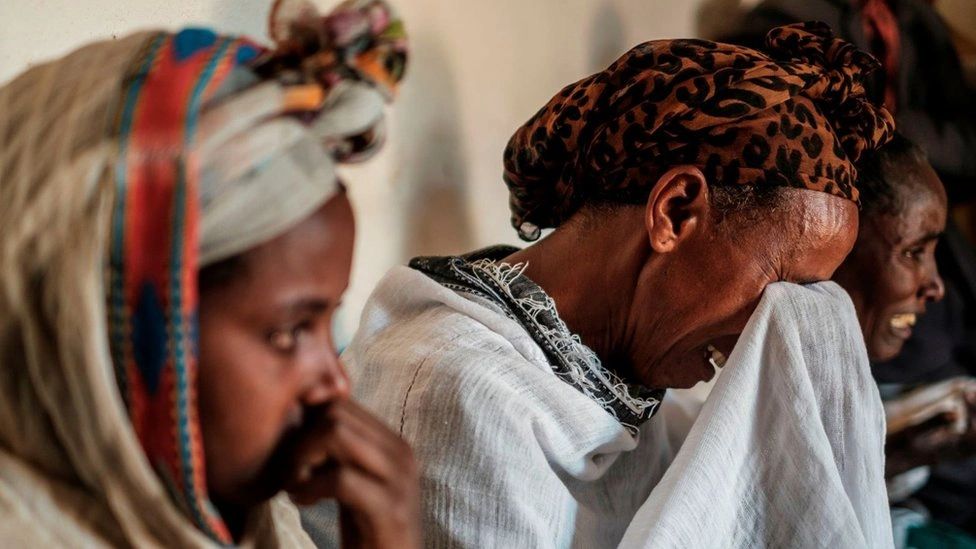
Tigray, Ethiopia’s northernmost region bordering Eritrea,is in the midst of an ongoing conflict. The conflict dates back to November 4, 2020. Worldvision,a humanitarian organization, estimates that 62, 255 children and adults have abandoned their homes in the region and fled to neighboring Sudan for shelter. This situation was compounded by several preexisting situations such as ongoing desert locust and armyworm plagues and erratic rainfall and drought. All of these situations have coalesced to form a perfect storm. The World Health Organization (WHO) has described the situation in Tigray as “horrific”. Ethiopians who were able to escape the conflict face illness, overcrowding, and malnutrition in refugee camps.
The conflicts long range origins are linked to disputes about Ethiopian control of the region. The recent catalyst for this conflict is a disagreement between the Ethiopian government and
the Tigray People’s Liberation Front (TPLF). The TPLF, once the dominant political party in Ethiopia, conducted an election in the Tigray region despite stern warning from the Ethiopian government. Ethiopia postponed its general elections because of the COVID-19 pandemic. The election’s outcome, a virtual landslide for the TPLF, caused Ethiopian Prime Minister Ably Ahmed’s government to dispute the vote claiming it was illegal. The government then began to withhold funds designated for a social welfare program.
The dispute was followed by attacks on federal army camps in Tigray. Abiy Ahmed , blamed the attacks on the TPLF, which denied involvement, calling them “traitorous.” He considered it an act of war and retaliated by ordering federal troops into the region and conducting extensive air strikes. Refugees began to flee into Sudan. After less than ten days of fighting, the United Nations warned of possible war crimes in Tigray. In February, the situation was further exacerbated by the involvement of Eritrean soldiers in the conflict. Amnesty International reported that Eritrean soldiers were responsible for the killing of hundreds of civilians near the holy city of Axum . Civilians in the area accused Eritrean forces of massacres and systematic rape. the Abiy Ahmed government finally admitted in March, that Eritrean forces were involved in atrocities against civilians. The Ethiopian Human Rights Commission also found the Eritrean Army was responsible for the murder of 100 civilians in Axum in November.
International observers, human rights groups and the Tigrayans continue to hold out hope for a peaceful solution. Although several peace proposals have been made, the parties have not reached an agreement. Peace talks began on November 9, 2020. The talks were led by Debretsion Gebremichael, the president of Tigray. He proposed a cease-fire but the Ethiopians declined. Representatives of the African Union (AU) attempted to resolve the conflict by bringing both parties in the conflict to the bargaining table , but they reached no agreement. In February 2021, the TPLF voiced its desire to settle the conflict, but peace talks are still ongoing. Ethiopia also rejected calls from the United States to remove troops from Tigray in March as well as ongoing pressure to end the conflict.
The situation in Tigray amounts to a human rights disaster and a public relations debacle for Ethiopia. Unfortunately, no end is in sight for the conflict in the foreseeable future.
Ask the Historian
Have a question about this story, or an idea for a future post? Send it here.