

This is Part 3 of a four-part HistorianSpeaks series for UK Black History Month 2026: (1) Before Windrush, (2) Windrush, (3) Brixton, Peckham, and Scarman, and (4) Black Britain today.
The people who came after Windrush did not settle in Britain in the abstract. They settled in particular streets, and few places carry that history more powerfully than Brixton and Peckham in South London. Part 2 of this series followed the promises made to Caribbean migrants and the hardships that followed. This part turns to the neighborhoods they built, the policing that targeted their children, the 1981 Brixton uprising, and Lord Scarman’s report on what had gone wrong.
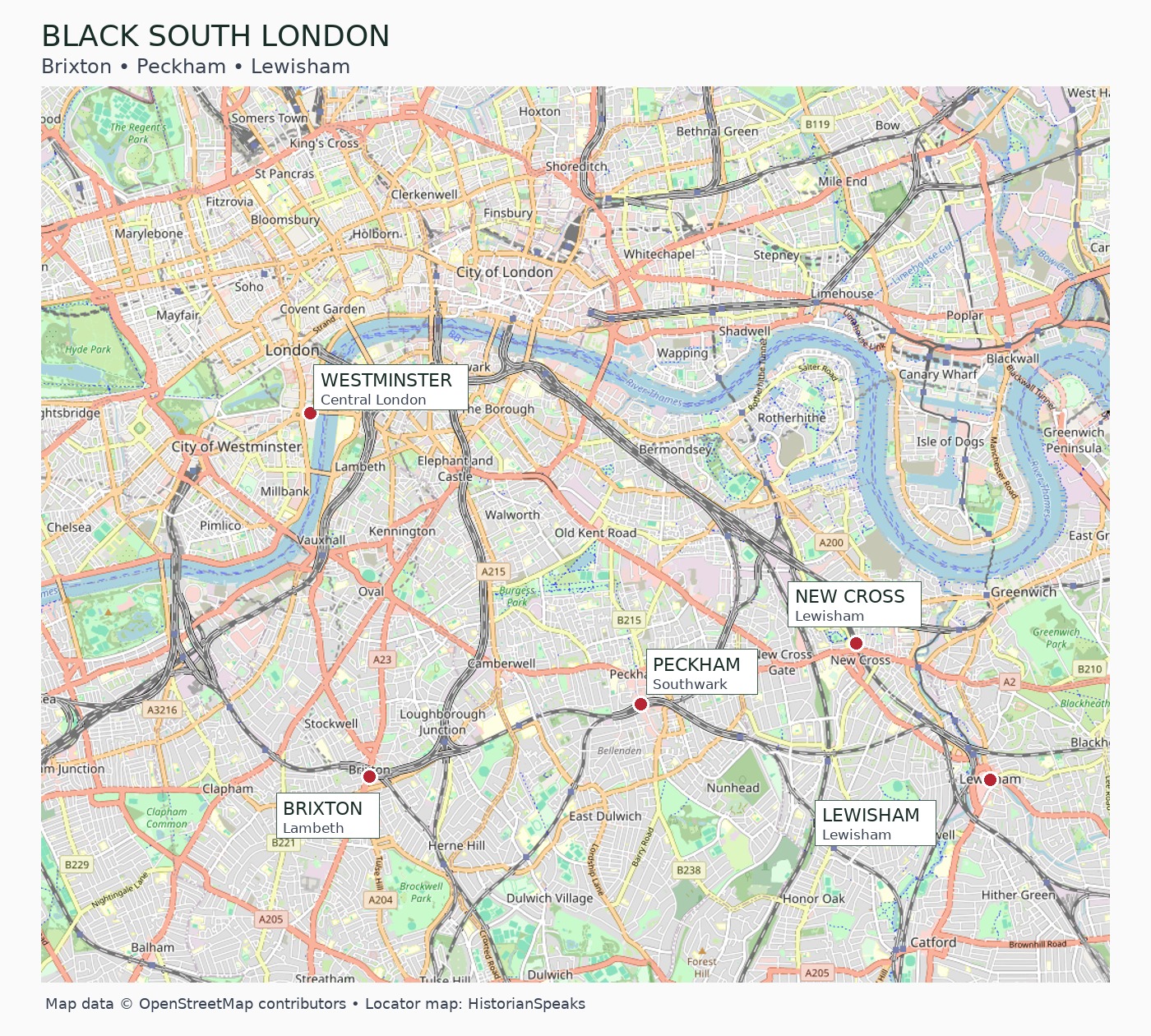
Finding the communities on the map
Brixton, Peckham, and Lewisham lie south of the River Thames, but they are not interchangeable names for one neighborhood. Brixton is in the borough of Lambeth; Peckham is farther east in Southwark; Lewisham lies beyond it to the southeast, in the borough of the same name. New Cross, also in Lewisham borough, connects this geography to the 1981 fire and the march that followed. Westminster provides a central-London reference point. The map marks places, not borough boundaries.
Brixton and Peckham: building Black South London
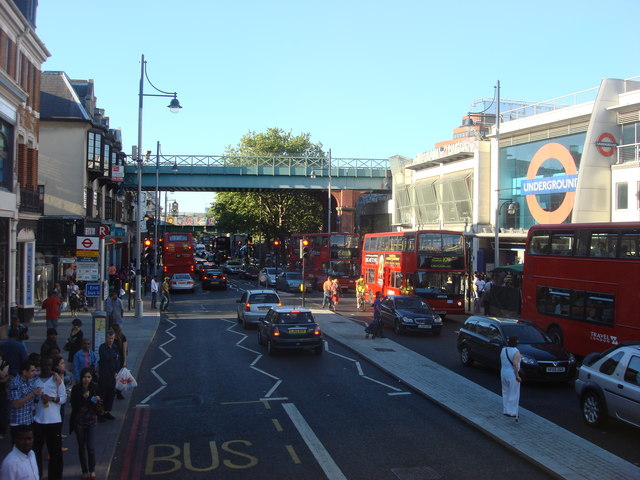
Brixton grew in the nineteenth century as a prosperous suburb served by new railways. Electric Avenue, completed in the 1880s, was among the first shopping streets in London lit by electricity, and the covered arcades of Brixton Market followed in the early twentieth century. By the end of the Second World War, however, much of the district had declined, and large Victorian houses had been divided into rooms for rent. That cheap housing helped make Brixton a destination. Some Windrush passengers were temporarily housed in the Clapham South deep shelter, and the nearest employment exchange was on Coldharbour Lane in Brixton. Many stayed nearby.
Over the next three decades, Caribbean families turned Brixton into a center of Black British life. Brixton Market sold yams, plantains, and Caribbean produce; record shops, sound systems, barbers, and churches anchored community life. Railton Road—known locally as “the Front Line”—became a hub of political organizing. Olive Morris and others founded the Brixton Black Women’s Group in 1973, and squatters’ and tenants’ campaigns challenged the council and landlords. The founding of the Black Cultural Archives in 1981 expressed another form of self-determination: preserving a history that national institutions too often overlooked. These were not merely places to live. They were places where Black people made institutions of their own.
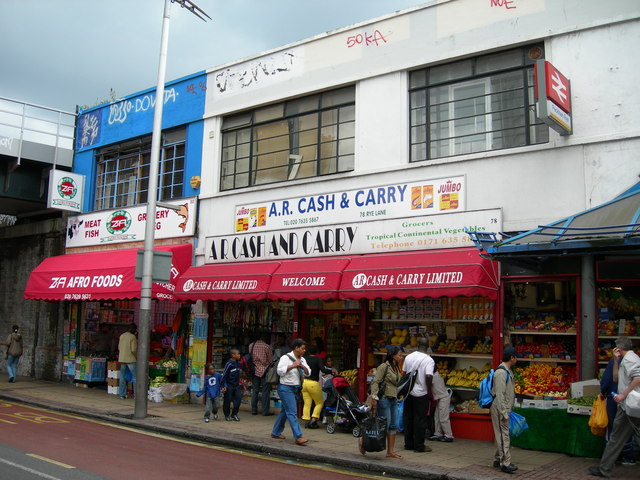
Peckham’s story is connected but distinct. Caribbean families settled there too, while later West African migration made it especially associated with Nigerians—hence the nickname “Little Lagos,” after Nigeria’s largest city. Rye Lane’s African grocers, fabric shops, hair salons, and churches made connections to home part of ordinary commercial and spiritual life. The nickname should not erase Ghanaian, Sierra Leonean, Caribbean, and other residents. Nor should a later photograph or census be mistaken for an exact portrait of Peckham in 1981.
Who lived here? Origins and the limits of the numbers
“Caribbean” covers different islands and histories, not one undifferentiated population. Jamaica is especially prominent in Lambeth’s migration history; Barbados, Trinidad and Tobago, and Grenada are also represented. To make that variety concrete without inventing a 1981 neighborhood census, the Greater London Authority’s compilation of the 2021 census counted 7,842 Jamaica-born residents in Lambeth, alongside 465 born in Barbados, 424 in Trinidad and Tobago, and 248 in Grenada. These are borough-wide country-of-birth counts, not totals for Brixton alone and not the full number of people with Caribbean ancestry.
The same distinction matters for Peckham. Across Southwark borough in 2021, 11,173 residents were born in Nigeria, 4,321 in Ghana, and 4,262 in Sierra Leone. Another 4,553 were born in Jamaica. The figures explain why “African” needs to be unpacked, while showing that African and Caribbean histories coexist rather than occupying neatly separate districts. They also show why Nigeria’s prominence does not justify calling everyone in Peckham Nigerian.
Lewisham’s borough-wide figures reveal an equally varied population: 9,278 Nigeria-born residents, 8,679 Jamaica-born residents, 2,838 Ghana-born residents, and 1,559 Sierra Leone-born residents. The Office for National Statistics reports that 26.8 percent of Lewisham’s residents identified within the broad Black ethnic category in 2021, compared with 24.0 percent in Lambeth and 25.1 percent in Southwark. These percentages describe ethnicity, not birthplace. British-born children and grandchildren belong to these communities too, but will not appear in the overseas-born counts.
These present-day statistics establish the enduring breadth of the communities, not their proportions during the uprising. The historical point is the interaction of different migrations: Caribbean settlement, African arrivals, and British-born generations made South London a shared Black space without dissolving its distinct national traditions. A shop could supply familiar ingredients; a church could offer a network of care; a record store could connect a local teenager to a wider Atlantic culture. Such everyday institutions provided resources that could also be mobilized against discrimination.
Rights on paper: the Race Relations Acts and new organizing
The 1965 legislation did not arrive as an isolated parliamentary gesture. Postwar migrants encountered a “color bar”—exclusion because of race—in renting rooms, getting jobs, and entering ordinary public establishments. Racist violence in Nottingham and Notting Hill in 1958 made the danger visible, while repeated campaigning challenged the assumption that Britain’s reputation for tolerance made legal protection unnecessary. The 1963 Bristol bus boycott exposed a particularly clear contradiction: a public transport company would carry Black passengers but excluded Black and Asian people from working as bus crews. Protest made that employment bar a national issue.
The bitterly racialized 1964 election in Smethwick further demonstrated that prejudice could be turned into electoral advantage. Meanwhile, the Commonwealth Immigrants Act of 1962 had restricted entry by people whose labor Britain had previously recruited. Restricting newcomers did nothing to protect those already living in Britain from unequal treatment. Under Harold Wilson’s Labour government, elected in 1964, the question became whether equal citizenship required enforceable rights, rather than assurances of fair play. The 1965 act was a limited response to that accumulated pressure, not the sudden discovery of a new problem.
The Race Relations Act of 1965 outlawed racial discrimination in specified public places, including pubs and hotels, and created a Race Relations Board to seek settlement of complaints. Crucially, it left housing and employment untouched—the very areas in which racial exclusion could determine a family’s livelihood and security. The 1968 act extended protection to those areas. The Race Relations Act of 1976 then included indirect discrimination: apparently neutral rules that disadvantaged a racial group. It created the Commission for Racial Equality, and individuals gained routes to bring complaints before courts or employment tribunals. The progression was real, but legislation alone did not eliminate discriminatory practice or guarantee that those suffering it could obtain a remedy.
Organizing beyond Parliament: Lewisham and Black women
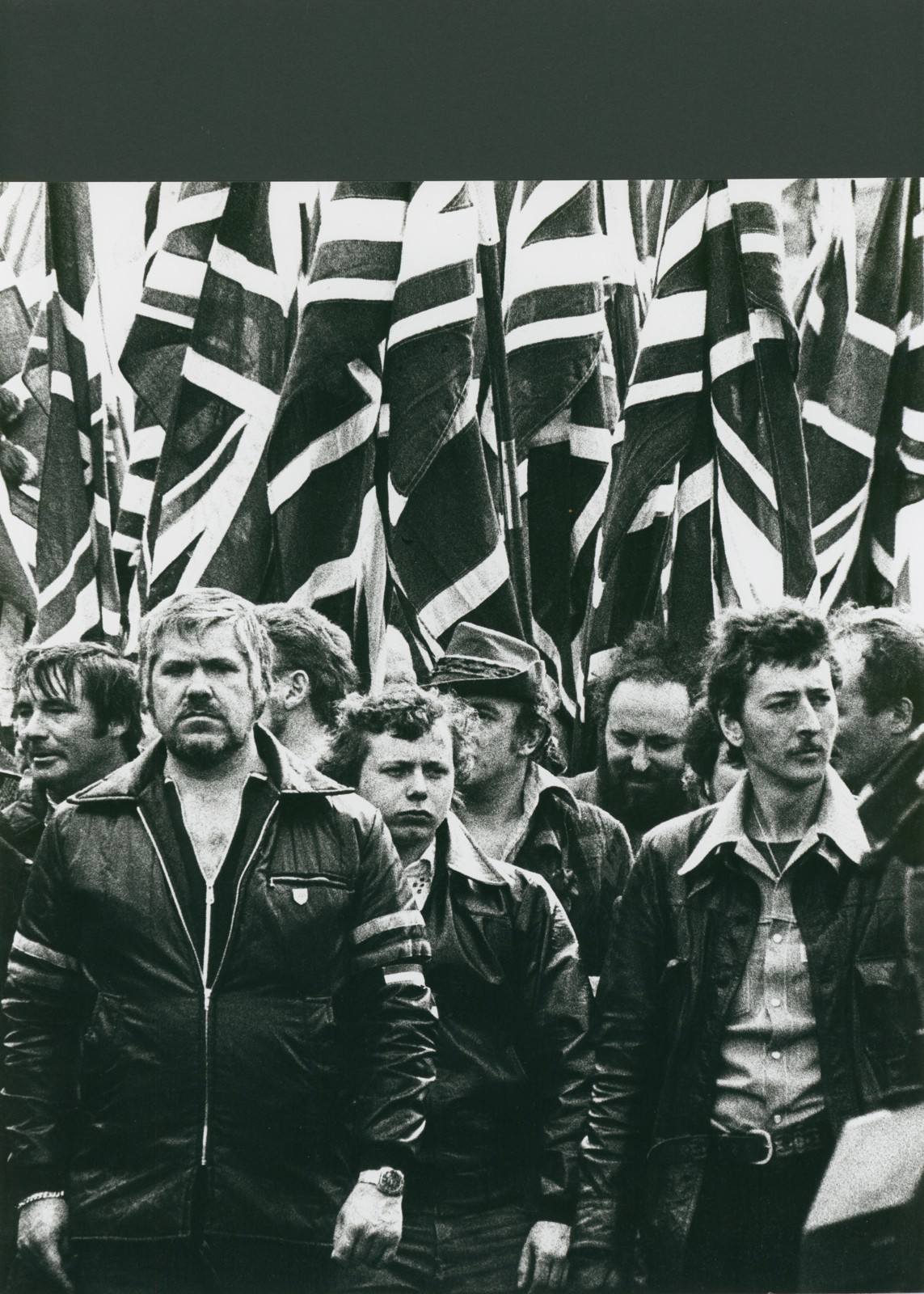
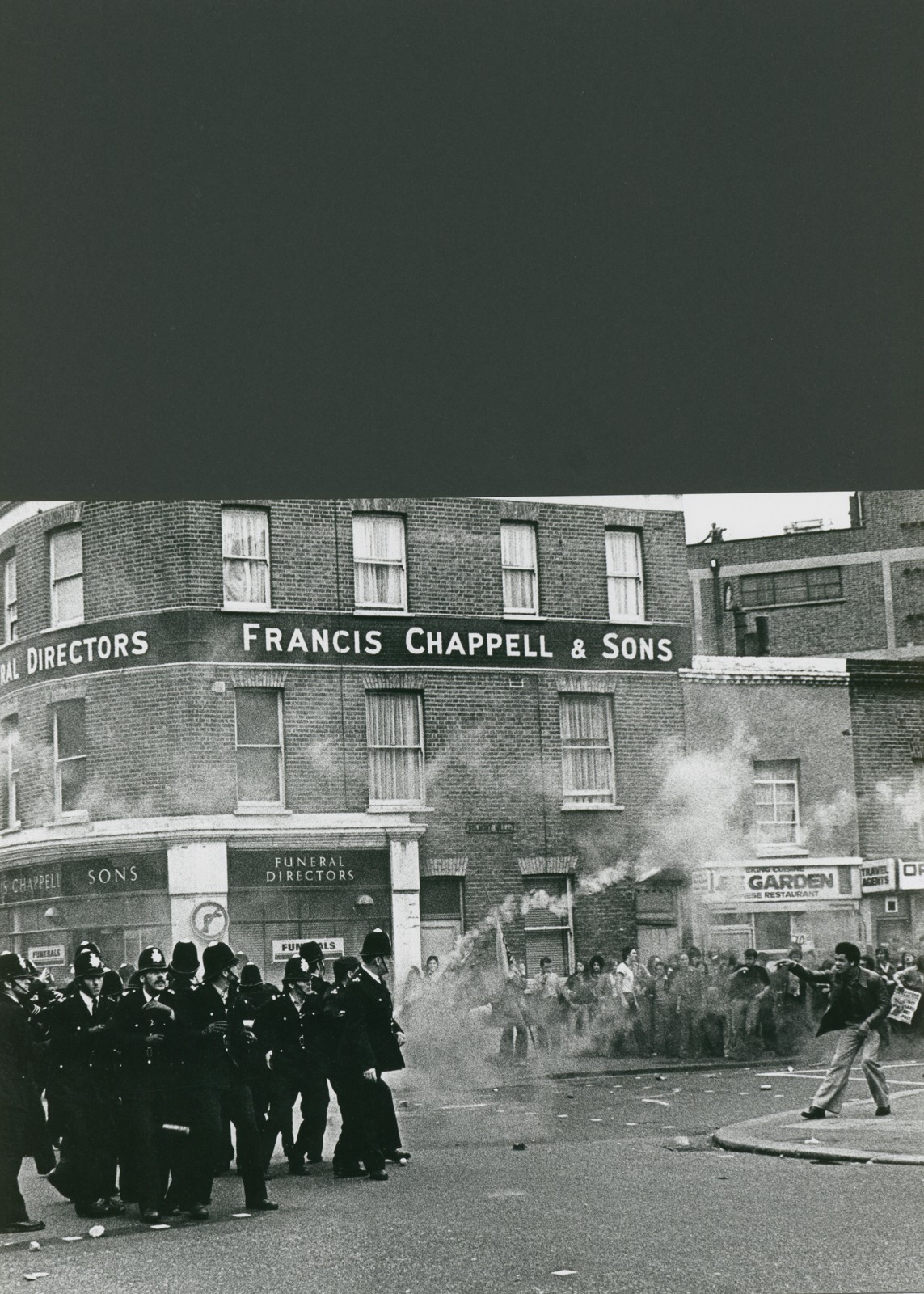
Black communities did not wait for Parliament. On August 13, 1977, the far-right National Front attempted to march through southeast London. Its anti-immigrant politics turned the presence of Black residents into a supposed national threat. Anti-racist demonstrators opposed the march, and violent clashes with police became known as the Battle of Lewisham. Here the issue was not merely whether individuals could complain after discrimination. It was whether an organized movement could intimidate a community in the streets where its members lived.
Women’s organizing challenged other exclusions. Founded in 1978, the Organisation of Women of African and Asian Descent—OWAAD—brought together activists including Olive Morris, Stella Dadzie, and Gail Lewis. Its national umbrella network connected local groups rather than requiring women to choose between opposing racism and opposing sexism. Education, health, immigration rules, employment, and police treatment were connected concerns, because the same woman might confront unequal treatment in several parts of her life.
OWAAD’s first national conference in 1979 made that organizing visible. In this movement, “Black” could function as a political term linking African, Caribbean, and South Asian women against racism; it was not simply a claim that all had identical ethnic identities. The Black Cultural Archives’ exhibition on the Black women’s movement includes a photograph of the 1979 OWAAD conference and campaign materials. It offers readers the actual archival image, rather than an invented recreation. Alongside the Black Parents Movement and Black Youth Movement, these networks connected the defense of children, housing, and community institutions to a larger struggle over power.
Before Brixton: the Mangrove Nine
The Mangrove case makes that connection especially clear. The Mangrove was Frank Crichlow’s Caribbean restaurant in Notting Hill, west London—not one of the South London locations on the map. More than a business, it was a meeting place. Repeated police raids and harassment therefore threatened a community institution as well as its proprietor. A demonstration on August 9, 1970, led to the prosecution of nine activists, including Crichlow, Darcus Howe, and Altheia Jones-LeCointe.
In 1971, the Mangrove Nine faced trial at the Old Bailey, London’s central criminal court. They contested not only the prosecution’s account of the demonstration but also the assumptions through which Black protest was treated as criminality. All nine were acquitted of the principal charge of incitement to riot, although some were convicted on lesser charges. The outcome was a landmark challenge to racist policing, not a declaration that the police had ceased to discriminate. A fuller account deserves its own treatment; here the case previews the conflict over who could define a Black community’s actions and speak for its experience.
Steve McQueen brought that history to a wider audience in Small Axe, his five-film anthology released in 2020. Its opening film, Mangrove, dramatizes the restaurant, protest, and trial. The anthology is not a documentary, and it should not replace archival evidence. But its attention to food, music, friendship, and family helps explain what an account confined to courtroom outcomes would miss: police harassment reached into spaces where Black people were making lives, not simply staging demonstrations. That cultural and political connection also runs through Brixton.
Brixton 1981: policing, protest, and Black youth
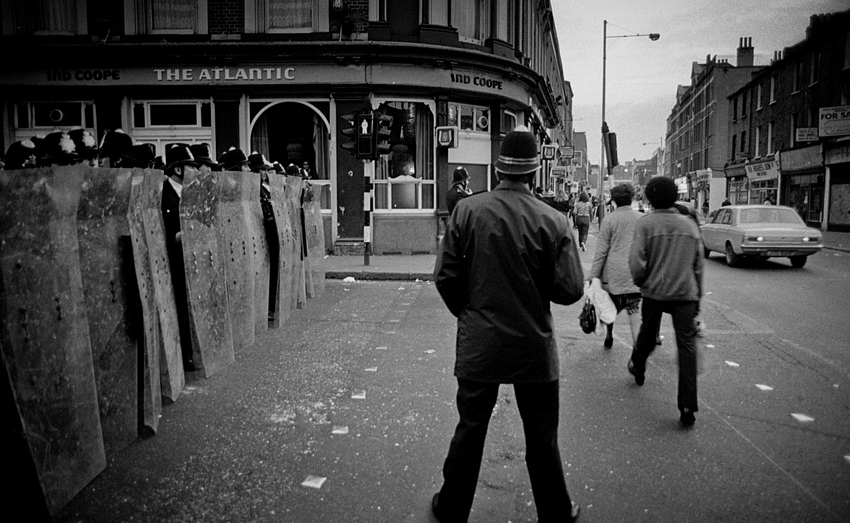
Policing became a defining arena of struggle. Through the 1970s, Black young people complained that the police used the “sus” law—a provision of the Vagrancy Act of 1824 that allowed arrest on mere suspicion of intent to commit a crime—to stop, search, and charge them disproportionately.
The year 1981 began with tragedy. In January, a fire at a house party in New Cross, in southeast London, killed thirteen young Black people. Many in the community believed the fire was a racist attack and that the police and press showed little concern; the cause remains unresolved, so that belief must not be presented as a proven finding. On March 2, an estimated twenty thousand people joined the Black People’s Day of Action, marching from New Cross to central London under the slogan “Thirteen dead, nothing said.” The protest turned mourning into a collective demand that Black lives receive public recognition and a serious investigation. Vron Ware’s photographs of the march, held by Autograph and presented through Art UK, show that community mobilization directly. They are linked here as an archival collection, not reproduced without permission.
Weeks later, the Metropolitan Police launched Operation Swamp 81 in Brixton, sending plainclothes officers to curb street crime. In about five days, nearly a thousand people were stopped and searched—most of them young Black men—and more than a hundred were arrested. On April 10, an attempt to help a stabbed young man was misread by onlookers as police harassment, and the next day an arrest outside a minicab office set off three days of violent confrontation. Close to three hundred police officers and dozens of members of the public were injured, scores of vehicles burned, and many buildings damaged. That summer, disturbances spread to Toxteth in Liverpool, Moss Side in Manchester, Handsworth in Birmingham, and other cities.
Many residents preferred to call the events an uprising, and describing them only as disorder strips away the conditions that preceded them: high youth unemployment, poor housing, and years of aggressive policing. For Black communities, Brixton confirmed a pattern in which young people were treated as suspects first and citizens second. The sus law was repealed in 1981, but stop-and-search powers remained, and the targeting of Black youth remained a lasting grievance. In 1985, Brixton erupted again after police shot Cherry Groce during a raid on her home, leaving her paralyzed; an inquest in 2014 found that police failings contributed to her death in 2011.
The Scarman Report and its limits
Two days after the violence ended, Home Secretary William Whitelaw appointed Lord Justice Scarman, a senior judge, to investigate. His report, published on November 25, 1981, described the disturbances as spontaneous outbursts of built-up resentment, not planned conspiracies, and placed them against a background of urban deprivation, racial disadvantage, and a breakdown of trust between the police and Black residents. Scarman called racial disadvantage “a fact of current British life” and judged Operation Swamp a serious mistake that had been carried out without consulting local community leaders.
“Urgent action is needed if racial disadvantage is not to become an endemic, ineradicable disease threatening the very survival of our society.”
This warning from Scarman’s first conclusion was quoted in Parliament by Roy Hattersley on November 25, 1981. Its force lies in refusing to treat racial disadvantage as a marginal problem affecting only a minority: it threatened the society that allowed it to persist. In the same debate, Home Secretary William Whitelaw endorsed consultation with communities, stronger police training, and substantial reform of complaints procedures. Better relations required changed institutions, not simply asking residents to trust them. Social and economic disadvantage also demanded action beyond the police.
Scarman also drew a line that would later be challenged. He rejected the claim that Britain or the Metropolitan Police was “institutionally racist” in the sense of knowingly discriminatory policy, while acknowledging that some officers behaved with racial prejudice and that practices could produce unintended discrimination. His recommendations included recruiting more Black and Asian officers, making racially prejudiced conduct a dismissal offense, improving training, creating statutory consultation between police and communities, introducing lay visitors to police stations, and adding an independent element to the complaints system. Many of these ideas shaped the Police and Criminal Evidence Act of 1984, which codified stop-and-search rules, and the Police Complaints Authority created the same year.
The report forced national attention onto experiences residents had long described, yet its refusal to name institutional racism left the deeper problem unaddressed. Stephen Lawrence’s racist murder in Eltham in 1993 produced the next reckoning. His family’s campaign exposed the failures of the police investigation, and the 1999 Macpherson inquiry concluded what Scarman had not: that the Metropolitan Police was institutionally racist. Doreen Lawrence’s persistence turned a family’s fight for justice into a challenge to the state. In both cases, recognition came through struggle, not through institutions correcting themselves unprompted.
Culture was not separate from the struggle
Brixton’s sound systems, Peckham’s shops, Lewisham’s organizing, and the Mangrove’s tables belong in the same history as legislation and inquiries. These institutions made survival possible, but they also made exclusion harder to hide. They gave people places to meet, language through which to recognize a shared experience, and networks capable of turning an individual grievance into public action. Culture was neither an escape from politics nor decoration added after the “real” struggle. It helped supply the people, confidence, and resources through which that struggle could be sustained.
The Race Relations Acts placed important rights on paper. The Mangrove Nine challenged racist assumptions in court; OWAAD insisted that Black women’s experience could not be subordinated; the Day of Action demanded that mourning be heard; and Brixton forced the state to confront the distance between its laws and residents’ lives. Scarman offered remedies while stopping short of the institutional diagnosis Macpherson would later make. The thread connecting these events is the demand to belong without accepting humiliation as the price of belonging.
Part 4 takes that history into the new century. The starting point is not a community defined only by injury. It is a community that built markets, movements, memory, and a culture of its own—and insisted that Britain’s promise of citizenship become an everyday reality.
This series continues. Part 4, "Still Rising: Black Britain's Global Resilience," is the featured preview of the first issue of Black Thread. It opens Friday, October 16. Become a founding member for $9.99 a month — that price holds for life — or subscribe free to our newsletter.
Ask the Historian
Have a question about this story, or an idea for a future post? Send it here.