

When people talk about HBCU sports, they usually mean football Saturdays, packed gyms, and the marching bands that turn halftime into the main event. Those traditions are real and they matter. But the fuller story of Black college athletics in 2026 is happening in places many fans never look: on golf courses, tennis courts, lacrosse fields, wrestling mats, baseball diamonds, softball fields, and bowling lanes.
This is the rising tide of HBCU sports. It is a story about excellence built under segregation, talent lost to integration, and a new generation of athletes, donors, and coaches deciding that Black colleges should compete in every arena, not just a few.
Built out of necessity
HBCU athletics began because Black athletes had nowhere else to play. As NewsOne notes in its 2026 survey of the 25 HBCU programs "leveling up right now," schools like Howard, Tuskegee, and Morehouse built teams in the early 1900s when predominantly white colleges shut Black students out. Those teams became sources of pride for whole communities.
The results spoke for themselves. Grambling's Eddie Robinson won 408 games and sent hundreds of players to professional football, a legacy we profiled in Eddie Robinson, HBCU Coach. Walter Payton (Jackson State), Jerry Rice (Mississippi Valley State), and Shannon Sharpe (Savannah State) all developed at HBCUs. On the track, Tuskegee's Alice Coachman became the first Black woman to win Olympic gold in 1948, and Tennessee State's Wilma Rudolph won three gold medals in 1960. As we reported in HBCUs and the Olympics, HBCU athletes have competed at every Summer Olympics since 1948.
Then integration changed the math. Beginning in the late 1960s and 1970s, the best Black athletes were increasingly recruited by wealthier predominantly white schools. HBCUs kept their traditions, their homecomings, and rivalries like the Bayou Classic, but they lost much of their pipeline and much of their national spotlight.
The spotlight returns
The turnaround has a recent face. When Deion Sanders took over at Jackson State in 2020, we asked whether he could change the future of HBCU football (“I Believe”: Deion Sanders and the Future of HBCU Football). Sanders came to the job as an HBCU graduate himself: after starring at Florida State, he completed his bachelor's degree in business administration through Talladega College's FastTrack program in August 2020, weeks before Jackson State hired him. His tenure brought cameras, recruits, and money. His son Shedeur Sanders started at quarterback, and in 2021 Travis Hunter, the nation's top-rated recruit, chose Jackson State over Florida State, the first five-star prospect to sign with an HBCU. Together they led the Tigers to back-to-back SWAC championships in 2021 and 2022 before following Sanders to Colorado. Other former NFL stars followed: Eddie George at Tennessee State, Michael Vick at Norfolk State, and DeSean Jackson at Delaware State.


The professional pipeline is reopening too. Our three-part series on the 2024 drafts tracked HBCU players signing NFL contracts and Canadian Football League offers (“Timeless Glory”: HBCUs and the NFL Draft; Part II; Part III), and HBCU Players Making Waves in the NFL showed how many are already starring on Sundays.
But football is only the most visible part of the tide. The bigger change is that HBCUs are adding, rebuilding, and winning in sports long treated as off-limits to Black athletes.
Golf: Howard's putting green of dreams

Golf has long been one of the most exclusive sports in America, shaped by private clubs that barred Black players for generations. Howard University decided to change that. With support from NBA star Stephen Curry, Howard relaunched Division I men's and women's golf in 2020.
The payoff came fast. As we reported in The “Putting Green” of Dreams, Howard's men won the PGA Works Collegiate Championship for a second straight year, finishing 57 strokes ahead of the field at Shoal Creek in Birmingham, Alabama. Senior Everett Whiten Jr. took medalist honors at 14 under par. The setting mattered: Shoal Creek was the club whose founder's 1990 defense of its all-white membership forced professional golf to confront its exclusion policies. Black college golfers dominating that course was history answering itself.
Tennis: from Althea Gibson to Howard's demand for dignity
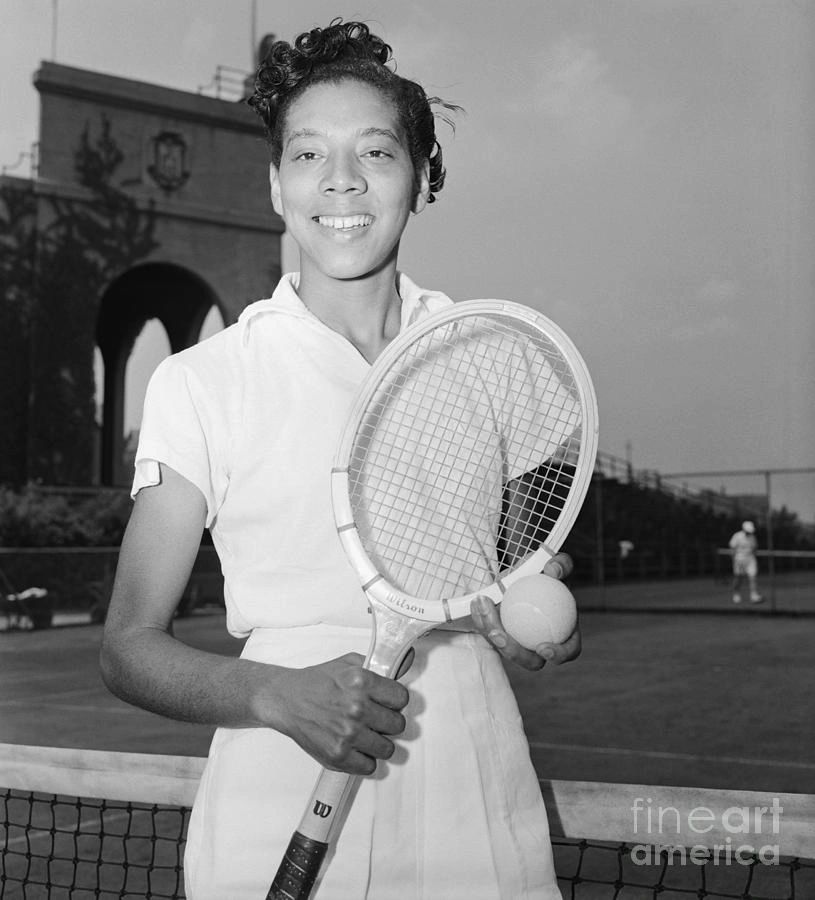
Tennis at Black colleges has deep roots. When segregated clubs closed their doors, the American Tennis Association, founded in 1916, gave Black players their own national championships, often staged on HBCU campuses. Althea Gibson attended Florida A&M on scholarship before becoming the first Black player to win Wimbledon in 1957 (Althea Gibson, First Black Tennis Player to Win Wimbledon, 1957). Arthur Ashe, who later broke the men's Grand Slam barrier, came through the same Black tennis network (Arthur Ashe, First Black Man to Win a Grand Slam Tennis Event).
That history is not finished. In October 2026, Howard's club tennis team reached the silver-draw semifinals at a University of Maryland invitational, its best result since the club's founding in 2021. They also faced Ku Klux Klan imagery in tournament materials. The players demanded a public apology, an investigation, sensitivity training, and a donation of tournament proceeds to the National Museum of African American History and Culture. Maryland suspended its club pending investigation. We are tracking the story in Howard Tennis Players Demand Accountability After Racist Tournament Imagery. The Howard players' achievement and their demand for dignity belong in the same story. So do Gibson's.
Lacrosse: an old first and a new wave
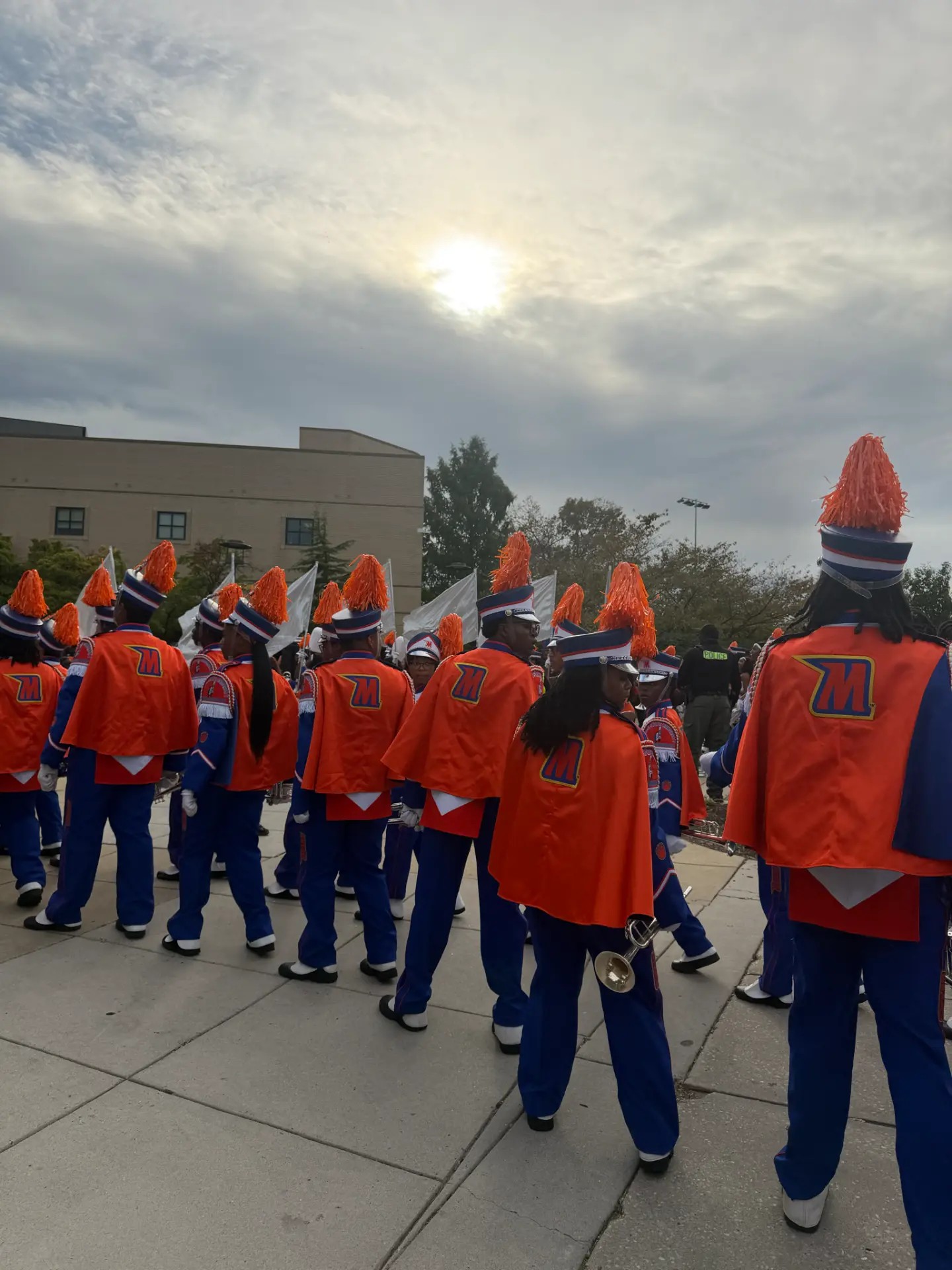
Lacrosse is one of the whitest sports in college athletics, but HBCUs have a claim on its history. In the 1970s, Morgan State fielded the first HBCU lacrosse program, and in 1975 its team upset nationally ranked Washington and Lee, one of the great upsets in the sport.
Today the game is growing again. Hampton University launched Division I men's lacrosse in 2016, and Howard and Delaware State field Division I women's teams. In 2022, USA Lacrosse Magazine counted only five active varsity HBCU programs. The wins have been hard to come by against long-established programs, but the interest is real. In February 2025, the Premier Lacrosse League hosted the first HBCU All-Star Game in Springfield, Virginia, bringing together players from Spelman, Norfolk State, Bowie State, Morgan State, Howard, Lincoln, and Morehouse.
Wrestling: the comeback sport
No sport shows the rising tide more clearly than wrestling. Delaware State was the last HBCU with a Division I wrestling program when it cut the sport in 2009. For a time, wrestling had all but vanished from Black colleges.
Then a nonprofit called HBCU Wrestling, founded in 2021, went to work. Its $2.7 million gift brought wrestling back at Morgan State. In November 2024, its $1.25 million gift helped Delaware State launch the first Division I women's wrestling program at any HBCU. Under head coach Kenya Sloan, the Hornets won their first dual meet in December 2025, finished second of 23 teams at a January tournament, and in March 2026 competed at the first NCAA women's wrestling championship in Iowa. In May 2026, Wilberforce University in Ohio, the nation's oldest private Black university, announced men's and women's wrestling for 2026–27, joining Morgan State, Bluefield State, and Delaware State.
Four HBCUs with men's wrestling is still a small number. It is also four more than seemed possible a few years ago.
Baseball: from the Negro Leagues to the Swingman Classic
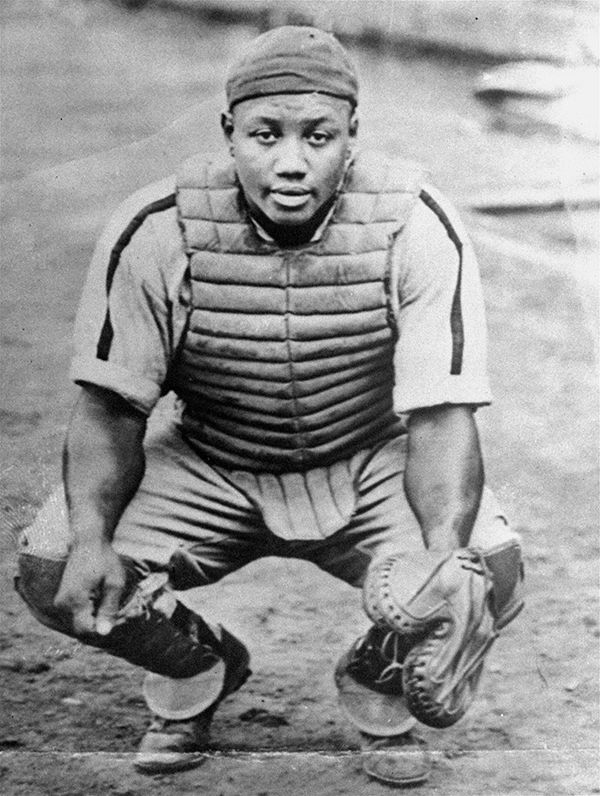
Black baseball's story is inseparable from HBCUs. When Major League Baseball kept Black players out, the Negro Leagues built their own institutions, a history we have told through Rube Foster, Josh Gibson, and the Homestead Grays. HBCUs later sent Hall of Famers to the majors, including Lou Brock from Southern University and Andre Dawson from Florida A&M.
As Black participation in Major League Baseball fell to historic lows, HBCU programs became a key part of the answer. Southern and Florida A&M remain conference powers, and since 2023 the HBCU Swingman Classic, created with Ken Griffey Jr., has showcased HBCU players during MLB All-Star Week in front of scouts and national television audiences.
Softball and bowling: where Black women are winning
Some of the most consistent HBCU success belongs to women. NewsOne singles out Alabama State softball as a dominant SWAC program that regularly reaches NCAA regionals.
Bowling may be the quiet giant. Because it is an NCAA women's sport that many HBCUs sponsor, it has become one of the most competitive places for Black college athletes. The University of Maryland Eastern Shore won NCAA national championships in 2008 and 2011, and North Carolina A&T's women's team is nationally ranked and a regular NCAA tournament qualifier.
The other firsts

The list keeps growing. Howard is home to the only HBCU swimming and diving program. Delaware State competes in Division I equestrian. And as we reported in Tennessee State University and First HBCU Hockey Program, Tennessee State became the first HBCU to announce men's ice hockey in 2023, with support from the Nashville Predators.
Rugby is the newest frontier. Howard University's club rugby teams, known as the Herd, were started in 2021 by nursing student Takunda Rusike during the pandemic, and Howard fielded only the second HBCU women's rugby team. Rugby remains a niche sport in the United States compared with Europe, which makes what the Herd has done all the more striking: by 2023, the women's+ side had reached a national championship game, at times taking the pitch with just 13 of the required 15 players. The Herd's rise is proof that the rising tide reaches even the newest shores.
Why it matters
These programs cost money, and HBCUs have always done more with less, a theme we explored in HBCUs and Finances: Charting a Course Forward. Each new team is a bet that Black students should not have to choose between the culture of an HBCU and the sport they love.
That is the real meaning of the rising tide. It is not just about wins, draft picks, or television deals. It is about Black colleges claiming the full range of American sport, from the golf course to the wrestling mat, and making sure that no young athlete has to leave home, culturally speaking, to chase a dream. The pioneers who built HBCU athletics under segregation would recognize the mission. They started it.
The HistorianSpeaks dispatch
Liked this HBCU story? Get one like it every week.
Ask the Historian
Have a question about this story, or an idea for a future post? Send it here.