

Maurice Woodson remembers the era by its hair. Born in the late 1960s and raised in the Bronx, he came of age as Afros gave way to braids, shags, Jheri curls, high-top fades and, eventually, clean-shaven heads. "I've seen everything," he told HistorianSpeaks. "I've also watched how beards and beard care have changed over the years. For Black people, facial hair has played a role in our style and history. In a lot of ways it has defined us."
Today Woodson, who goes by M. S. Woodson, is the founder and CEO of Moor House Grooming For Men, a beard-care and skin-care line launched in 2026. His company is new. The tradition he works inside is not. Black men have built businesses around grooming since before emancipation, and the barbershop has long served as a newsroom, a political hall and a place where young men learn how to carry themselves. Woodson's story is a bridge between that history and the present, and it is a reminder that Black enterprise often begins with a simple observation: the products on the shelf were not made for us.
Look the Way You Want to Be Seen

Woodson has kept the same signature look since the 1990s: a goatee and a bald head, sometimes traded for a fuller beard. Grooming, he says, was never vanity. It was discipline, and it was a lesson he absorbed during years in the music and magazine industries.
One lesson came from a towering figure in Black business. Earl G. Graves Sr., the founder of Black Enterprise, was one of Woodson's mentors. "He once told me, 'Look the way you want people to see you,'" Woodson recalled. "I've lived by that."
The advice belongs to a long line of Black thought about presentation. In the decades after slavery, Black Americans understood that appearance was read politically. A pressed suit at a church convention, a well-kept beard in a photograph, a clean fade on the first day of school: each was a statement against a society that caricatured Black people as disorderly. Graves built a magazine on the idea that Black professionals deserved to see themselves as builders of wealth. Woodson took that idea into a bathroom cabinet.
The Science the Big Brands Skip

Ask Woodson what large grooming brands get wrong, and he answers with biology rather than marketing. "Most skincare companies act as if humanity's skin is a monolith," he said. They rarely account for the fact that Black and Brown skin carries more melanin, including the pigments eumelanin and pheomelanin, along with differences in how melanocytes behave and how melanosomes are arranged.
Those differences matter. Skin rich in melanin is more prone to post-inflammatory hyperpigmentation, the dark marks that linger after irritation, razor bumps or acne. Curly, coarse beard hair can curl back into the skin, producing ingrown hairs and inflammation. Many products treat the beard and ignore the skin beneath it. Woodson built Moor House to treat both, with formulas meant to soften the hair while calming and evening the skin underneath.
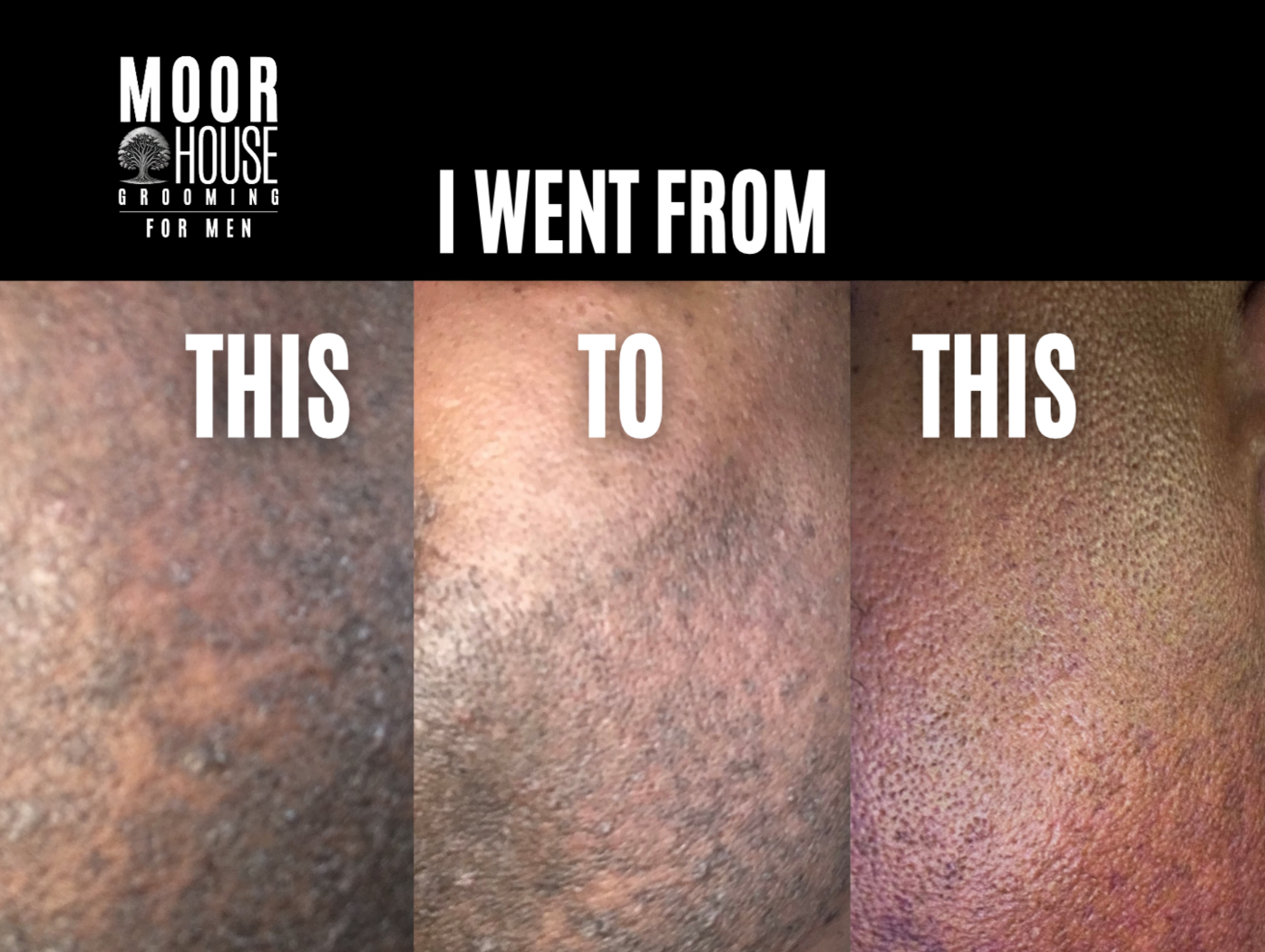
His own before-and-after photographs, taken in April and September 2026 and labeled "no digital altering, no filter," present the results he attributes to his routine, rather than independently measured treatment outcomes. He is nearly 60, and he says people now tell him he looks two decades younger. HistorianSpeaks is not in the business of endorsing products, but the larger point stands on its own: Black consumers have spent generations adapting goods designed for someone else, and Black makers have repeatedly stepped in to close that gap.

An Old Trade, a New Shelf
Woodson's venture sits within a history that stretches back two centuries. In the antebellum United States, Black barbers such as William Johnson of Natchez, Mississippi, and the Philadelphia and Cleveland barbering families who served white elites built some of the largest Black fortunes of their time. Historians have shown that barbering offered Black men a rare path to property, savings and civic standing, even as it required them to serve white customers in a segregated economy.
After the Civil War, Black barbers increasingly turned their shops toward Black customers. The shop became a community institution. Ministers stopped by to talk politics. Newspapers like the Chicago Defender were passed hand to hand. Civil rights organizers in the 1950s and 1960s relied on barbershops and beauty salons as safe gathering places, because they were Black-owned spaces outside the reach of white employers.
The products followed the shops. Madam C. J. Walker and Annie Turnbo Malone built hair-care empires for Black women in the early twentieth century, training agents and selling door to door. Black-owned men's lines appeared too, although many were later absorbed by larger corporations. That pattern, independent creation followed by corporate acquisition, is part of why Woodson speaks so carefully about the future of his company.
Independence as a Business Plan
Woodson is open about wanting Moor House to stay Black-owned. He has watched beloved brands sell to multinational firms and lose the connection to the customers who built them. For him, equity and independence are not slogans. They are the point.
That stance echoes debates that have run through Black business history since Booker T. Washington founded the National Negro Business League in 1900. Should Black entrepreneurs grow by partnering with white capital, or build slowly and keep control? Graves's Black Enterprise championed ownership. Woodson's answer is to grow carefully, sell directly through MoorHouseGrooming.com, and let customers see the founder behind the bottle.
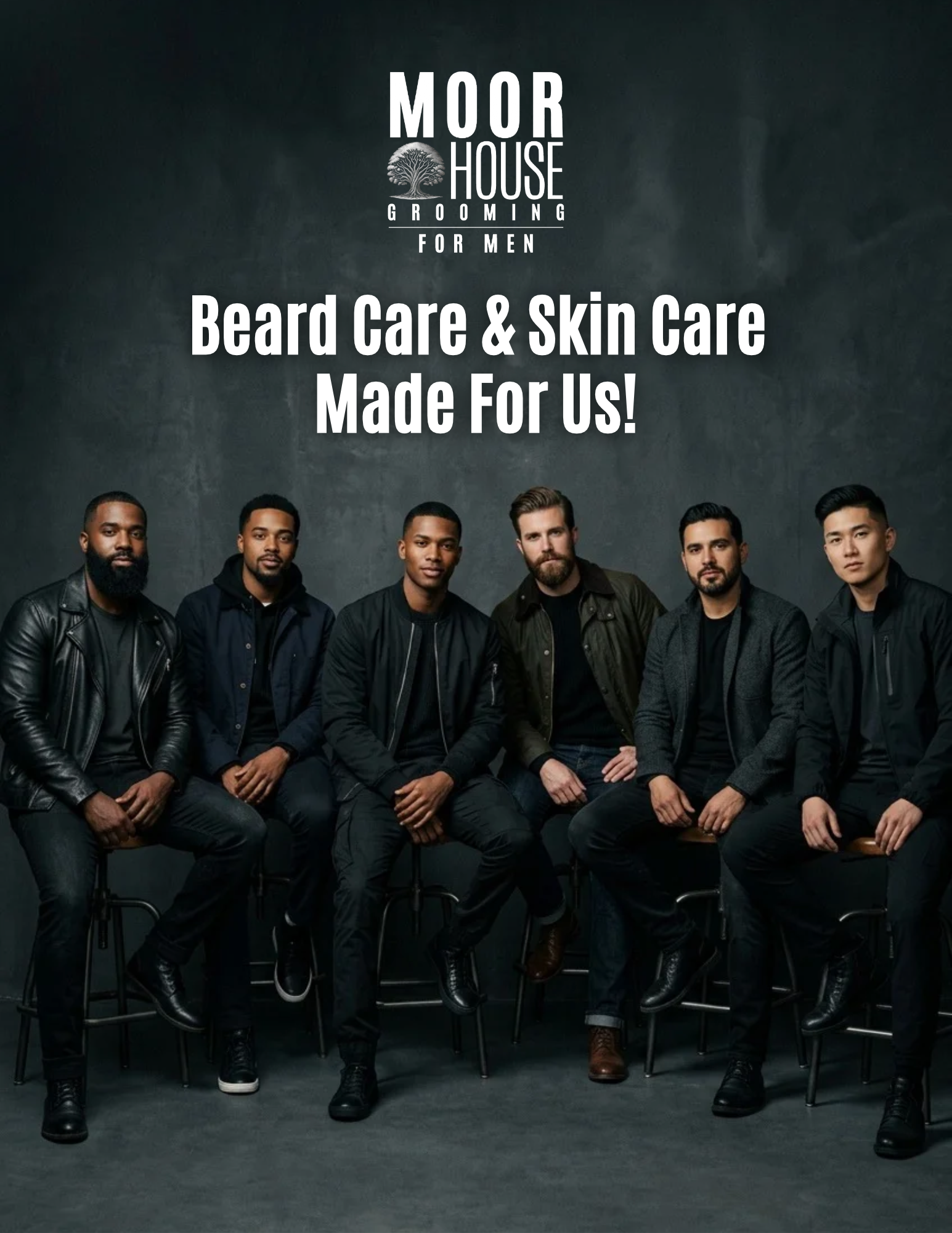
His campaign imagery makes the same argument visually. One image, titled "Made For Us," shows six men of different appearances seated on stools against a dark background. The message is simple. These products are designed for the men in the picture, not adapted for them as an afterthought.
From the Bronx to the Barbershop Chair
Woodson's Bronx childhood placed him at the center of one of the great style laboratories of the twentieth century. The borough gave birth to hip-hop in the 1970s, and with it a visual culture of fades, parts, designs cut into hair and carefully shaped facial hair. Barbers were artists, and a fresh cut was a calling card.
His later work in music and magazines kept him close to that culture as it went global in the 1990s. He watched how images of Black men in print and on video shaped what young men wanted to look like. That experience taught him something big brands often miss: grooming is identity, not just hygiene. A man's beard can signal faith, age, profession, region and politics.
Why This Story Matters Now
This feature is part of the HistorianSpeaks run-up to the December Black Thread package on Black hair care and grooming. The series traces Black beauty culture from enslaved people's improvised remedies through Walker, Malone and Rose Meta Morgan to today's independent makers. Woodson's story shows that the history is not finished.
It also shows how Black enterprise often grows from the gap between what a community needs and what the market offers. The barbers of the nineteenth century filled that gap with skill. The hair-care pioneers of the twentieth century filled it with chemistry and sales networks. Makers like Woodson fill it with attention to melanin, curl patterns and the skin beneath the beard.
"Look the way you want people to see you" was advice about personal discipline. It is also a fair summary of a century of Black business. When the market refused to see Black customers clearly, Black entrepreneurs built mirrors of their own.
What Comes Next
Woodson plans to expand the Moor House line while keeping the company independent. He hopes younger Black men will treat grooming as self-respect rather than an afterthought, and he wants the brand to carry the lessons of mentors like Graves forward.
For readers, his story is an invitation to look closely at the businesses in their own neighborhoods: the barber who has cut three generations of hair, the woman who mixes her own oils, the young founder selling online. Each one stands in a tradition that helped Black communities build wealth, community and pride when few other doors were open.
Want the full December package on Black hair care and grooming? Join HistorianSpeaks free, or become a $9.99 founding member to support independent Black history journalism and receive Black Thread.
Why your support matters
Liked this story of Black science? Get one like it every week.
HistorianSpeaks is independent and reader-supported. No corporate owners, no paywall on the daily history. Every member keeps stories like this one coming.
Free
Newsletter
The weekly dispatch in your inbox.
Founding member
$9.99/month
Price locked for life, founder recognition and full Black Thread magazine access.
Become a founderShare Your Thoughts
Tell us what you think of this story. Comments go privately to the editor; your email is never published.
Ask the Historian
Have a question about this story, or an idea for a future post? Send it here.