

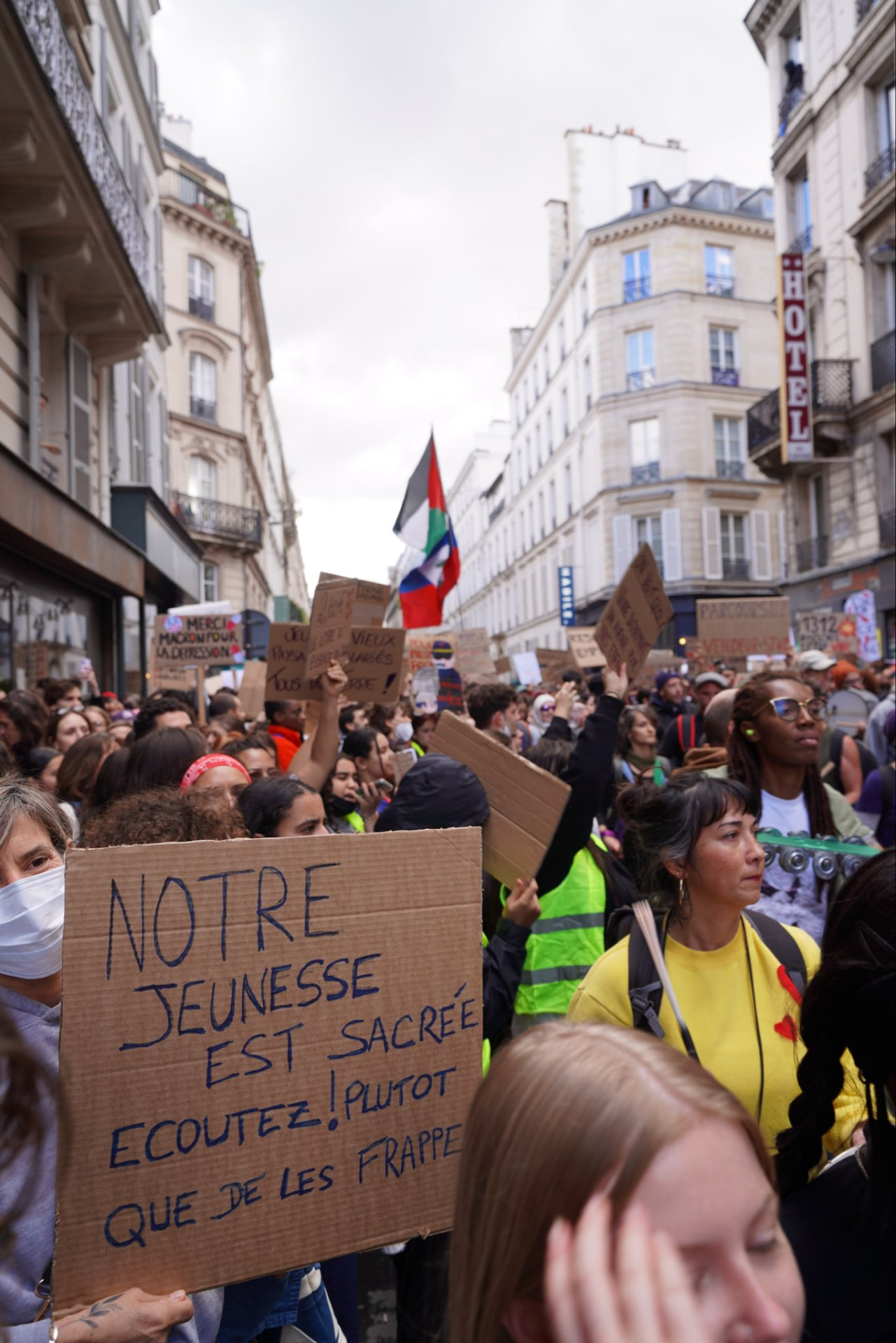
Black high school students from the suburbs of Paris lit the spark. Their walkouts over crumbling schools, missing teachers and Parcoursup became a national movement, and on Saturday, October 17, 2026, they were joined in cities across France by teachers, union members, farmers, climate activists and former Yellow Vests. The Interior Ministry counted 550,000 marchers nationwide. The date was chosen with care: 65 years earlier, on October 17, 1961, Paris police attacked a peaceful march of Algerians and threw some of them into the Seine.
A Month of Rising Anger
The movement began in the high schools. On September 17, students walked out of class; anger over Parcoursup, the university admissions platform, soon became one of their rallying points. On October 13, six education unions joined them with a national strike. By October 17, the demands had widened to wages, pensions, the cost of living and a national budget that the CGT, France's oldest union federation, called an attack on daily life.
Peaceful Crowds, a Violent Night
For most of the day, the marches were calm. Late in the day, clashes, fires and looting broke out in Paris and other cities, and police made arrests across the country. By Sunday, the Interior Ministry put the weekend total at 2,397 arrests. Education Minister Édouard Geffray and Higher Education Minister Philippe Baptiste said the violence had drowned out the voices of those who marched peacefully. In Limoges, fire tore through the roof of city hall that night. In Lyon, rioters looted and set fire to a tourist office on the Place Bellecour, and in Bordeaux intruders ransacked the official residence of the Gironde prefect, Sophie Brocas.
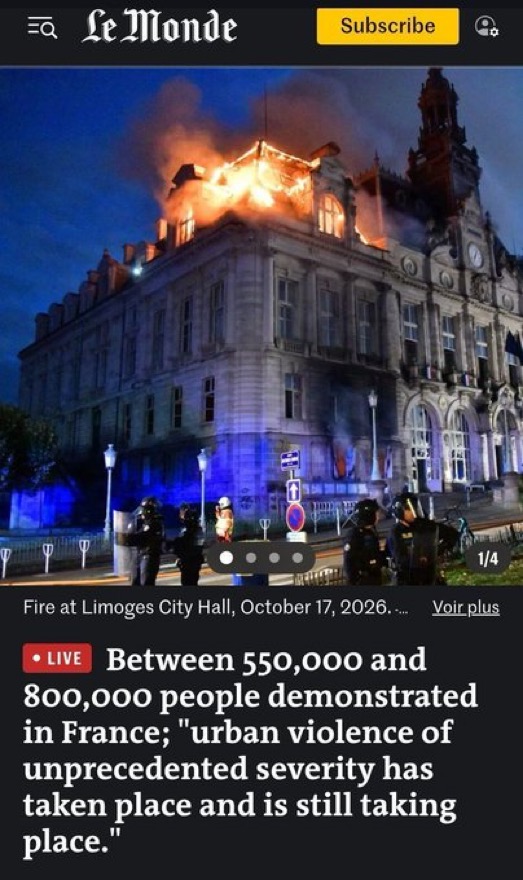
Video: franceinfo on the night of October 17 and the Limoges city hall fire, both on X. The CGT blamed the government's refusal to negotiate and condemned police for firing a stun grenade at union leaders in Toulouse.
The organizers see it differently. One widely shared post from the X account Bourgeois Spoiler cast the day as a "first warning" and described a very young crowd, many from the suburbs, dressed in black and yellow and set on picking up where the 2018 Yellow Vests left off, driven above all by a sense of falling behind.
Macron Speaks
On Sunday evening, October 18, President Emmanuel Macron addressed the nation. "Nothing justifies violence," he said, and he promised that looters would pay for the damage. He conceded that authorities had lost control in several cities. Yet he also called the young people's demands just, saying they want control over their own future, according to FRANCE 24.
Not everyone was persuaded. Paul Smith, head of modern languages at the University of Nottingham, told FRANCE 24 that the intelligence services had failed to anticipate the violence. He also faulted Macron for offering no real program to answer the protesters' demands.
Why the Date Still Matters
The choice of October 17 tied the young marchers of the suburbs, many of them the grandchildren of North and West African immigrants, to the Algerians who marched for their dignity in 1961. That memory, long buried by the French state, has become a living part of their protest.
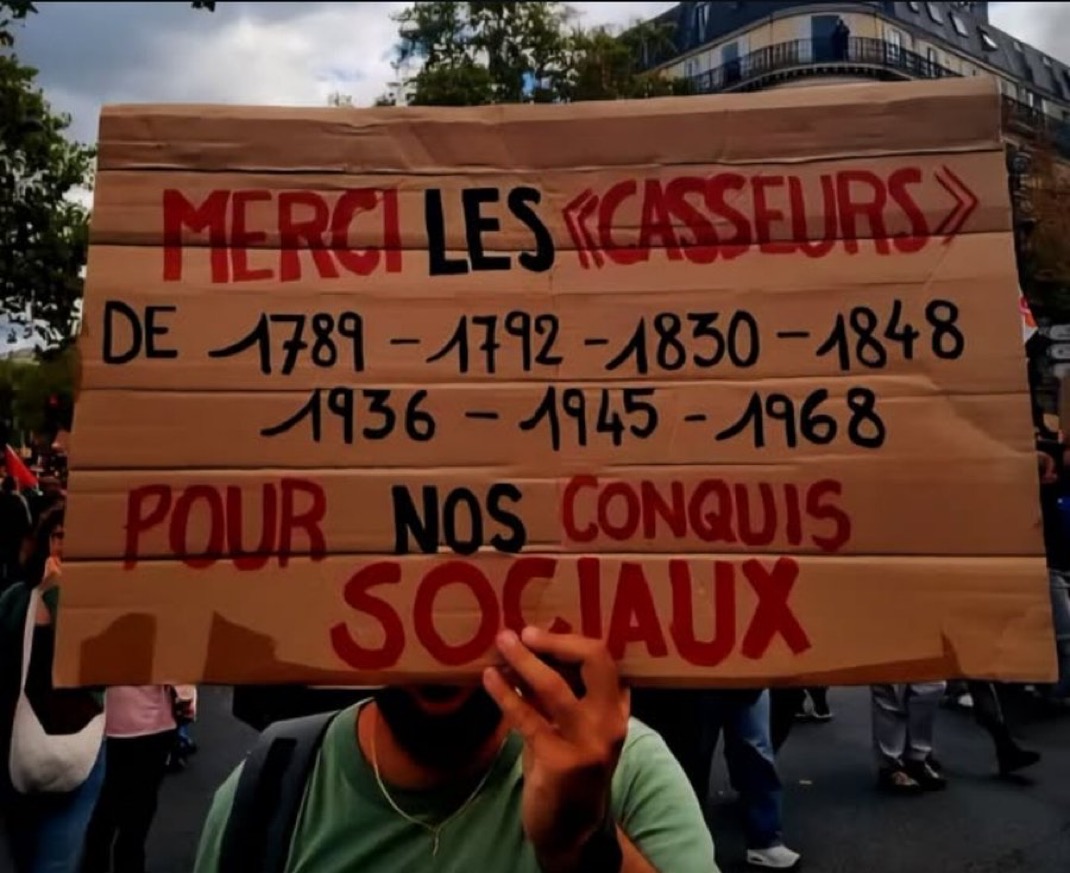
!A marcher's sign thanks the "casseurs" (rioters) of 1789, 1792, 1830, 1848, 1936, 1945 and 1968 "for our social gains." Photo supplied to HistorianSpeaks. Our full history of that night appears in "The Past Is Present: October 17, 1961, and the Marches of 2026."
What Comes Next
By Sunday, October 18, the movement was already planning its next steps. In Toulouse, supporters called a rally outside police headquarters for those arrested, while other posters urged marchers back "into the street" the same day.


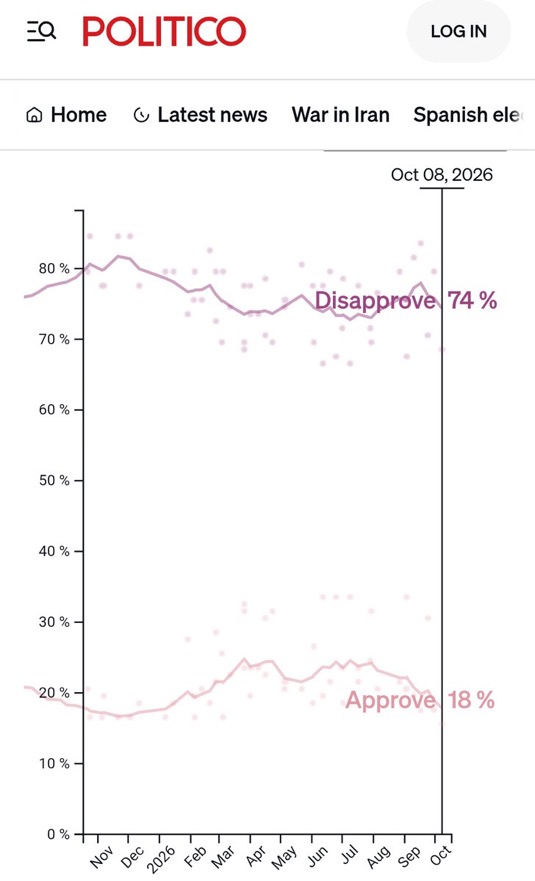
The CGT has called its next national day of action for November 5. Whether the government of Prime Minister Sébastien Lecornu negotiates, or the movement keeps growing, will shape France's fall. The government starts from a weak position: by early October, polls tracked by Politico showed only about 18 percent of the French approved of President Macron, with 74 percent disapproving.
!Macron approval and disapproval, through October 8, 2026. Chart: Politico Europe poll of polls. As we say at HistorianSpeaks, the past is present.
Previous Coverage
- From the Suburbs to the Whole Country: France's October 17 Day of Action, our October 16 preview
- The Past Is Present: October 17, 1961, and the Marches of 2026
- The Students Are Rising: France's School Uprising and the Fight for Black Education
- Seydou Ba: A New Voice of France's Student Uprising
- The Machine That Decides: Why France's Students Want Parcoursup Gone
- Standing Between Students and Shields: Mayor Bally Bagayoko and France's School Uprising
Ask the Historian
Have a question about this story, or an idea for a future post? Send it here.