

It began in the schoolyards of Créteil and Seine-Saint-Denis, in the suburbs of Paris, where Black and Arab students blockaded their schools over crumbling buildings, unfilled posts and unequal education. Two weeks later, their complaints have become a national agenda. On Saturday, October 17, France holds its widest announced day of action this fall: protests against the price of fuel, the cost of rent, groceries and energy, and the state of the country's public services, in hundreds of cities and towns at once.
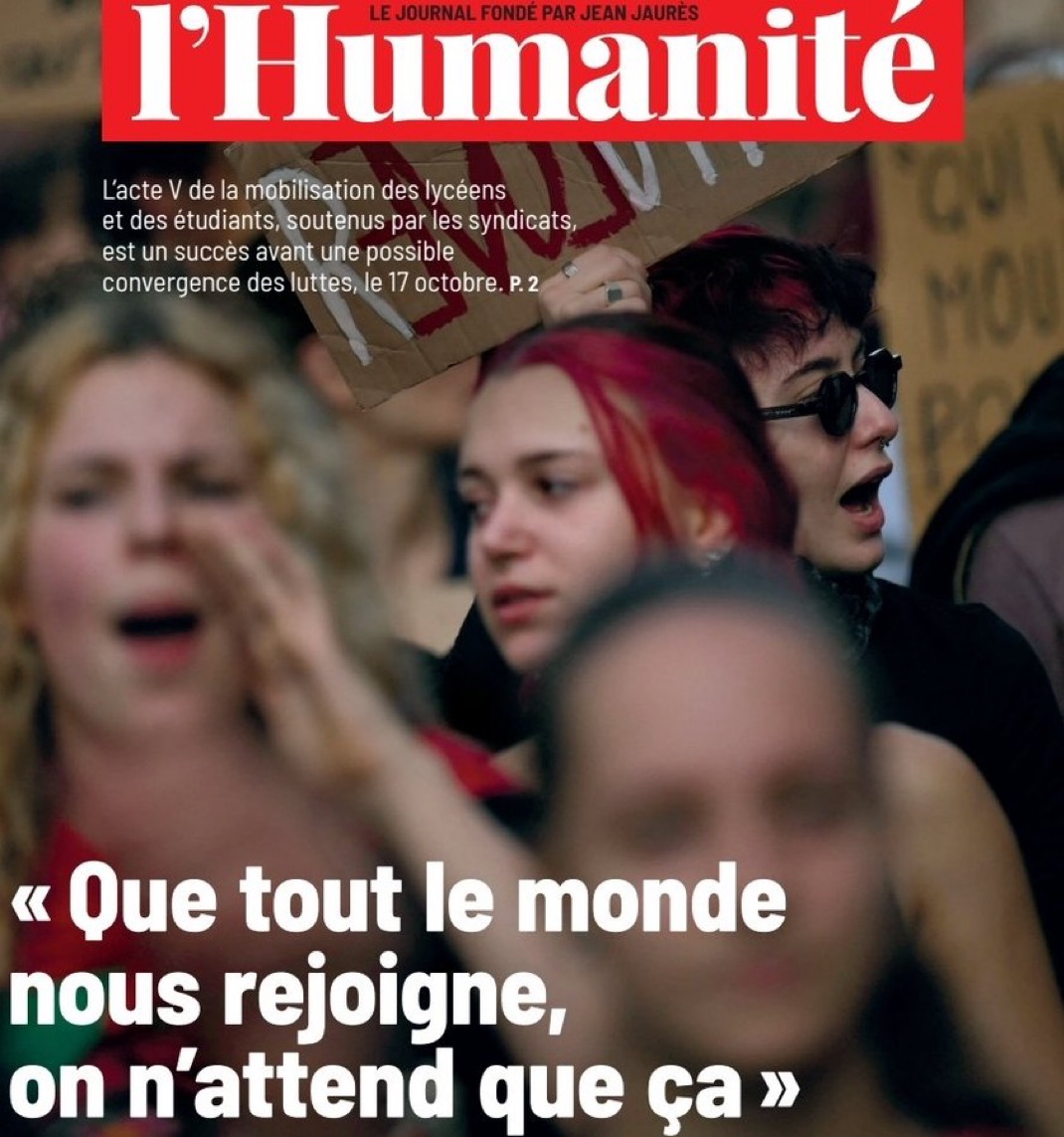
The connection is not incidental. One of the flyers circulating for Saturday says it plainly: "Les lycéens ont commencé, le 17/10 à nous tous de continuer" — the high school students have started it; on October 17, it is up to all of us to continue. The students who first took to the streets named problems that reach far beyond their classrooms: a state that lets its schools decay, a police force that answers teenagers with tear gas and detentions, and a government that insists there is no money for services while prices keep climbing. Their demands turned out to be everyone's.

How the Date Emerged
The October 17 call did not come from a union hall. It emerged in mid-September on TikTok, X and Telegram, sparked by anger over the price of gasoline. A video proposing the date drew more than two and a half million views, and the rapper Kopp Johnson, a former delivery rider who had filmed a "gilet jaune" video during the 2018 roundabout movement, became one of its best-known voices. There is no single organization behind the call; media observers describe several overlapping appeals rather than one "movement" (franceinfo; Contretemps).
The date is the first Saturday of the Toussaint school vacation — the autumn break around All Saints’ Day, November 1 — chosen so that as many people as possible could take part (Linternaute). It also happens to be the first Saturday since the October 13 school strike, when the six education unions that HistorianSpeaks previewed last week walked out in support of the students.
The date also carries a weight of history. On October 17, 1961, Paris police violently repressed a peaceful demonstration of Algerians called by the FLN (National Liberation Front), the movement fighting French colonial rule during the Algerian War of Independence (1954–1962), against a curfew imposed on Algerians; historians place the number killed that night and in the days after between several dozen and more than two hundred, many of them thrown into the Seine. The Paris prosecutor's office acknowledged the massacre in 1999. We found no public indication that the organizers of the October 17, 2026 call chose their date in reference to that memory, but for many French families of North African origin the coincidence is impossible to miss — the same banlieues that produced today's school protesters carry the memory of that night.

What Is Planned
A crowdsourced map maintained by the call's supporters lists 619 announced actions across France, including 384 demonstrations, 70 roundabout occupations, 131 service-station actions, four refineries and 30 fuel depots, with the stated demands of freezing prices at the pump and regulating fuel industry margins (CNEWS; 17octobregiletjaune.net). In Paris, the call's organizers point to the place de la Bastille at 2 p.m., with other flyers having earlier evoked the place de la République; both squares carry republican symbolism: Bastille recalls the storming of the prison in 1789, while République centers on a monument to the French Republic and is a familiar gathering place for demonstrations. No route has been officially published, and no march has been declared to the police prefecture as of this writing (17octobregiletjaune.net; actu.fr).
The numbers on the map are self-reported and should be read as intentions, not a turnout forecast. HistorianSpeaks does not publish predictions of attendance.


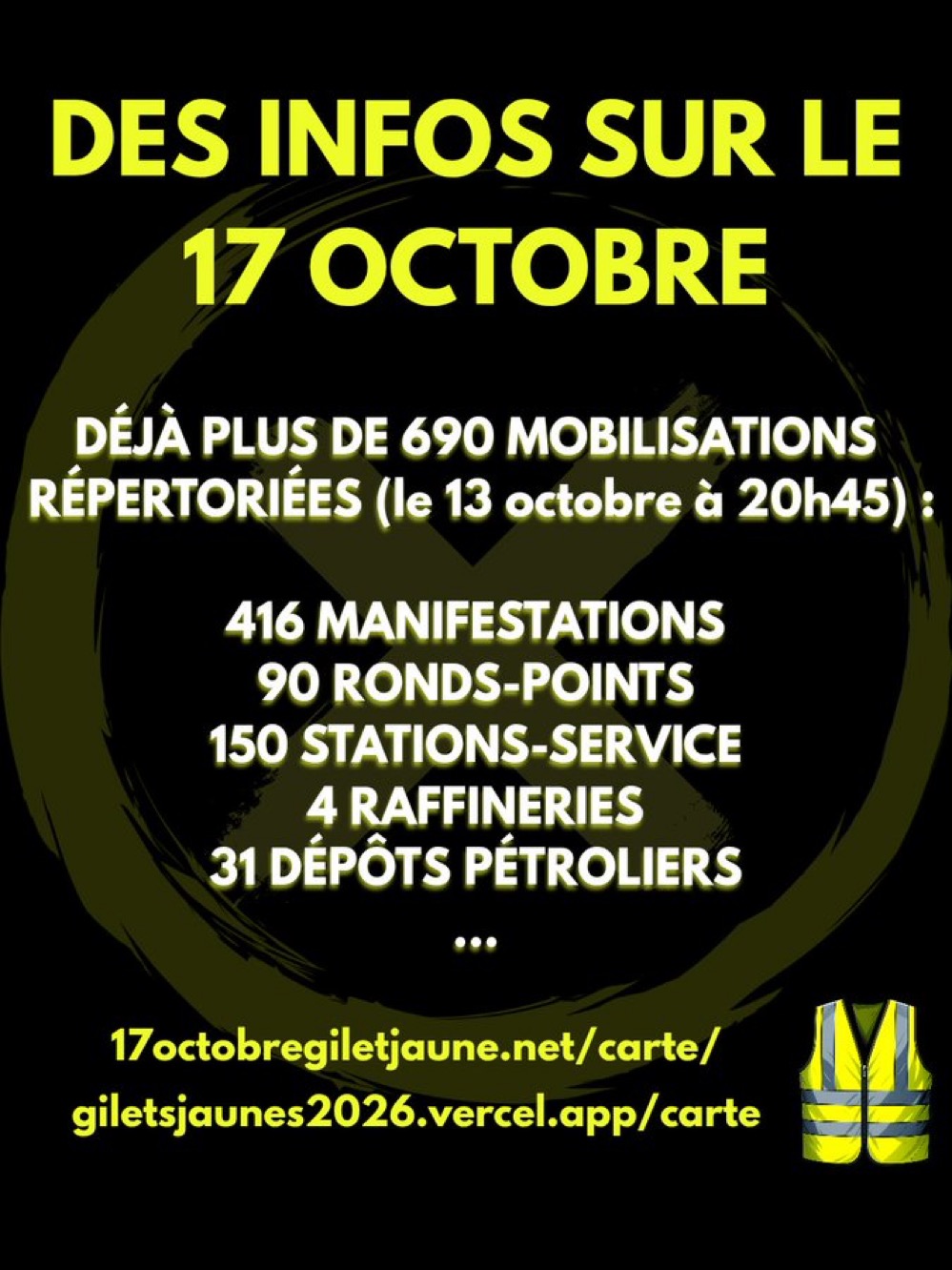
A flyer circulated by the call's supporters on the evening of October 13 pushed the count higher still: more than 690 mobilizations listed as of 8:45 p.m. that night, including 416 demonstrations, 90 roundabouts, 150 service stations, four refineries and 31 fuel depots. Like the map figures, these are the organizers' own tally of announced actions, not verified events.
The Students' Demands, Widen
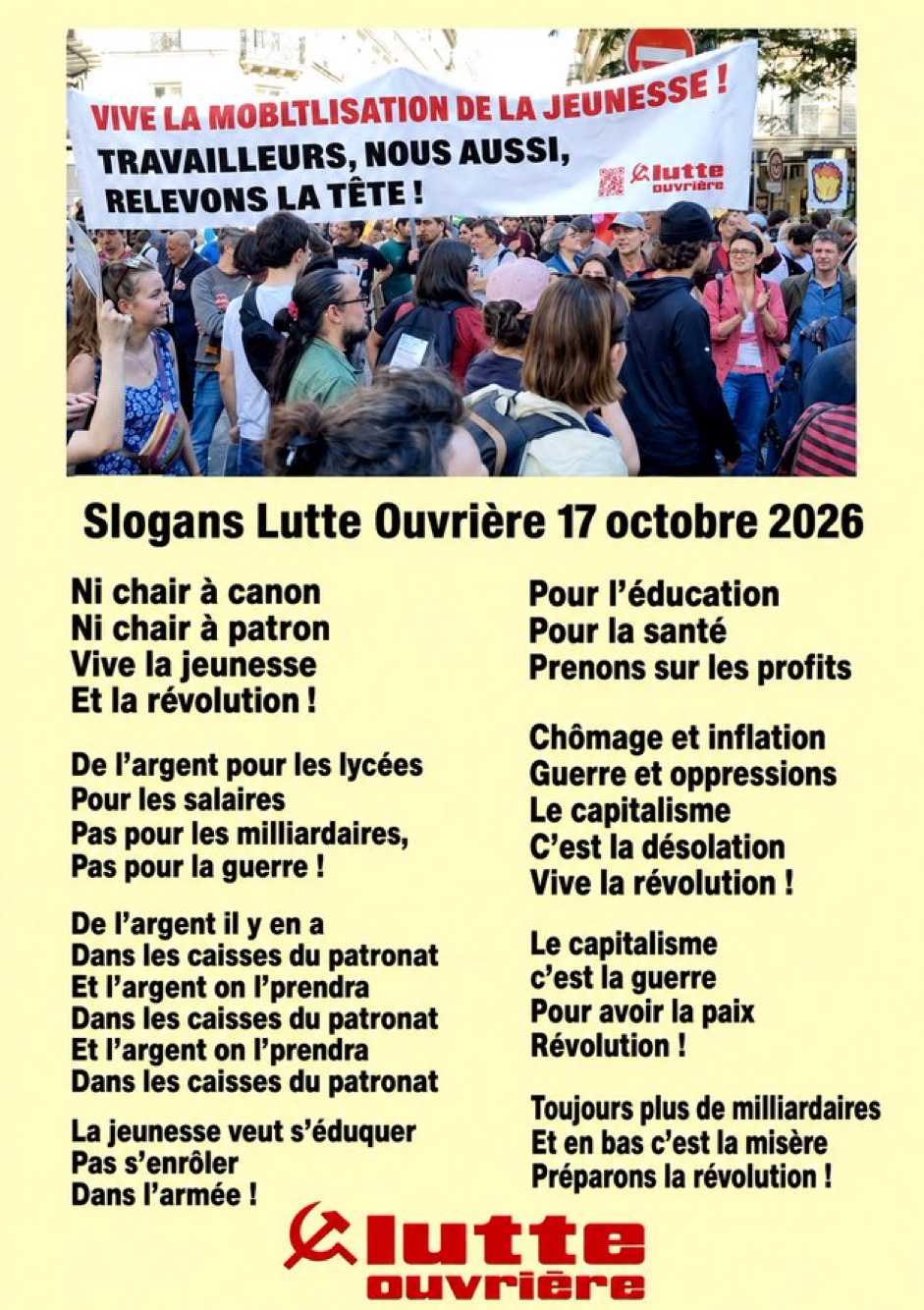
The flyers themselves trace the trajectory the students began. One graphic lists the school complaints side by side with the wider ones: a public hospital "in ruins," high schools without teachers, poverty rising — "C'est son bilan!" (that is his record, it says over a photograph of President Emmanuel Macron). Another names the daily ledger of the cost of living — rent, groceries, gasoline — and adds, "On ne s'en sort plus": we cannot get by anymore.


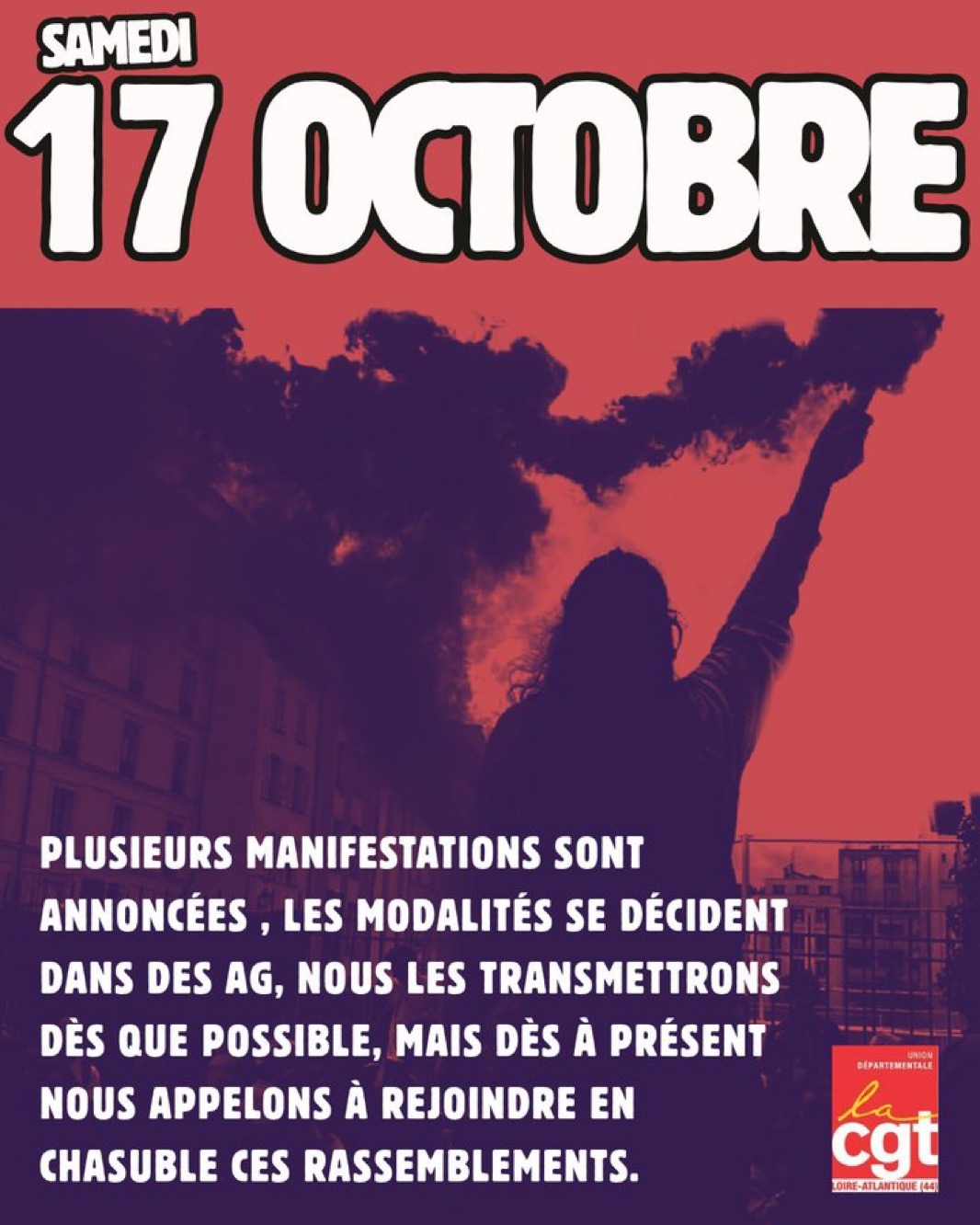
Established organizations have begun to converge on the date. Sophie Binet, general secretary of the CGT, France's largest union confederation, announced on October 12 that the CGT would support the mobilization "everywhere the conditions are met," and called for continued support for the high school students (Sud Ouest/AFP). Political backing came earlier: Communist Party leader Fabien Roussel endorsed the call on September 11, and La France Insoumise parliamentary leader Mathilde Panot on September 15 (Linternaute). Yellow-vest veterans are divided: Jérôme Rodrigues has joined the call, while Maxime Nicolle has urged followers not to gather in Paris (L'Échiquier social).
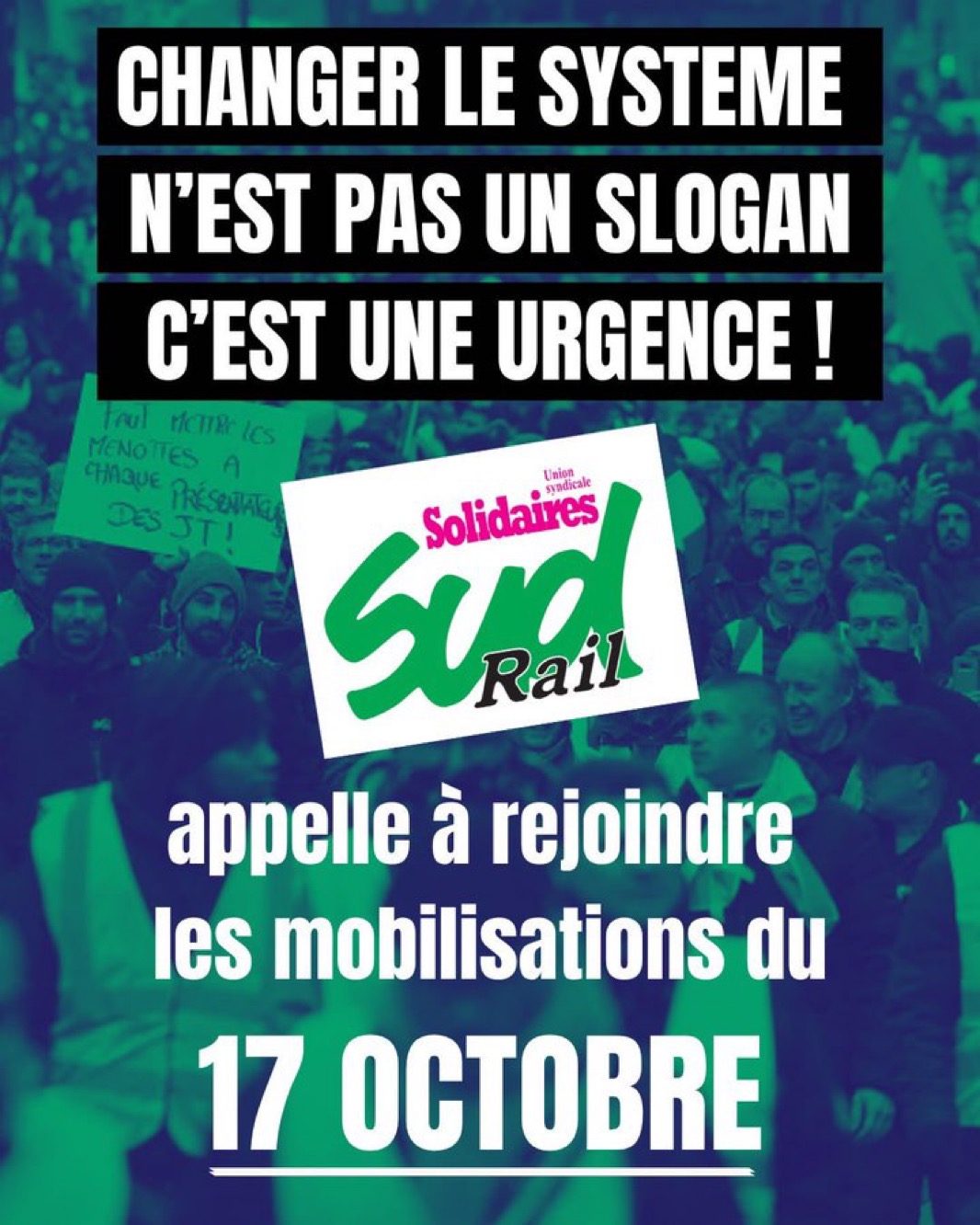
The convergence kept widening in the days before Saturday. The Confédération paysanne, the small farmers' union, called its members out under the banner "Colère noire" — black anger — listing the destruction of public services, police repression, a "sacrificed youth," climate-killing policies, the cost of living and "undignified farm incomes," and naming the day one of "convergence." SUD Rail, the rail workers' union, told its members that "changing the system is not a slogan, it is an urgency" and called them into the October 17 mobilizations. And UNEF, the national student union, summoned high school and university students back into the street — "lycéen·e·s, étudiant·e·s, tou·te·s dans la rue" — for a 2 p.m. demonstration at the place de la République, closing the loop with the students who started it all.


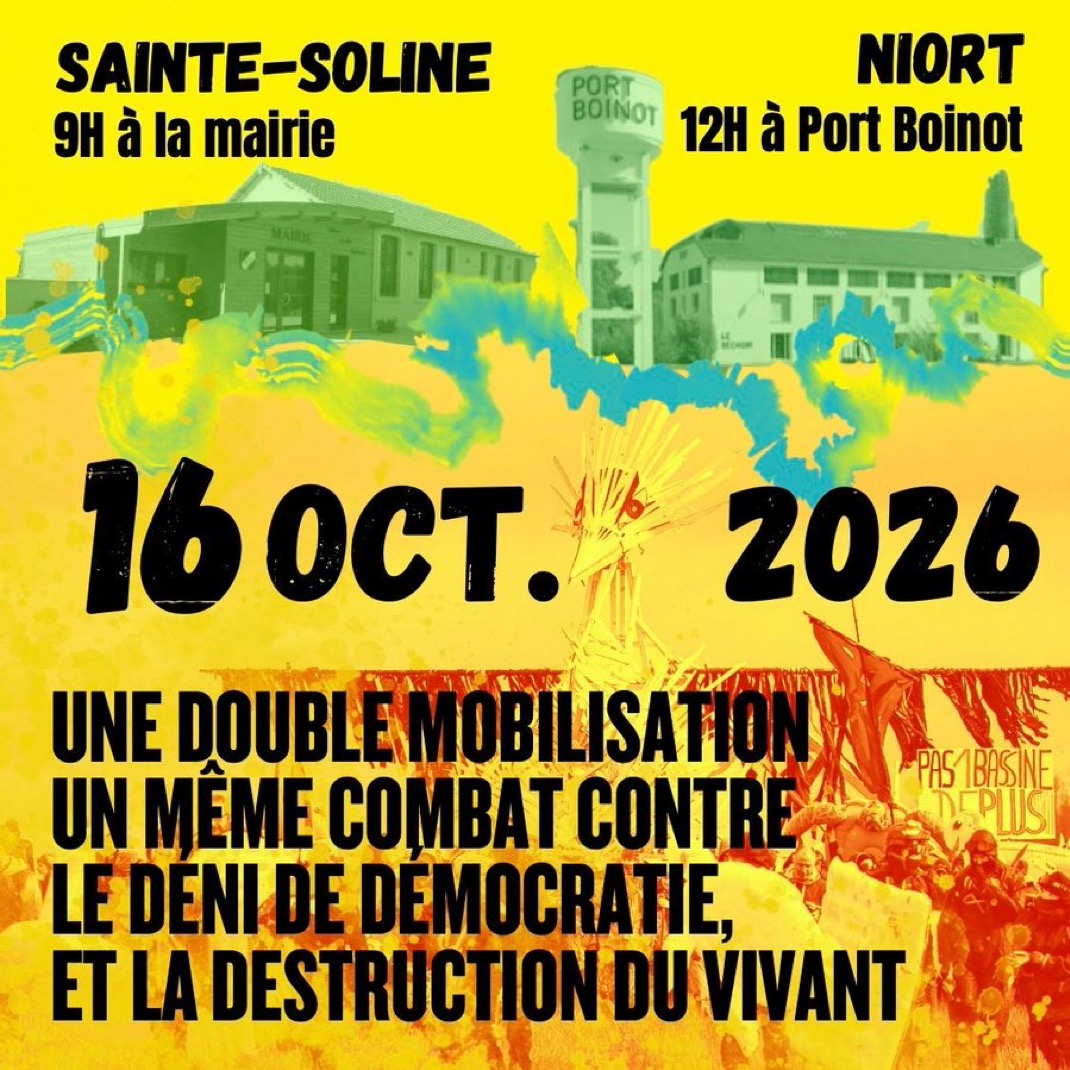
The eve of the day of action has its own announced mobilization. For Friday, October 16, a supplied flyer calls opponents of the contested "mega-basin" water reservoirs to Sainte-Soline at 9 a.m., and to Niort at Port Boinot at noon, framing it as "a double mobilization, one same fight against the denial of democracy and the destruction of the living" — presenting the environmental appeal as part of the same week of anger.
One union of commerce workers, the SCID, has published a seven-point program that reads like a list of what the students' school crisis opened: affordable living, dignity at work, a fairer distribution of wealth, access to health care, postal services in every neighborhood, equal education and dignified transport (SCID). That the same list covers classrooms, hospitals and gasoline stations is the clearest sign that the students' complaint — a state that spends less and less on the public things — was never only about schools.
A Red-and-Black Memory
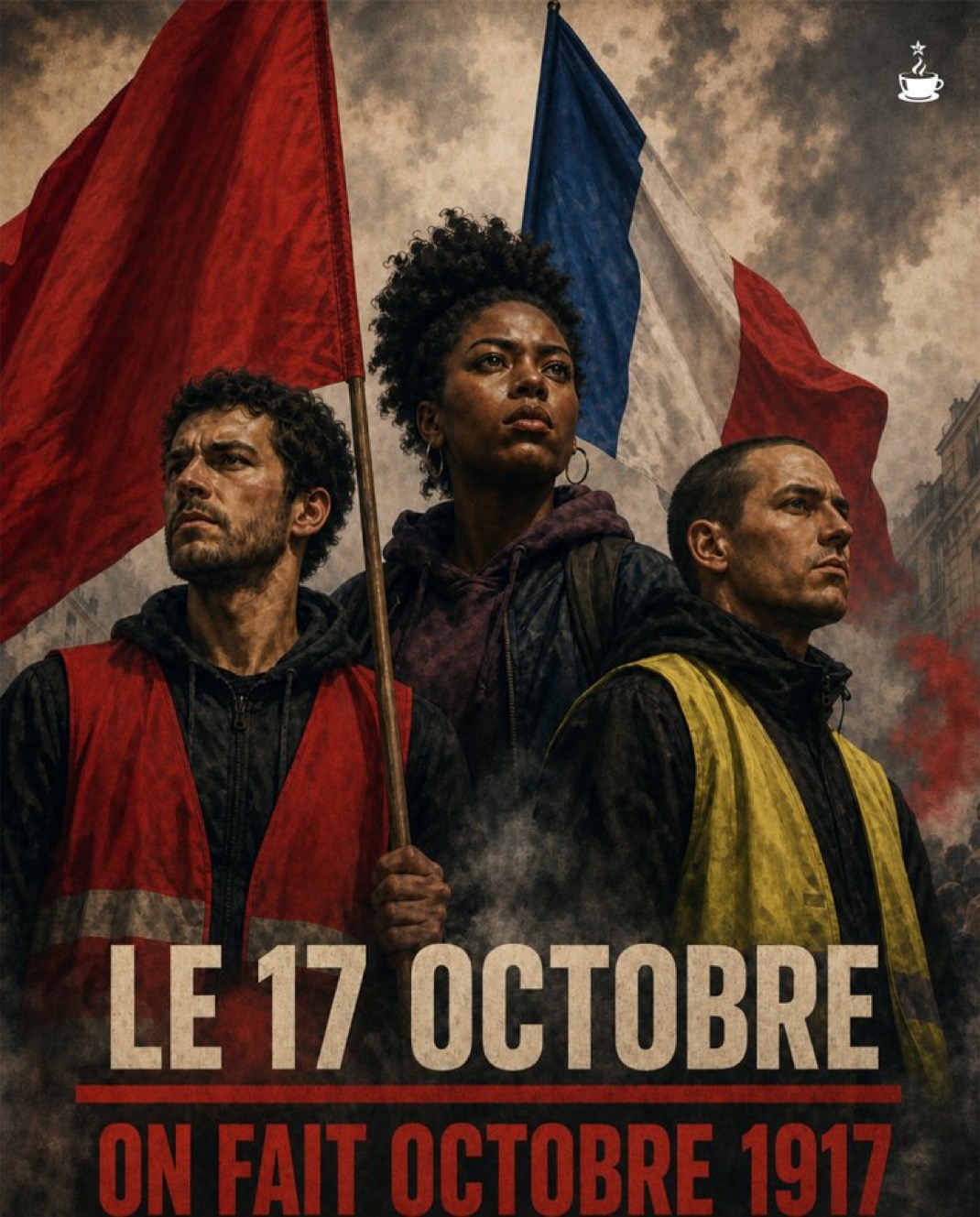
The flyers are heavy with history. Several are built on imagery of the French Resistance — the varied networks that opposed Nazi occupation and the collaborationist Vichy regime during World War II: one shows a yellow-vested figure holding a tricolor flag marked with the Cross of Lorraine before the Panthéon, whose inscription — "To the great men, from a grateful homeland" — is plainly visible. Another reworks a French Communist Party poster from 1946, "Forward... all united! For the triumph of the republican Resistance and antifascist lists," stamping it with "October 17 — Liberation." The visual language is deliberate: this mobilization is presenting itself as a continuation of France's oldest democratic street traditions.


One of the simpler flyers is the most telling. Under a red-and-black engraving-style crowd, it reads, "On met fin à l'époque contemporaine" — we are ending the contemporary era. However one reads its politics, it reflects the sense among organizers that the price crisis has pushed France past something.

The Price of Gasoline by the Numbers
The fuel figures help explain the anger. Average prices in mid-September stood at about €2.11 (US$2.36) a liter for SP95-E10 gasoline and about €2.35 (US$2.63) a liter for diesel, with the price of oil above 100 dollars a barrel and taxes making up roughly 45 percent of the pump price (Public Sénat). Some stations have sold diesel at nearly €3.00 (US$3.36) a liter (actu.fr).
The dollar equivalents use the European Central Bank’s October 15, 2026 reference rate of €1 = US$1.1208, rounded to the nearest cent; they are comparisons per liter, not American per-gallon prices (ECB).
The call's organizers add a structural argument: refining margins. Their site reports, citing government energy data, that the gross refining margin has multiplied by 4.4 between the 2025 average and August 2026, and is 8.4 times its level at the start of President Macron's first term, while distribution margins stayed stable (17octobregiletjaune.net). Those figures come from the organizers' compilation of official data and are presented here as their claim.
What to Watch on Saturday
Three questions will be answered in the streets. First, how many turn out — the calls are diffuse, and Saturday's first day of the school vacation could cut both ways. Second, whether the teachers, unions and students who marched on Tuesday reappear alongside the yellow-vest callers, or whether the two currents remain separate. Third, how the police respond, after two weeks in which arrests and detentions of students have already become a national controversy. The story has already traveled well beyond France. Brazil's Itatiaia network opened a report this week with the headline "Student protests return to the streets of France," tracing Saturday's call back to the school blockades (video, in Portuguese).
HistorianSpeaks will report the verified figures — attendance, arrests and injuries — once they can be confirmed, rather than the estimates circulating on social media.
Ask the Historian
Have a question about this story, or an idea for a future post? Send it here.