
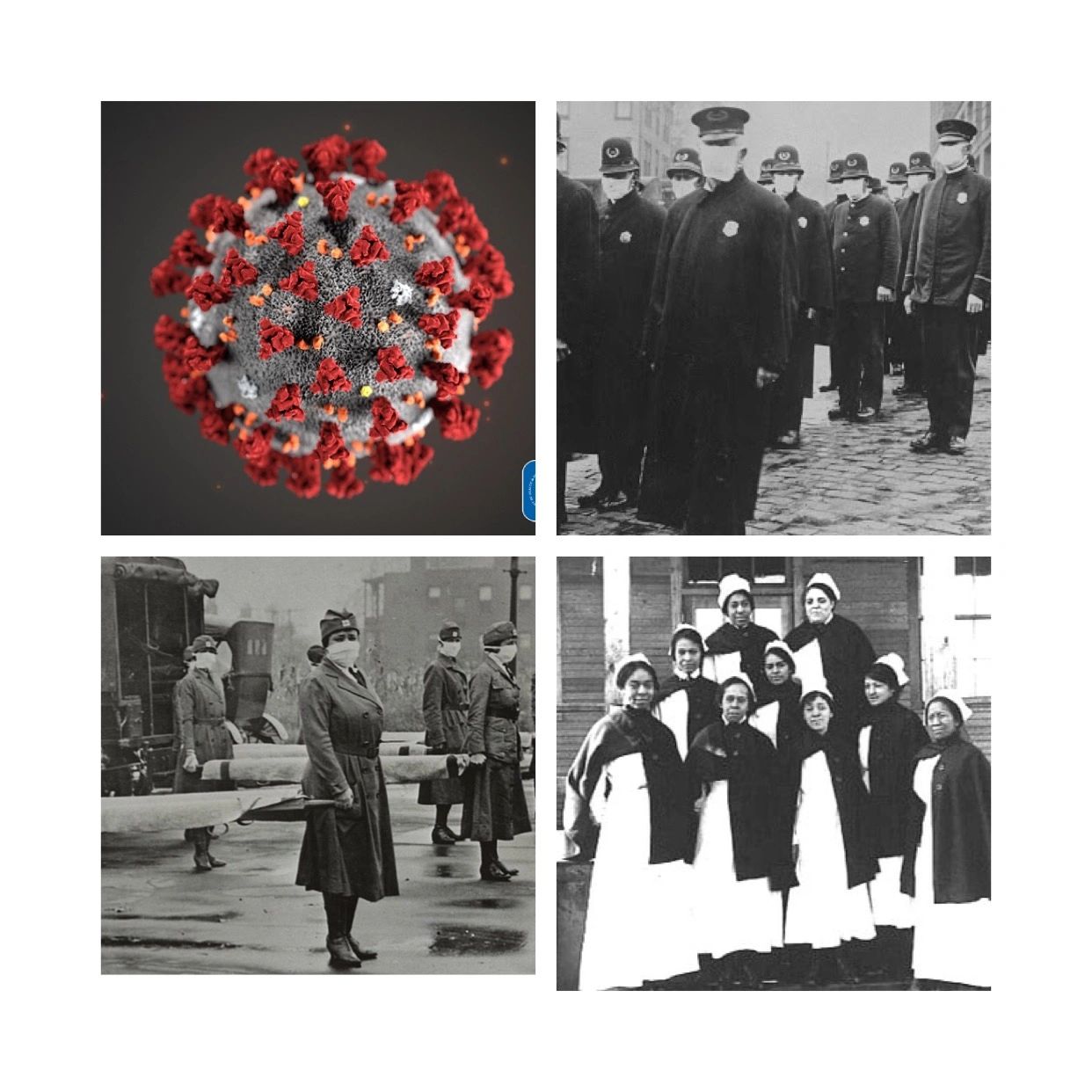
The Coronavirus Pandemic(COVID-19) developed less than two months ago, yet it has taken the world by storm. Although researchers traced its genesis to China, the pandemic is presently a global crisis So far, the deadly virus has infected more than 145,369 individuals globally , claiming the lives of 5,429 persons . Efforts to contain the virus have been uneven at best. In Asia, containment and mitigation have begun to make tangible impact. For example, coronavirus cases are decreasing in China and South Korea. In Europe, however, the virus continues to spread at an exponential rate. In Italy, the entire country is on lockdown. In the United States, the infection rates have unfortunately increasedto more than 2170 cases and more than 48 deaths. Major universities such as Stanford University in Palo Alto, California, Ohio State University in Columbus, Ohio and Rice University in Houston, Texas, to name only a few, have suspended face-to-face classes.
Despite how devastating and novel the coronavirus seems at present, pandemics are not new. Approximately 100 years ago, the world was in the throes of another major pandemic: the Influenza or colloquially known as the Spanish Flu of 1918-1920 (HINI).Like the coronavirus pandemic, it also had a global effect. It killed between 20 to 40 million people. It began in the Spring of 1918 and re-emerged in the Fall and Winter of 1919. It killed swiftly and particularly impacted young people harshly. It affected more than 25 percent of the population. While all sectors of the population were impacted, African Americans were less affected and even played a key role in mitigating the crisis.
When the influenza epidemic moved into high gear, African Americans suffered much lower rates of infection than other populations. Much of this advantage was due to the intense efforts of African American health providers to tackle health challenges in Black communities. Throughout the late 19th and early 20th centuries, African Americans and Black medical providers were plagued by racially essentialist and fatalistic theories about Black mortality and morbidity. Black health practitioners worked tirelessly to combat these stereotypes. They constructed a segregated health care system in urban areas, encouraged proper sanitation and self-care practices. They also established national health programs such as Negro Health Week to promote appropriate sanitary practices.
The influenza epidemic was no respecter of persons. While rates of infection and death were higher in the white community than in the Black community, African Americans were not totally spared by the pandemic. Most of what we know about the epidemic’s impact on Blacks appeared in the Black press. Newspapers such as the Chicago Defender, Cleveland Call and Post, Philadelphia Tribune, and the Baltimore Afro American. Papers featured full news stories and snippets on aspects of the epidemic and its impact on Black communities.
In addition to the personal toll the virus took on Black communities, it also taxed the segregated medical infrastructure. Black women took the lead in addressing the challenge. Already active in the settlement house movement, a late 19th century movement devoted to providing welfare and health servants to immigrants in urban areas, Black nurses and social workers took the lead in providing treatment for infected Backs and whites alike. While some Red Cross nurses in white communities were overwhelmed, Black Red Cross units mobilized to provide help in homes and community centers. Black nurses such as Frances Elliot Davis, a professional nurse at Freedman’s Hospital in Washington, DC; and Aileen Cole, one of the first Black nurses commissioned into the Red Cross Reserve Nurse Corps led the way. Davis became, in 1917, one of the first Black nurses officially approved by the Red Cross. Aileen Coles was a Red Cross enrolled nurse. In 1918, she worked closely with coal miners in West Virginia who were victims of the influenza pandemic. During World War I, more than 90 Black nurses were certified and recruited for service by the U.S. military. Coles immediately volunteered and served in the Red Cross Reserve Nursing Corps and became one of the first black nurses in the military’s Army Nursing Corps. Much of this work, especially in Black communities, was also facilitated by the Urban League, formed in 1910 to address the needs of African Americans in urban areas.
The existence of a segregated health infrastructure illustrated the discrimination against and marginalization of African Americans in the period. It also demonstrated the great odds Blacks surmounted to maintain some semblance of order in a very chaotic situation. Several examples illuminate this point. Hospitals in major urban centers were overwhelmed. After its 75 beds rapidly filled, Philadelphia’s Frederick Douglass Memorial Hospital’s Director, Dr. Nathan Francis Mossell, was forced to open a temporary overflow facility. The “emergency annex” was located on the first floor of a local school nearby. Mossell admitted both paying and penniless patients. He operated the clinic without financial support from the city of Philadelphia, despite the fact that it had opened several similar facilities under its direct supervision.
Similar developments took place in Richmond and Baltimore. In Richmond, Black patients received care in a hospital basement. This situation only changed when the city opened a separate facility staffed by African American doctors but administered by white doctors. Virginia’s governor visited the facility and heralded its ability to operate as a separate entity. In Baltimore, Provident Hospital, the city’s oldest Black hospital, was forced to turn patients away after exhausting its 40-bedspace capacity.
Black nurses, as mentioned earlier, also rendered heroic service. Some contracted influenza while caring for patients. One of the toughest challenges for these nurses was their exclusion from the Army Nurses Corps. In addition to the work of Davis and Cole, one of the pioneers in advancing Black nurses was Adah BelleThoms. Thoms attended the Women's Infirmary and School of Therapeutic Massage, graduating in 1900. She was the only Black woman in a class of thirty. She went on to establish the National Association of Colored Graduate Nurses. This group comprised of 52 nurses devoted to the full Integration of Black nurses into the nursing profession. Thoms also took a leading role in fighting for the inclusion of Black nurses in the armed forces and the Red Cross. Due to her individual and organizational activism as well as the influenza epidemic, the Army was forced to drop its ban. Consequently, Black nurses arrived at Camp Sherman and Grant. Although they lived in segregated barracks, they treated both Black and white soldiers. The story of Black engagement with the influenza pandemic is an important chapter in Black medical history. But for the united approach to remedy the pandemic, the situation of Blacks would have been far more devastating.
On the whole, pandemics are colorblind, yet the way we respond to them is conditioned by our social disposition. At the inception of the coronavirus crisis, anti-Asian propaganda was rampant. Although there are certainly similarities between the xenophobia at present with the racism and Jim Crowism of earlier periods, this moment is distinct from the past. Our challenge at this stage is to work together and recognize how the present reflects the accumulated baggage of the past.
Ask the Historian
Have a question about this story, or an idea for a future post? Send it here.