
Despite intense efforts to curtail its impact, the Coronavirus (COVID-19)is having a devasting impact on the American economy. The stock market has lost almost 10% of its value in the past week . Schools, theaters, and non-essential businesses have all closed. Restaurants have shuttered in-store operations but drive-thru, curbside pickup, and delivery are still available. The Ohio primary were postponed to June 2nd. the Internal Revenue Service (IRS) has extended tax filing to July 15th, California, New York, Illinois, Louisiana, Ohio and Connecticut have issued lockdown, shelter in place orders or stay at home orders. New York and Washington State have received Major Disaster Declarations. While all sectors of the economy have been impacted by the pandemic, workers, who make up the backbone of the working class, are the most vulnerable and the least of us.
Now, although vast economic inequities exist in American society, this situation is being worsened by the current crisis. According to labor statistics, the majority of Americans, about half, live from paycheck to paycheck. Most do not have $400 to cover an emergency. Moreover, most states do not require companies to provide severance for workers who are laid off. These situations are exerting undue pressure on the economic system, and heightened anxiety for workers nationwide.
One of the concerns, among many, is rapid job loss. In a recent survey, Goldman Sachs estimates that 50% of the workforce could be laid off due to closures across all categories of the business sector. The situation results in a 20% unemployment rate—half the unemployment rate during the Great Depression. The number of jobs lost at this rate is around 3.5 million. In the past week, states have begun to record a 9-10% increase in unemployment claims.
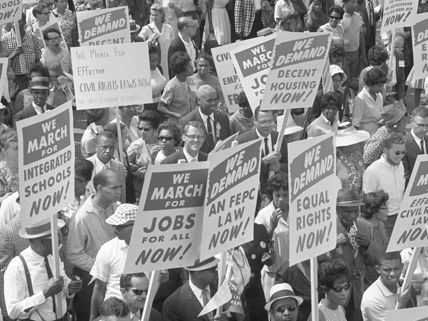
In this bleak economic landscape, when we add race and ethnicity into the mix, we see even greater challenges. Generally, minorities and low-income earners are often the last hired and first fired. Consequently, they occupy a disproportionate number of menial and low-wage jobs. These jobs are extremely vulnerable in the face of public crises such as the current coronavirus pandemic. Although the Black unemployment rate has been declining in recent years, it still outstrips that of whites.
As Blacks face difficulties in the health system, they suffer from a plethora of illnesses and life-threatening conditions. These conditions are heightened by dense living and commuting spaces, especially in urban areas. While the Black middle class may live in better circumstances in the outlying areas of cities and in suburbs, their life outcomes are not better. Black women, regardless of class, face an epidemic of deaths during childbirth. Statistics show that healthcare options are limited and maternal care is extremely uneven. Recent dramatization of these issues has attracted a long overdue attention to it.
Furthermore, other issues such as trust and lack of access to technology also impact Black health conditions. African Americans also have misgivings about medical professions as a whole. In some cases, Blacks are skeptical of practices in the medical profession which, through much of the 19th and early 20th centuries stereotyped African Americans as genetically and biologically inferior. These beliefs instigated abuses such as The Tuskegee Syphilis Experimentsin the 1920s up through the early 1970s. In our contemporary world, the condition of Blacks is still undermined significantly by insufficient care in urban and rural areas due to not just the shortage of physicians and resources but also lack of access to technology including smart phones and internet service.
Rather than simply citing the problems and challenges, a proactive approach to addressing them is essential. The Congress is moving to draft legislation designed to alleviate the stress on critical sectors of the economy including the cruise, hospitality travel business, airlines and small businesses. Moreover, there has been significant discussion about what shape current legislation should take regarding American workers which includes the most vulnerable or better put, the least of us. Some of the best ideas have been encapsulated in the Poverty Amidst Pandemic petition from MoveOn.org, including Some of these proposals are extremely important represent bedrock principles: comprehensive and permanent paid sick leave for all workers; immediate health care for all; a guaranteed annual income for all; a national moratorium on foreclosures, rent hikes and a national rent freeze; an end to utility shut offs; suspension of ICE enforcement; and support for schools to provide continuous remote access learning to all students, among many other ideas. These ideas speak to a deep sense of justice and the restoration of the nation’s moral fabric. As a people, we are duty-bound to ensure the realization of these important proposals to protect the least of us.
Ask the Historian
Have a question about this story, or an idea for a future post? Send it here.