
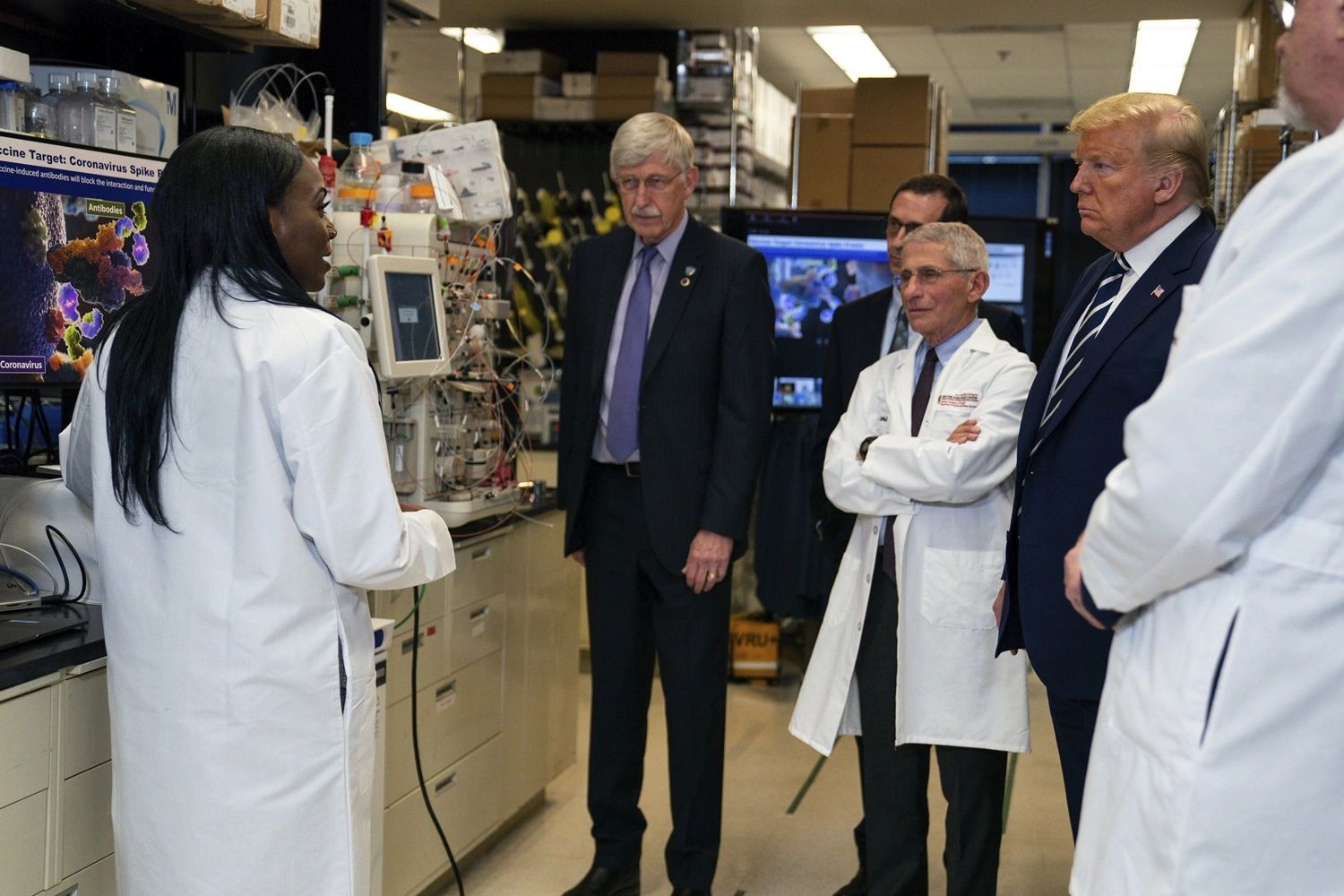
The COVID-19 pandemic has placed tremendous strain on the American health system. As the pandemic intensifies, the number of cases has increased by 90,000 in one month. The current total cases in the US is 188,172. These numbers exceed the cases in Italy and China, which are 101,739 and 82,240 respectively, at their height. Deaths in the United States have surpassed more than 3,899 during the same time period. In the midst of very dynamic situation, the media has focused on presenting white public health professionals as the authoritative voices during this pandemic. The work and opinions of health officials such as Ambassador Deborah Brix, US Global Aids Coordinator and U.S. Special Representative for Global Health Diplomacy; Anthony Fauci, Director of the National Institute of Allergy and Infectious Diseases (NIAID); Robert Redfield, Head of the Centers for Disease Control (CDC), all medical doctors, have been highlighted because of their prominent role as members of the White House Coronavirus Panel led by Vice-President Michael Pence. Despite the visibility of their white counterparts in the public sphere, Black epidemiologists and immunologists are also playing an important, albeit unheralded role. Epidemiologists examine the causation and spread of various diseases in human beings. Immunologists are also critical in combating this pandemic because they manage various conditions impacting the immune system including allergies, asthma and immunodeficiency diseases. One of the most prominent Black scientists on the front lines of the COVID-19 pandemic is Dr. Kizzmekia Corbett, an African American immunologist. Her work is revolutionizing our understanding this infectious disease, and she is taking the lead in the race for a cure by developing a vaccine.
Dr, Corbett is a viral immunologist at the National Institutes of Allergies and Infectious Diseases. Corbett completed her undergraduate education at the University of Maryland Baltimore County. She was a Meyerhoff Scholar and a National Institutes of Health (NIH) undergraduate scholar. She received a B.S in Biological Sciences with a second major in Sociology. Corbett completed her PhD in Microbiology and Immunology at the University of North Carolina at Chapel Hill. Her dissertation, “Dissecting Human Antibody Responses to the Dengue Virus Infection” received several academic rewards.
Corbett is in the forefront of developing a vaccine for COVID-19. She is the lead scientist on Dr. Barney Graham’s Coronavirus team based in Seattle. Graham’s team is studying the spike pattern in the corona virus. Corbett explains: “If you can block the spike protein from binding to a cell, then you’ve effectively prevented an infection.” Corbett and Graham along with a host of other researchers have studied spike proteins in infectious diseases like SARS and MERS. These viruses contain spike structures very similar to COVID-19. Spike proteins are used to develop experimental vaccines. Experimental vaccines for SARS never made it to market because the virus was contained using public health measures. These experimental vaccines are now being redeployed in the current pandemic.
Many Americans are opposed to receiving vaccines, but they are an important component in fighting infectious disease. They are the crowning achievement in the fight, yet they involve may challenges. Despite innovation in technology, genome research and delivery improvements, the process for developing a vaccine is slow. They must be tested in cell cultures, animals and humans, a process that could take years. After the lengthy testing and trial period, the approval process can still take up to a year. While this process may seem painfully slow, it is important to understand the effectiveness and potential side effects before administering the vaccine to the general public.
After receiving the initial data from Chinese in early January that a virus existed, researchers began to genetically map the virus. They quickly identified the letters of the genetic code used to make a vaccine. Corbett and Graham were joined in this activity by researchers in Australia and by three pharmaceutical companies: Johnson & Johnson, Moderna Therapeutics, and Inovio Pharmaceuticals. Inovio received a $9 million dollar grant from the Coalition for Epidemic Preparedness. Corbett and Graham and the Australian team received similar grants.
Graham’s team led by Corbett has a method to fast track the production. They are using the template for the SARS vaccine and putting in enough genetic code to make it applicable for the new virus. Corbett, within a short period, prepared the modified sequence for researchers. The results were shared with researchers around the country. On January 14th, the new sequence was sent to Moderna. Scientists at Moderna will use the genetic information to create what’s called synthetic messenger RNA. The messenger RNA provides instructions for cells protein-making components. These components will produce antibodies to identify the spike protein and fight off infection.
Corbett’s team has begun human trials in Seattle, 66 days after the initial sequence release. The vaccine, mRNA-1273 requires volunteers for the trials. Participants receive two doses and are monitored 28 days apart. The goal is to determine how well the vaccine stimulates a response to the protein on the virus’s surface. Phase II will test a larger number of individuals.
Ask the Historian
Have a question about this story, or an idea for a future post? Send it here.