
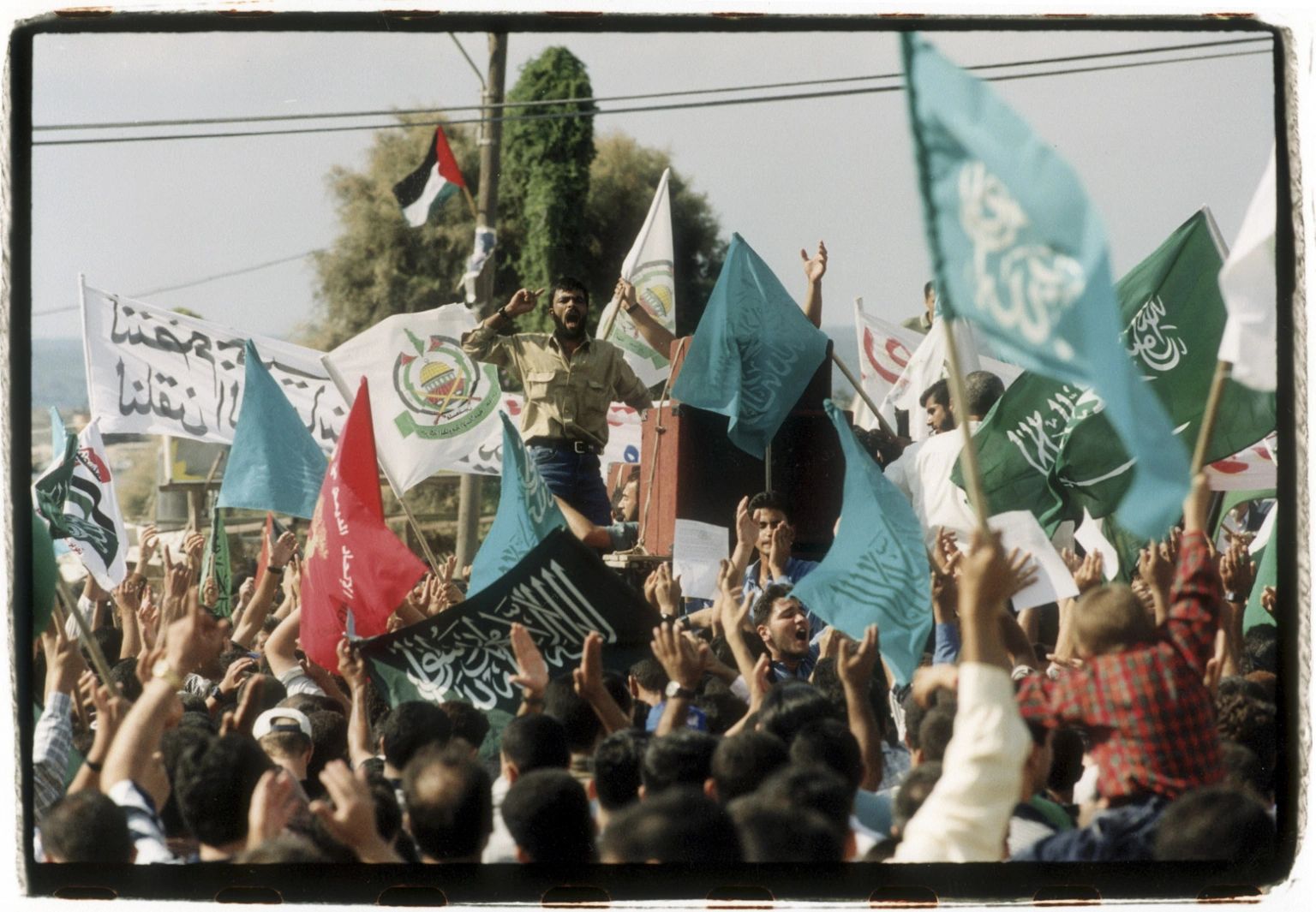
This is the second of several blogs on the conflict in Gaza. Our goal is to deepen understanding of the conflict and shed light on ramifications and its implications for the broader world. This second period of our series on Palestine focuses on the Palestinian conflict from Oslo II up to October 7, 2023. We will follow up with the a blog on the conflict and international efforts to secure a peaceful solution followed by a blog on African Americans and the Palestinian cause. We hope you will think deeply about this information and take action to serve as a constructive force for change in the world.
The second intifada, or uprising, that began in September 2000 after Ariel Sharon, then Israel’s foreign minister, visited the Temple Mount, a holy site for both Jews and Muslims. The intifada lasted until 2005 and involved violent clashes, suicide bombings, and military operations that resulted in thousands of deaths and injuries on both sides.

The Camp David summit in July 2000 and the Clinton parameters in December 2000, which were efforts by U.S. President Bill Clinton to broker a final peace agreement based on the 1993 Oslo Accords. The talks failed to reach a consensus on the core issues of Jerusalem, refugees, borders, and security.

- The Mitchell report in May 2001, which was a U.S.-led committee that investigated the causes of the violence and recommended steps to end it, such as a ceasefire, confidence-building measures, and a return to negotiations.
- The roadmap for peace in June 2002, which was a plan proposed by the Quartet (the United States, the European Union, Russia, and the United Nations) that outlined a phased approach to achieve a two-state solution by 2005. The plan called for an end to violence, political reforms, Israeli withdrawal from Palestinian territories, and final status negotiations.

- The Gaza disengagement in August 2005, which was a unilateral decision by Israel to withdraw its troops and settlers from the Gaza Strip and four settlements in the northern West Bank. The move was intended to reduce friction with the Palestinians and improve Israel’s security and international standing. However, it also created a power vacuum in Gaza that was filled by Hamas, a militant Islamist group that opposes Israel’s existence.

- The Hamas takeover of Gaza in June 2007, which was a violent coup that ousted the Fatah-led Palestinian Authority (PA) from the coastal enclave. Hamas and Fatah are the two main Palestinian factions that have been in conflict since the 2006 legislative elections, which Hamas won. The split between the two groups has created a political and territorial division between the Gaza Strip and the West Bank, where the PA still maintains limited control.
- The Israeli wars with Hamas in 2008-2009, 2012, 2014, and 2023, which were triggered by rocket attacks from Gaza, border clashes, and assassinations. The wars involved Israeli airstrikes, ground incursions, and naval blockades on Gaza, as well as rocket and mortar fire from Hamas and other militant groups on Israeli towns and cities. The wars caused heavy casualties, displacement, and damage on both sides, as well as international condemnation and humanitarian crises.
Lessons from Israel's Wars in Gaza | RAND (An excellent overview including maps and schematic drawings showing the evolution of the conflict)
- The Arab Spring in 2011, which was a wave of popular uprisings that swept across the Middle East and North Africa, challenging authoritarian regimes and demanding political and social reforms. The Arab Spring had an impact on the Israeli-Palestinian conflict, as it reshaped the regional dynamics, alliances, and threats. For example, it led to the overthrow of Egypt’s Hosni Mubarak, a key mediator between Israel and Hamas, and the rise of the Muslim Brotherhood, a supporter of Hamas. It also sparked a civil war in Syria, a close ally of Iran and Hezbollah, two of Israel’s main adversaries.

- The UN recognition of Palestine in 2012, which was a diplomatic initiative by the PA to seek international recognition and support for its statehood bid. The PA applied for full UN membership in 2011, but faced a U.S. veto in the Security Council. In 2012, the PA successfully obtained a non-member observer state status in the General Assembly, which gave it access to some UN agencies and treaties. Israel and the United States opposed the move, arguing that it undermined the peace process and violated previous agreements.
Palestine at the United Nations: A vote for peace and justice - NAD-PLO brochure/Non-UN document - Question of Palestine (UN Document on the importance of recognizing the Palestinian state)
- The U.S.-brokered peace talks in 2013-2014, which were launched by U.S. Secretary of State John Kerry to revive the stalled negotiations and reach a final status agreement within nine months. The talks collapsed in April 2014, after Israel failed to release a group of Palestinian prisoners as agreed, and the PA announced a reconciliation deal with Hamas. The talks also faced obstacles on the core issues, such as settlements, security, borders, refugees, and Jerusalem
Former U.S. Envoy Explains Why Mideast Peace Talks Collapsed In 2014 : NPR
- The Abraham Accords in 2020, which were a series of normalization agreements between Israel and four Arab countries: the United Arab Emirates, Bahrain, Sudan, and Morocco. The agreements were brokered by the United States and marked a historic shift in the region, as they ended the decades-long Arab boycott of Israel and established diplomatic, economic, and security ties. The agreements also reflected a common concern over Iran’s nuclear and regional ambitions, as well as a desire to diversify the Arab countries’ foreign relations. The Palestinians rejected the agreements, accusing the Arab countries of betraying their cause and undermining their leverage.
The Abraham Accords - United States Department of State (Complete overview of the accords including video footage.
These are some of the major events and developments that have shaped the Palestinian conflict since 2000. The conflict remains unresolved and volatile, as both sides continue to face political, security, and humanitarian challenges. The prospects for a lasting peace depend on the willingness and ability of the parties to address the root causes of the conflict and the role of the international community in facilitating and supporting a negotiated solution.
Ask the Historian
Have a question about this story, or an idea for a future post? Send it here.