
Sunnie Rucker-Chang, PhD is Associate Professor of Slavic and East European Studies and affiliate faculty in Women’s, Gender, and Sexuality Studies, Film and Media Studies, and the Nathaniel R. Jones Center for Race, Gender, and Social Justice at the University of Cincinnati. She is also Director of the University of Cincinnati STARTALK Workforce Development Media & Year-round Student Immersion Program, Diversity, Equity, and Inclusion Lead for the Institute for Research in Sensing (at the University of Cincinnati), and a Co-Director of the Russian, East European, and Eurasian Studies Undergraduate Think Tank, which is housed at Howard University. She is the co-author of Roma Rights and Civil Rights: A Transatlantic Comparison (Cambridge, 2020) and co-editor of and contributor to Chinese Migrants in Russia, Central Asia and Eastern Europe (Routledge, 2011).
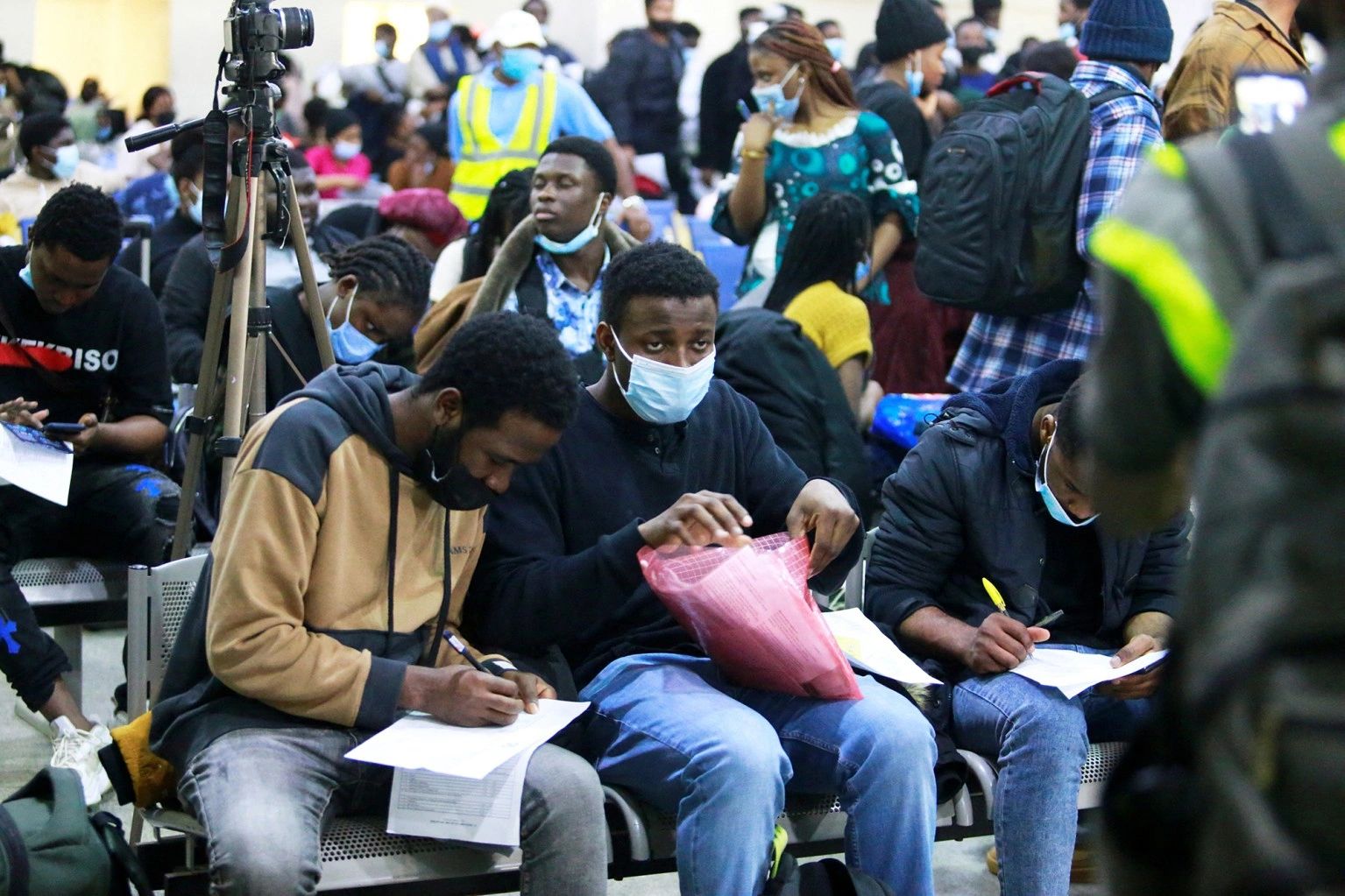
Over 1,000,000 people have been forced to leave Ukraine and made refugees because of Russian imperialism and irridentism. Attempts of many people of color to leave Ukraine have been impeded by border officials who refuse or delay their passage. This is not unique or unexpected. Rather, these stories underscore the globality of anti-Black racism. In fact, anti-Black racisms and coloniality lie at the foundation of European identity and Western modernity. Blackness travels and translates in myriad ways, and transnational anti-Black racism is global and easily recognizable, but what constitutes race and racism(s) is nimble and dependent on both global and local constructs. If we can recognize that imperialism produces racial hierarchies, then we must acknowledge that different imperalisms produce different local notions of race and racial hierachies.
Russian imperialism and irridentism are existential threats for Ukrainians as contemporary articulations posit that Ukraine is not its own country, but is, or at least should be, a part of Russian territory as it was in the Russian and Soviet Empires. Racialization is implicated in these ideas. However, to understand its intricacies necessitates including not only Black and brown people, but also Jews and Roma whose biological racialization has a deep history, in part, because of Russian and European eugenics movements. Also implicated in these constructs are European “nested” racisms that establish a hierarchy of Europeanness, or being unmarked or “white,” versus who is “white but not quite,” as a result of a country’s history of state-socialism or religious belonging. That Ukrainians have become “white” in Western media, highlights that “white” as a racial category conveys a span of meanings depending on the context and that race relies on its “symbolism and invisibility.”
The 1990s Yugoslav wars, specifically the Bosnian war (1992-1995), which apparently a great percentage of the world has forgotten, were also a byproduct of imperialism based, in part, on the constructed Otherness of the majority-Muslim state of Bosnia which Serbian military leaders used to justify committing genocide against them. The “West” misunderstood (ignored?) the Bosnian war, and were slow to respond to Serbian aggression, but ultimately evoked the language of “never again” thereby associating the Bosnian genocide with WWII, recognizing, perhaps inadvertently, the ethno-religious racialization of Muslims in Bosnia as similar to Jews in WWII. Relational power imbalances and patterns of racialization are currently on display in Ukraine. Ukrainians are being afforded a transitional, if not conditional, whiteness because of their place in the global color line. However, the continued war and utter disregard for Ukrainian life by Russian soldiers illustrates the Ukrainian position within the local racial order. Broad inability to see it any other way must be acknowledged as an internalization of a global color line as well and a particular racial imaginary that centers colonial constructions of race. To stand up against anti-Black or anti-Roma racism and antisemitism is to be in defense of anti-imperialism. To stand with Ukraine is as well.
Ask the Historian
Have a question about this story, or an idea for a future post? Send it here.