
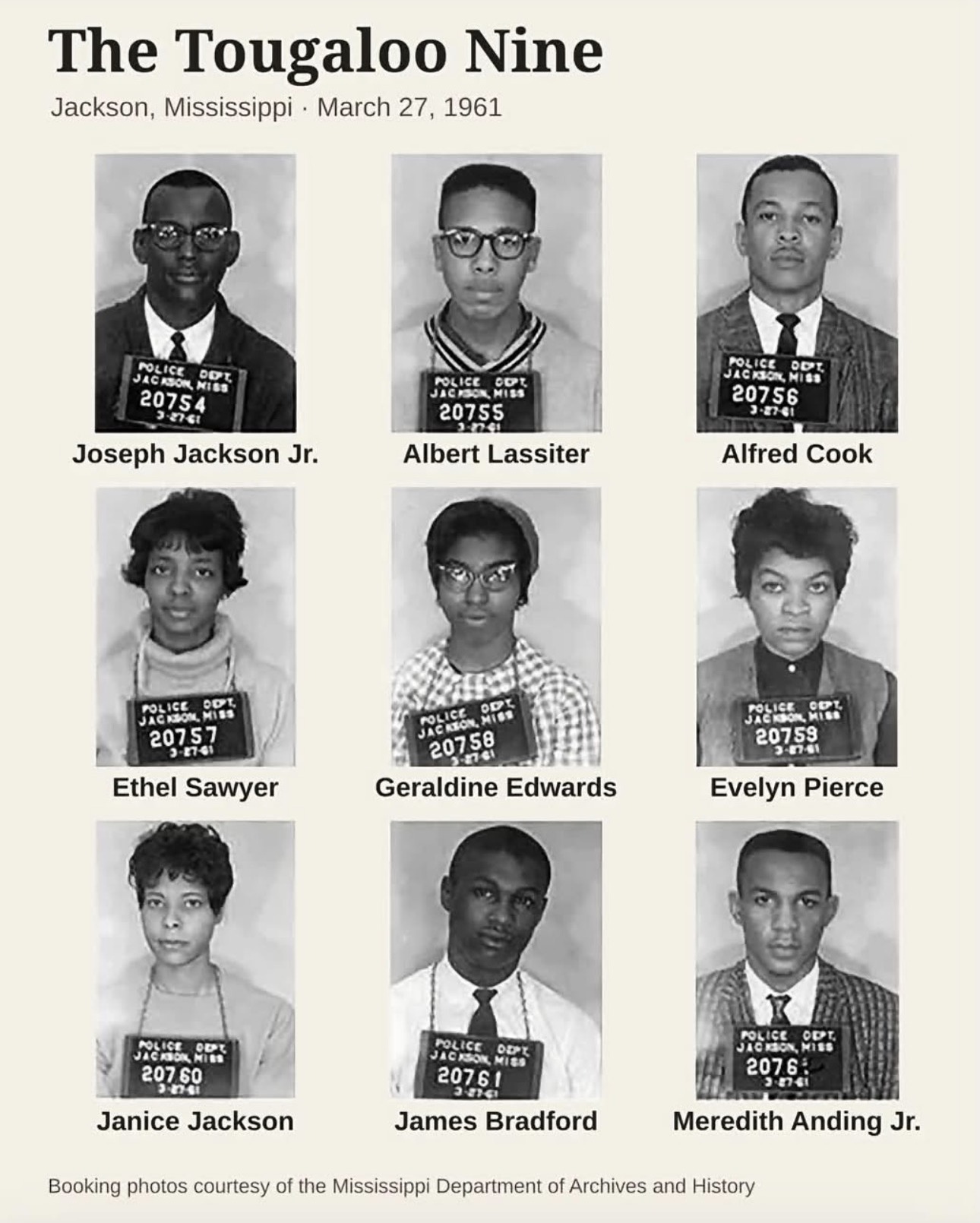
On March 27, 1961, nine students from Tougaloo College walked into the Jackson Municipal Library, a building reserved for white patrons, took books from the shelves and sat down to read. Within the hour, Jackson police arrested them for "breach of the peace." They spent roughly 32 hours in jail before their release. Sixty-five years later, Scott Colom took the stage at the same college as Mississippi's first Black senator-elect since Reconstruction, and the first ever chosen by a popular vote.
The line between those two moments is not a coincidence of geography. It is a record of organizing.
Nine Students, One Library and a Plan
The "read-in" was not spontaneous. The students belonged to the Tougaloo chapter of the NAACP Youth Council, and they planned the action with Medgar Evers, the NAACP's Mississippi field secretary. Evers had pressed for direct action in Jackson for years. The library was a deliberate target: a public institution, paid for by Black taxpayers, closed to them by law and custom.
Four young women and five young men took part: Joseph Jackson Jr., Albert Lassiter, Alfred Cook, Ethel Sawyer, Geraldine Edwards, Evelyn Pierce, Janice Jackson, James Bradford and Meredith Anding Jr. Their booking photographs, numbered 20754 through 20762, now sit in the state archive that once served a segregationist government. The faces in them are composed and unafraid.
The City Answers With Dogs and Clubs
The arrests did not end the protest; they widened it. The next day, students at Jackson State College gathered to march in support. Police met a later march with tear gas, clubs and police dogs. The nine were tried, convicted and fined, with suspended jail sentences. The city's message was meant to be final.
It was not. The read-in was the first student direct-action protest in Jackson, and it opened the door to the Freedom Riders, who arrived in the city weeks later, and to the Jackson Movement of 1963. Evers led that movement until a white supremacist murdered him in his driveway on June 12, 1963.
Tougaloo as a Movement Institution
Tougaloo College, founded in 1869 by the American Missionary Association, became one of the few places in Mississippi where organizers could meet, plan and recover. Faculty and students helped stage the 1963 Woolworth's sit-in. The campus hosted freedom schools, Freedom Summer volunteers and the planning that produced the Mississippi Freedom Democratic Party. White officials called it a "cancer." Its students called it a base.
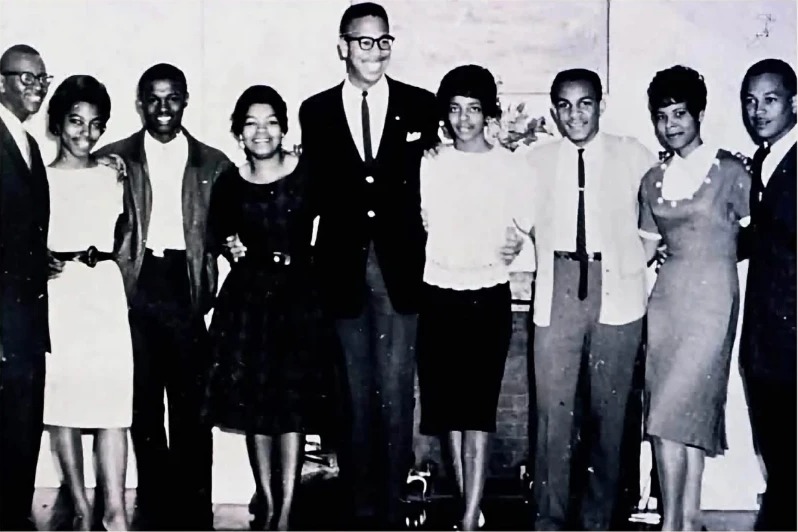
That institutional memory is the point. Movements do not survive on single acts of courage. They survive because places like Tougaloo keep the knowledge, the networks and the relationships alive from one generation to the next.
From the Library Steps to the Senate Floor
Colom's victory was narrow: 473,336 votes to Cindy Hyde-Smith's 468,667, a margin of 4,669, according to the Associated Press, which called the race on Nov. 11. Commentators rushed to explain it as a candidate story or a national wave. The Tougaloo stage tells a different story.
The voters who carried Colom were organized the way the Tougaloo Nine were organized: church by church, campus by campus, family by family. Black Mississippians built that capacity across six decades, through the Freedom Democrats, through the long fight to enforce the Voting Rights Act, and through the slow work of registering, driving and calling voters when national money looked elsewhere. As we have argued throughout our Southern organizing series, grassroots, multigenerational organizing won this election, not consultants.
Choosing Tougaloo for that moment was an act of historical accounting. A college whose students were jailed for reading a library book sent a senator-elect to Washington. The nine did not sit down to read so that one man could win an office. They sat down so that Black Mississippians could claim every public space and every public right. Colom's win is one return on that investment, not its conclusion.
What the Nine Still Ask of Us
The read-in asks a simple question that remains current: who is a public institution for? In 1961 the answer was a library. In 2026 it is the ballot itself, as courts narrow the Voting Rights Act and legislatures redraw districts. The Tougaloo Nine answered with their bodies and their names. Those names deserve to be said as often as the senator-elect's.
---
Why your support matters
Liked this story? Get one like it in your inbox every week.
HistorianSpeaks is independent and reader-supported. No corporate owners, no paywall on the daily history. Every member keeps stories like this one coming.
Free
Newsletter
The weekly dispatch in your inbox.
Founding member
$9.99/month
Price locked for life, founder recognition and full Black Thread magazine access.
Become a founderAsk the Historian
Have a question about this story, or an idea for a future post? Send it here.