

In the past two weeks, Americans got an unwelcome lesson in how fragile the digital world is. Bank transfers stalled. Microsoft and Apple services went dark. A key system at the National Security Agency shut down, and for a time every commercial flight in the United States was grounded. Officials say they have found no evidence of a coordinated attack. As The New York Times reported on November 21, the more unsettling explanation is that artificial intelligence is now uncovering old flaws buried in decades-old software faster than anyone can fix them, and the rushed repairs are breaking things too.
That makes this a good moment to ask a basic question: what is cybersecurity, and who built it? The answer reaches back eighty years, to a segregated office in Virginia where Black codebreakers did some of the country's most sensitive work.
Three Jobs Behind Every Screen
Cybersecurity is the work of keeping computer systems and the information inside them safe. Experts boil it down to three jobs.
- Keeping secrets secret (confidentiality). Only the right people should be able to read your bank records, medical files or military plans. Codes and encryption do this work.
- Keeping information honest (integrity). No one should be able to quietly change a payment, a vote count or a flight schedule. The flaws AI is finding now, such as the "Upload2Shell" bug in Ghostscript, a 38-year-old program for handling images and documents, threaten exactly this.
- Keeping systems running (availability). Power grids, hospitals, airports and payment networks have to stay up. When they fail, working people who depend on paychecks, transit and instant payments feel it first.
Long before the word "cyber" existed, these were the jobs of cryptology: making codes and breaking them. That is where the Black history of cybersecurity begins.
The Codebreakers in the Segregated Unit
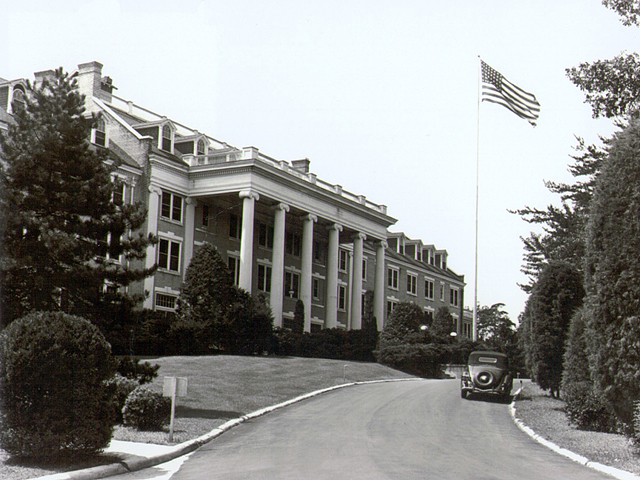
During World War II, the Army's Signal Intelligence Service worked out of Arlington Hall, a former girls' school in Virginia. Most of the first Black employees were hired as messengers, carrying papers between white analysts. In early 1944, the chief of codebreaking was told to hire about one hundred Black workers and give them meaningful work. With the help of his messenger, William D. Coffee, he created the agency's first all-Black codebreaking unit.
Coffee was no accidental hire. Born in 1917 in Abingdon, Virginia, he earned a bachelor's degree in English from Knoxville College, a historically Black college in Tennessee, and served in the Civilian Conservation Corps from 1937 to 1940. Like many college-educated Black men of his generation, he found that a degree did not open federal office doors. Arlington Hall hired him in 1942 as a janitor and houseman, then made him a messenger. When the agency finally agreed to open professional work to Black employees, Coffee used his own campus and church networks to recruit roughly one hundred college graduates, many from HBCUs, and became the day-to-day leader of the new unit.
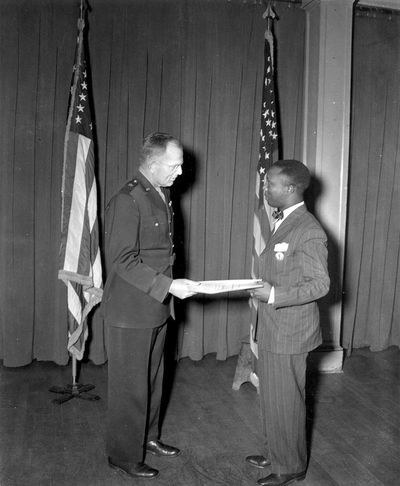
The unit's job was to identify, decode, translate and route coded commercial messages from many countries, traffic that could reveal how enemy governments moved money and goods. A white supervisor was nominally in charge, but Coffee ran the office day to day. He also recruited more Black talent into a field that had shut them out.
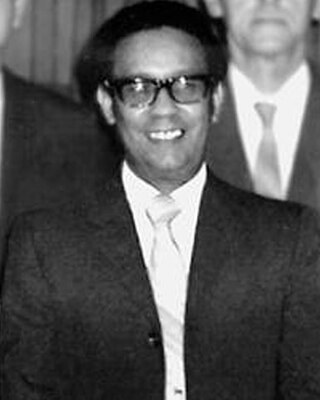
Herman Phynes was a Washington, D.C., native who graduated from Howard University in 1941. Despite his degree, the only federal jobs offered to him were clerical posts at the Internal Revenue Service and the War Department, and he tried real estate and insurance before joining the Signal Security Agency in March 1944 as a cryptanalytic aide. His training at Howard, steeped in mathematics and close reading, suited the work. He rose to head the unit's most technical section, which attacked enciphered messages, and in February 1947 he was named officer-in-charge, ending the unwritten rule that a Black unit needed a white supervisor. Over a 31-year career he stayed through the birth of the National Security Agency, reached the senior civil-service grade GG-16 and became the NSA's first Black office chief in its Operations Directorate.
Coffee received the Army's Commendation for Meritorious Civilian Service in 1946 and retired in 1972. The NSA inducted him into its Cryptologic Hall of Honor in 2011.

Out of the Basement
Minnie McNeal Kenny was hired in 1951 and was part of the first group of Black workers allowed to work upstairs in the Operations Division rather than in the basement. She became an expert in codebreaking, languages and traffic analysis, chaired the NSA's Language Panel and served as deputy commandant of the National Cryptologic School. In the 1970s she pressed for every analyst to have a computer, years before that was normal. She also fought for equal opportunity inside the agency. The NSA inducted her into its Cryptologic Hall of Honor in 2009.

Their careers show a pattern that runs through Black history: people barred from the front door who ended up holding the keys.
The Hardware That Lets Computers Talk
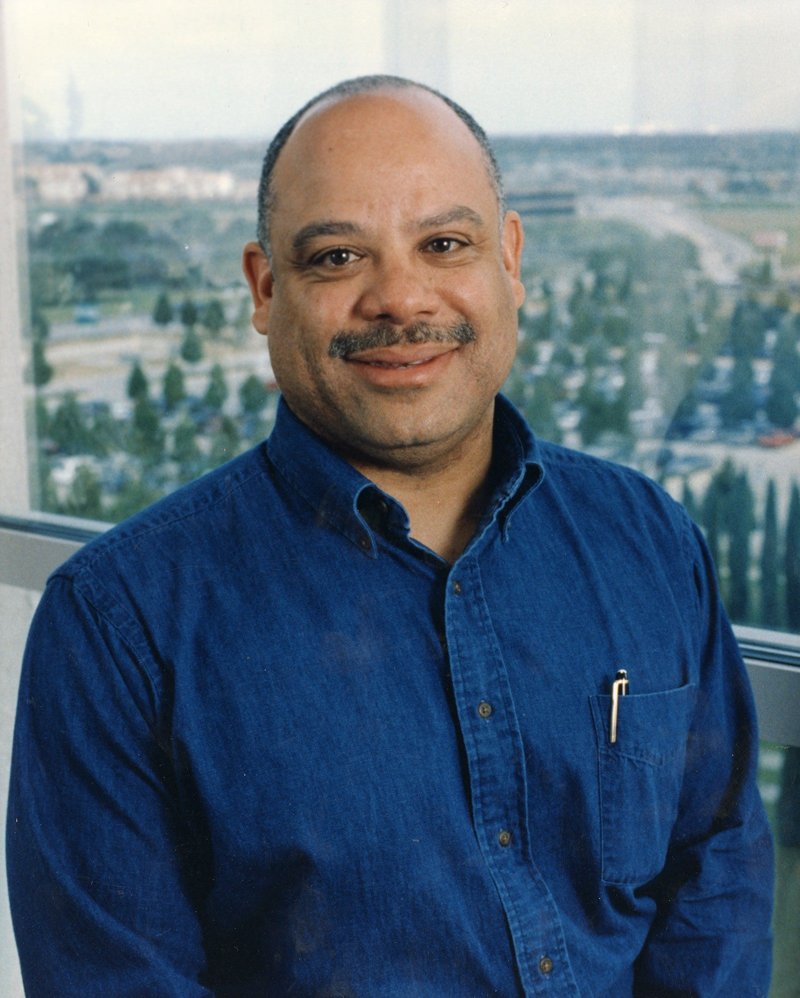
Security depends on machines, and machines depend on design. Mark Dean, PhD, an IBM engineer, holds three of the nine original patents on the IBM personal computer. His work included the ISA bus, the shared pathway that let a computer talk to printers, disk drives and other parts. Much of the modern office, and the security systems that guard it, sits on standards that grew from that work.

HBCUs on the Front Line
Today, historically Black colleges and universities are training the next generation of defenders. Morgan State, Bowie State, Hampton, Norfolk State and North Carolina A&T are among the HBCUs recognized in the federal National Centers of Academic Excellence in Cybersecurity program, run with the NSA. Their graduates go into government agencies, banks and tech companies, the very places shaken by this month's outages.
That matters for more than jobs. The people who design and defend systems decide whose data is protected and whose communities are watched. Black Americans know from long experience that surveillance tools have often been pointed at them, from the FBI's war on civil rights groups to modern facial recognition. Having Black experts inside the field is part of keeping security from turning into control.
Why This History Matters Now
The outages of November 2026 are a reminder that the digital world is built and kept running by people. Some of the first of those people worked in a segregated office, decoding the world's secrets while their own country denied them equal rights. We will keep watching this story and update this piece through the end of the month.
If you value history that connects yesterday's struggles to today's headlines, join HistorianSpeaks for free, or become a $9.99 Founding Member and help us keep building.
Further Reading on HistorianSpeaks
Live updates
Latest
Who controls the chips? Nvidia reinstates Jensen Huang
Nvidia's board voted unanimously on November 23 to reinstate Jensen Huang as chief executive, eleven days after he resigned amid reports of extramarital affairs, including one with a former executive whom U.S. intelligence has reportedly examined over alleged contacts with Chinese intelligence. The board said it had received "input from senior levels of the United States government" and was satisfied he "poses no national security risk," after President Trump publicly urged his return. Investigations reportedly remain open. The episode shows how the chips behind artificial intelligence, and the security of the systems built on them, are now treated as matters of national power, with government pressure shaping who leads a private company.
Why your support matters
Liked this story? Get one like it in your inbox every week.
HistorianSpeaks is independent and reader-supported. No corporate owners, no paywall on the daily history. Every member keeps stories like this one coming.
Free
Newsletter
The weekly dispatch in your inbox.
Founding member
$9.99/month
Price locked for life, founder recognition and full Black Thread magazine access.
Become a founderShare Your Thoughts
Tell us what you think of this story. Comments go privately to the editor; your email is never published.
Ask the Historian
Have a question about this story, or an idea for a future post? Send it here.