
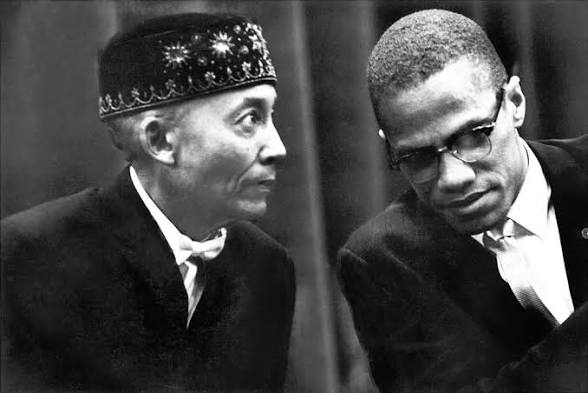
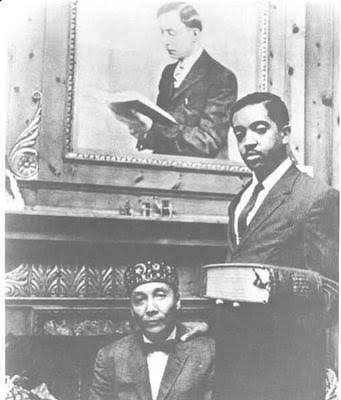
Elijah Muhammad (Oct 7, 1897 - Feb 25, 1975). Born Elijah Robert Poole, religious leader, separatist, self-proclaimed Messenger of Allah who led the Nation of Islam (NOI) from 1933 until his death. He was the teacher and mentor of Malcolm X, Louis Farrakhan, Muhammad Ali and his son, Warith Deen Mohammed.
From Georgia Sharecropper to Detroit Seeker
Elijah Poole was born in Sandersville, Georgia, the son of a sharecropper and Baptist preacher. He left school early, worked in fields and sawmills, and saw the violence of Jim Crow firsthand. In 1923 he joined the Great Migration, moving with his wife, Clara, and their children to Detroit, where he found factory work and, during the Depression, unemployment.
In 1931 Poole heard Wallace D. Fard, a silk peddler who had begun preaching in Detroit's Black neighborhoods in 1930. Fard taught that Black Americans were the original people, that Islam was their true religion, and that Christianity had been used to keep them in bondage. His own origins remain disputed; the FBI later linked him to a man named Wallace Dodd Ford. Poole became his most devoted student. Fard gave him the name Elijah Karriem, later Elijah Muhammad, and made him chief minister. When Fard vanished in 1934, Muhammad declared that Fard had been Allah in person and that he himself was Allah's Messenger.
A Different Faith for the Urban North
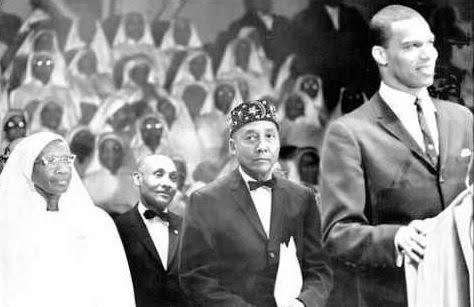
The Nation of Islam offered migrants in Detroit, Chicago and Harlem an alternative to the Black Baptist and Methodist churches that dominated urban religious life. It drew on two earlier movements. From Noble Drew Ali's Moorish Science Temple, founded in the 1910s and 1920s, it borrowed the idea that Black Americans had a lost Asiatic and Islamic identity. From Marcus Garvey's Universal Negro Improvement Association, it took race pride, Black nationalism, self-knowledge and economic independence.
Muhammad preached self-help and self-determination. Members were urged to build their own businesses, schools and social institutions rather than depend on white society. The Nation eventually owned farms, restaurants, bakeries, a newspaper, Muhammad Speaks, and the University of Islam schools. Discipline shaped daily life: no pork, no alcohol, no tobacco or drugs, modest dress, and the separation of men and women in public gatherings and worship. For many converts, especially men coming out of prison, those rules meant a new life.
Persecution and Prison
Muhammad's early years as leader were dangerous. Rival factions threatened him after Fard's disappearance, and he moved to Chicago and spent years traveling under assumed names. Police harassed members, and Detroit authorities clashed with the movement over its schools. In 1942 federal agents arrested Muhammad for refusing to register for the draft; he argued that his followers owed no loyalty to a nation that oppressed them. He served from 1943 to 1946 in the federal prison at Milan, Michigan. He emerged with his authority strengthened and a movement still small but loyal.
The Messenger and Malcolm X
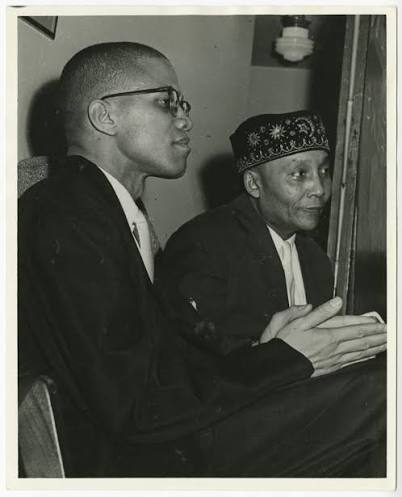
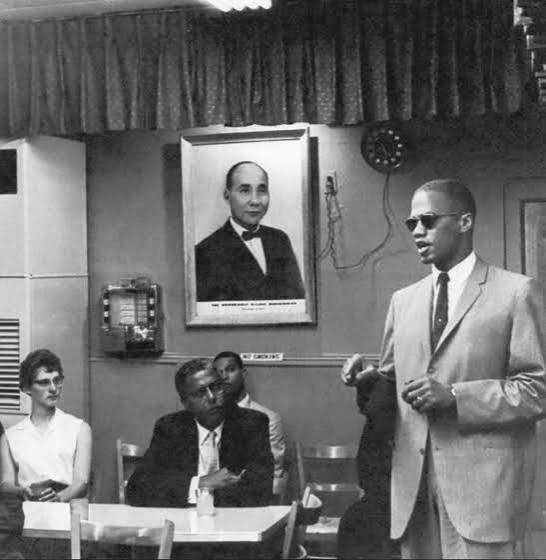
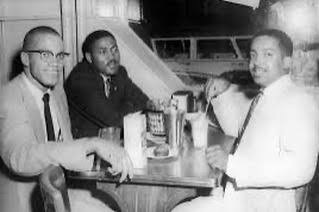
The Nation's great growth came after 1952, when Malcolm Little, converted in a Massachusetts prison, was released and became Malcolm X. Muhammad embraced him as a son and sent him to lead Temple No. 7 in Harlem. Malcolm's speaking power helped expand membership into the tens of thousands, and he helped bring in followers such as Louis Walcott and the boxer Cassius Clay, who became Muhammad Ali.
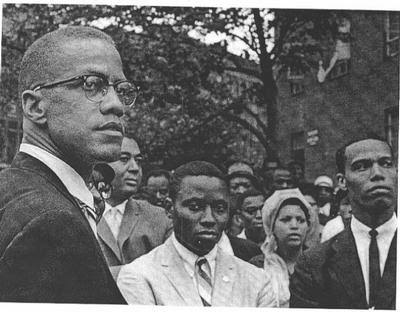
The relationship broke apart in the early 1960s. Malcolm learned that Muhammad had fathered children with several young secretaries, a betrayal of the moral code the Nation demanded of its members; paternity suits soon made the matter public. After Malcolm's remark that President Kennedy's assassination was a case of "chickens coming home to roost," Muhammad suspended him in December 1963. Malcolm left in March 1964, embraced Sunni Islam after his pilgrimage to Mecca, and denounced his former teacher. He was assassinated in New York on February 21, 1965, by men tied to the Nation.
After the Messenger
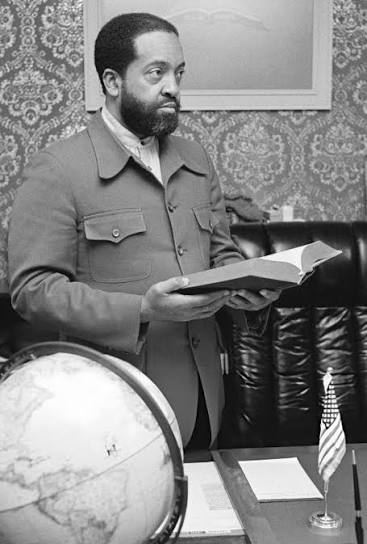
Elijah Muhammad died in Chicago on February 25, 1975. His son Wallace, later Warith Deen Mohammed, succeeded him and quickly moved the movement toward mainstream Sunni Islam. He dropped the teaching that Fard was God, opened membership to white people and renamed the group, first the World Community of Al-Islam in the West and later the American Muslim Mission. Facing heavy debts, he sold off many of the Nation's businesses and properties, ending much of his father's economic empire.
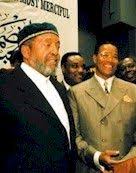
Louis Farrakhan refused to follow. Born Louis Eugene Walcott in New York in 1933 and raised in Boston, he had been a calypso singer known as "The Charmer" before joining the Nation in 1955. Malcolm X mentored him in Boston, and Muhammad later made him a national spokesman and minister of the Harlem mosque. In the late 1970s Farrakhan rebuilt the Nation of Islam on Elijah Muhammad's original teachings, restoring its emphasis on separation, discipline and Black economic self-reliance.
An American Islam
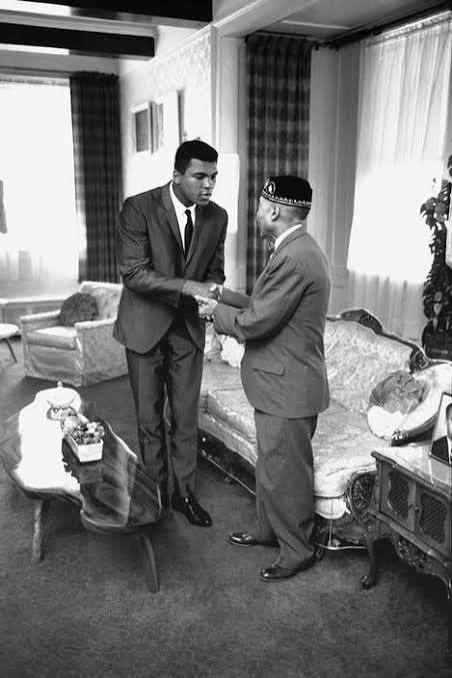
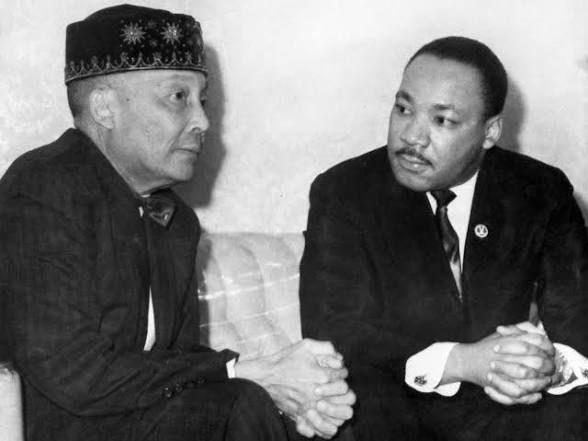
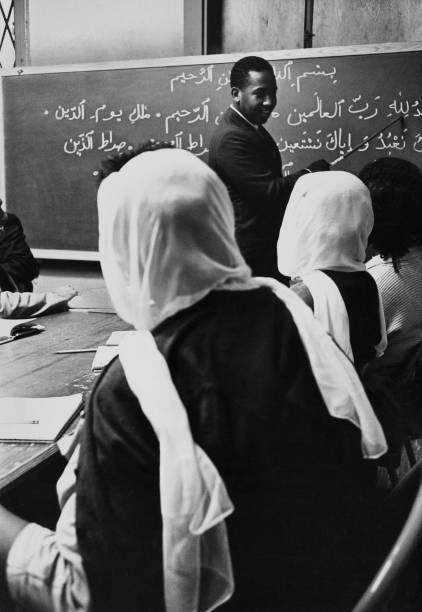
The Nation of Islam is a distinct form of Islam. Its teachings on Fard and on Elijah Muhammad as Messenger set it apart from traditional Sunni belief. Yet it shares many familiar practices with Sunni Islam, including prayer, fasting during Ramadan and dietary law, and it opened a door through which many African Americans, including Malcolm X and Warith Deen Mohammed's followers, entered mainstream Islam. Elijah Muhammad's legacy lies in that bridge and in his insistence that Black people could build their own institutions and define their own faith.
Ask the Historian
Have a question about this story, or an idea for a future post? Send it here.