
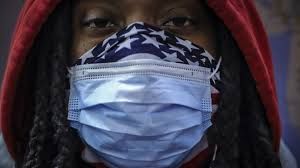
Following a rash of new stories and community outrage, Dr. Anthony Fauci, Director of the National Institutes on Allergy and Infectious Diseases (NIAID) and a member of the White House Coronavirus Panel, publicly acknowledged the outsized impact of COVID 19 on African American communities. He stated: "We have a particularly difficult problem of an exacerbation of a health disparity. We've known literally forever that diseases like diabetes, hypertension, obesity, and asthma are disproportionately afflicting the minority populations, particularly African Americans.” Black public health officials have warned of these outcomes for years. The impact of this pandemic on our communities is even greater than imagined. The COVID-19 pandemic has disproportionately impacted African Americans. By every measure, Black people are overrepresented per capita in the numbers of cases, and hospitalizations. This is due to the fact we work in sectors placing us on the front lines of contagion risk: hospitality, food service, health care, law enforcement and grocery. Moreover, social and economic barriers to nutritious produce, parks and recreation, good paying jobs, and residential sprawl contribute to the staggering number of infections in our communities.
The numbers tell the story. In New York, African Americans comprise 28% of the COVID-19 cases in the state and 18% in New York City. In Illinois, African Americans comprise 42% of reported cases. The same is true in Chicago where only 29% of the city’s population is Black, but this group comprises 72% of the city’s fatalities and 52% of its positive cases. In Michigan, Blacks represent 33% of all cases.
Similar realities exist in the South and West. In South Carolina, African Americans account for 36% of all cases. In Louisiana, although they constitute 33% of the state’s population, Blacks account for 70% of the fatalities. Georgia’s Black population is 31%. Early reports indicate Blacks comprise 20% of the 9,901 confirm coronavirus cases in the state. In the West, the rates of infection in Los Angeles show Latino infection rates outstrip those of whites, (27%), Asians (28%), Asians 19%, and Blacks (17%.). Although the African American rate of infection is relatively low, when looked at in isolation, Blacks actually make up only 9% of the population.
These numbers may not be a true measure of the problem. We know access to testing is uneven and often nonexistent in Black communities. Moreover, very little has been done to provide proper personal protective equipment (PPE) to frontline workers in urban communities. These workers in occupations such as supermarket and fast food workers, licensed practical nurses, home health workers and STNAs lack basic wage and job protections. The Centers for Disease Control (CDC), in consultation with some of the nation’s largest research laboratories, is developing rapid-response testing devices, which may provide accurate results within minutes. These tests should be immediately available for EMT's, nurses, home health workers and elder care facility staff.
Exploding rates of infections, and lack of adequate access to healthcare are often used to blame the victim. Media pundits spin these numbers and conditions to attack victims. We witnessed this phenomena during the financial crisis of 2007-2008, when the Black community was attacked by critics. Mostly because junk mortgages, on which credit default swaps were based, were sold primarily to Black homeowners. Rather than framing it as a product of structural racism , such as red lining and decades of housing segregation, African Americans were accused of destabilizing the economy.
Beyond victim blaming, other important contextual and cultural issues in our communities must be considered. African Americans in Flint and Detroit, Michigan are still attempting to navigate a contaminated water crisis. This pandemic adds an extra layer of misery to their plates. In the Deep South, during a crisis, Black community members turn to communal worship, family events and dinners with elders as places for communication, counsel, solace and levity. The closure of these “essential” spaces deprives us of these outlets. School cancellations limits access to healthy meals, and child care. The lack of cosmetology and barbering services ranging from haircuts, braiding, extensions, twists, coloring, manicures and pedicures also deprives the community of informational spaces to combat the ravages of the virus.
Black interaction includes hugs, handshakes and other cultural habits of proximity and affection. They are also casualties of the outbreak. And though there was discussion of the expendable nature of seniors, and re-opening “the economy” to save Big Business and Wall Street, that formula does not resonate with Black folk. Within a week we lost Dr. David Driskell & Ellis Marsalis who between them constituted a library of artistic and musical performance.
Michigan and Illinois are battleground states in the presidential election. If Black voters, particularly seniors, die and are hospitalized in the tens of thousands, how will that impact upcoming presidential race in those states? Both Florida and Georgia almost elected Black officials: Andrew Gillum and Stacey Abrams. Governors in both states were slow to implement stay-at-home measures. Georgia just moved to re-open its beaches. Also disproportionately impacted, and majority Black are the U.S. homeless. The same applies to the incarcerated.
In the North, Midwest, South and West, the pandemic is wreaking havoc on Black residents, which illuminates systemic divides in living standards . The way restrictions limit traditional diversions which have buoyed us in trying times. These realities are an overlooked casualty of the spread. It is incumbent on community based organizations, thought leaders, philanthropists and clinicians to address these unique concerns. They must do so before we lose institutions which, following the urban upheavals of the 1960’s, may never return.
Bijan C. Bayne is a cultural critic and author of “Elgin Baylor: The Man who Changed Basketball” and “Martha’s Vineyard Basketball: How a Resort League Defied Notions of Race and Class.” He is a Public Policy Fellow at the Institute for Politics, Policy and History
Ask the Historian
Have a question about this story, or an idea for a future post? Send it here.