
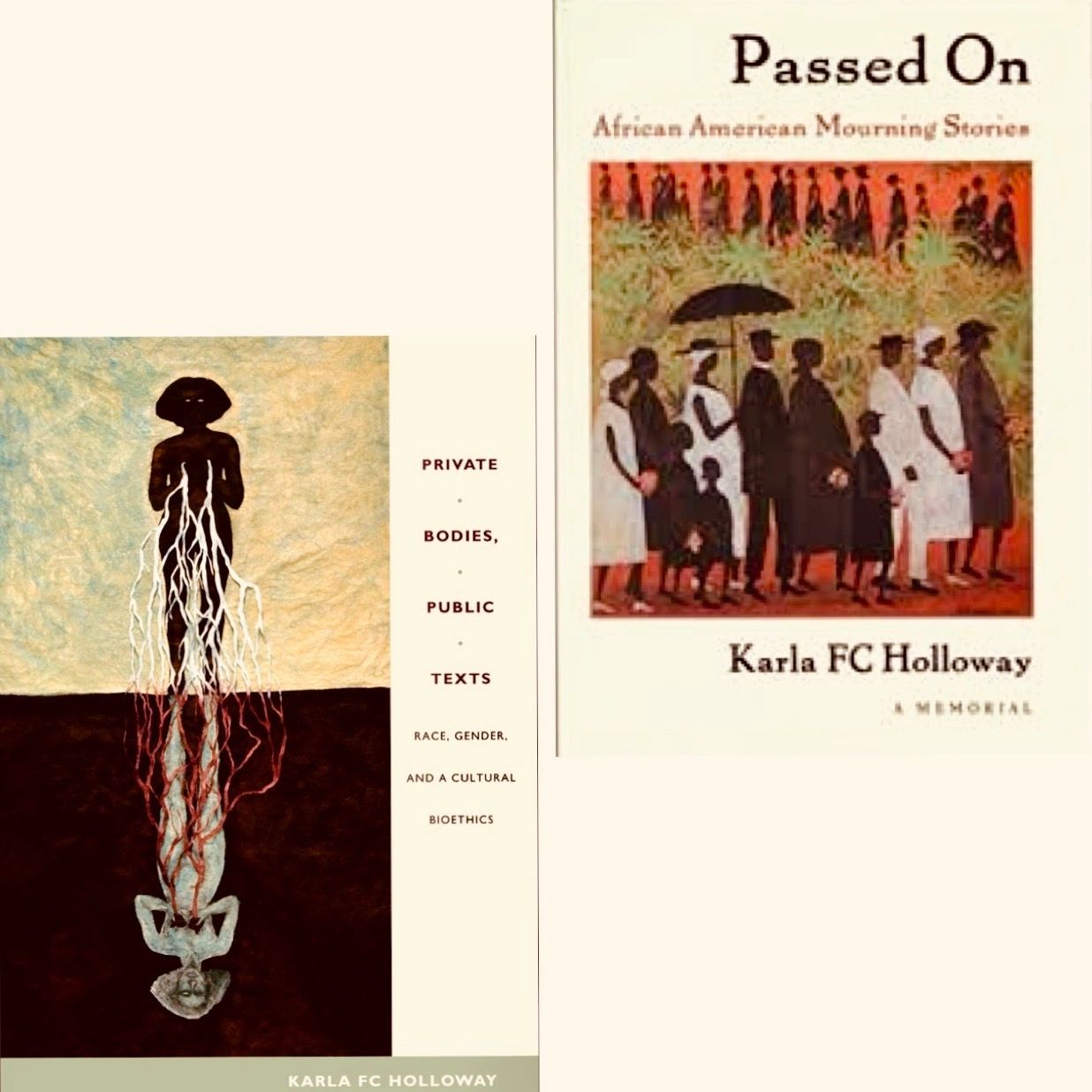
Black History Now is pleased to present this brief interview with Dr. Karla FC Holloway. Dr. Holloway is the James B. Duke Professor of English at Duke University. Her interests include African American cultural studies, biocultural studies, gender ethics and law She is the author of eight books, including Passed On: African-American Mourning Stories (2002) and Private Bodies/Public Texts: Race, Gender and A Cultural Bioethics (2011). . She is widely recognized as one of the nation’s foremost scholars of race, gender, law and bioethics.
HISTORIANSPEAKS: What, in your opinion, are the factors which account for the outsized impact that COVID-19 is having on Black communities around the nation?
HOLLOWAY: This is not a puzzle. It’s fully predictable. The service industries now deemed “essential” are disproportionately populated by black and brown hourly employees. It gives us another opportunity to understand how the 21st century of “service” is not far removed from other ways our labor has been historically exploited. That and the ways in which urban communities have less opportunity for space, “social distancing,” isolation from other family members in the same home because city living is congested — from transportation to residence. So the novel Corona Virus Disease - 2019’s specific profile of high transmission, droplet spread, fairly long-term viability on some surfaces would be particularly dangerous for folks and their families who are circumstantially vulnerable to intimate public contact. The structures of urban life are racially determined.
HISTORIANSPEAKS: In recent comments regarding African Americans and COVID-19, the Surgeon General seems to suggest that individual health challenges in Black communities are more important than structural challenges in the public health system as we attempt to measure the rates of infection in our communities?
HOLLOWAY: Those health challenges are directly tied to structural racism. From HBP to asthma to diabetes. The stress of everyday racisms is carried out on our bodies. For example, the ability to buy fresh and wholesome food is connected to zip codes. We have school lunch programs because hourly wages do not support a family’s basic needs. That’s a corporate choice, not an individual one. The structural challenges of disparate economies link directly to public health. Conduct happens within and follows the restrictions of these codes. The Surgeon General picked the easy and palatable narrative of self responsibility (Booker T or Horatio Alger—choose your fiction) as if the systems that bodies made vulnerable labor under are neutral. Beginning disease discourse with the patient’s “responsibilities" rather than the patient’s “circumstances" forwards the fiction that the medical narrative that matters absolves the systems under which those public health structures flourish. Additionally, it does not engage at all what we’ve found to be disparate treatment in medicine. The Surgeon General's statement ghosted the systematic and corporate conduct that creates public economies and disrespected the populations that office allegedly represents.
HISTORIANSPEAKS: Death seems to permeate every aspect of our existence. What lessons can African Americans share with the nation about grief, mourning and dying that can reframe our national conversation on these issues. Are their special understandings or sensibilities that African Americans bring to this topic?
HOLLOWAY: I’m not certain that I’d want to place our experiences with death, dying, and grief into the service mode that our bodies ordinarily occupy for the US. I’d rather not share our intimacies of community memory and practice. Look how, for example, the New Orleans Jazz funeral is displayed as spectacle. We can, however, remind America that our bodies are consistently on the line between life and death and ask it to examine what in the structure of our nation’s laws and liberties consistently places black folk into the company of death to the extent that we know what “anticipatory grief’ is — from excess mortality at childbirth to excess mortality during our youth, to the targeting of all of us, our children and adults, by police. There’s something deeply disturbed about an American ethic that repeats these experiences decade after decade. Similarly, there’s something extraordinarily resilient, creative, and hopeful in a community that has absorbed the rituals into our quotidian cultural moments in order to survive the ways in which we have been made vulnerable. But the fix is not—in my opinion—with sharing our resilience, its rather in a rigorous response to the ways we are targeted.
HISTORIANSPEAKS: How will this pandemic alter our social and moral consciousness related to race, class and gender?
HOLLOWAY: You’re more hopeful than I am that it will alter these issues. Here’s the first check: While it’s happening, will we protect and pay “essential” workers in ways that acknowledges the necessity of their labor? After it passes, will we pay essential workers in ways that indicates their critical position in America’s economies? We can draw all the rainbows in our driveways (those who have them) we want, applaud hospital personnel coming off shift, understand the rigors faced in classrooms by “thanking a teacher” (especially nursery and preschool). When will the applause become pay?
Ask the Historian
Have a question about this story, or an idea for a future post? Send it here.