

Today, we celebrate the beginning of Black History Month. Black History Month began as "Negro" History Week in 1926. The celebration was founded by the African American historian Carter G. Woodson. Woodson was a Harvard trained PhD and the second African American to receive a PhD in History. Woodson founded the Association for the Study of Negro Life and History (ASNLH) in 1915. He also established the Journal of Negro History (JNH) in 1916. He also established the Negro History Bulletin, a journal for K-12 teachers in 1936. Woodson founded "Negro History Week" to highlight the acheivements of African Americans and Black people around the world. The celebration was situated in February for two distinct reasons. February is the birthday month of Frederick Douglass and Abraham Lincoln. Douglass was the foremost abolitionist of the 19th century and Abraham LIncoln was viewed as the Great Emancipator, due to his promulgation of the Emancipation Proclamation in 1863. Both men were viewed as symbols of freedom and emancipation, which are core tenets in the Black community.
From the 1930's up to the 1950's, Mary McLeod Bethune served as President of the ASNLH. Under her leadership the membership of the organization grew. She served as a steward and guardian of the Black past in her mutiple roles as presidential advisor, Black women's advocate, college president and founder of Bethune-Cookman College and co-founder of the United Negro College Fund among many other notable accomplishments.
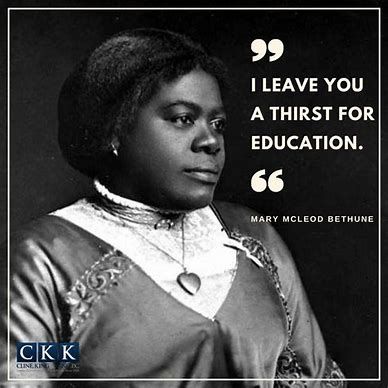
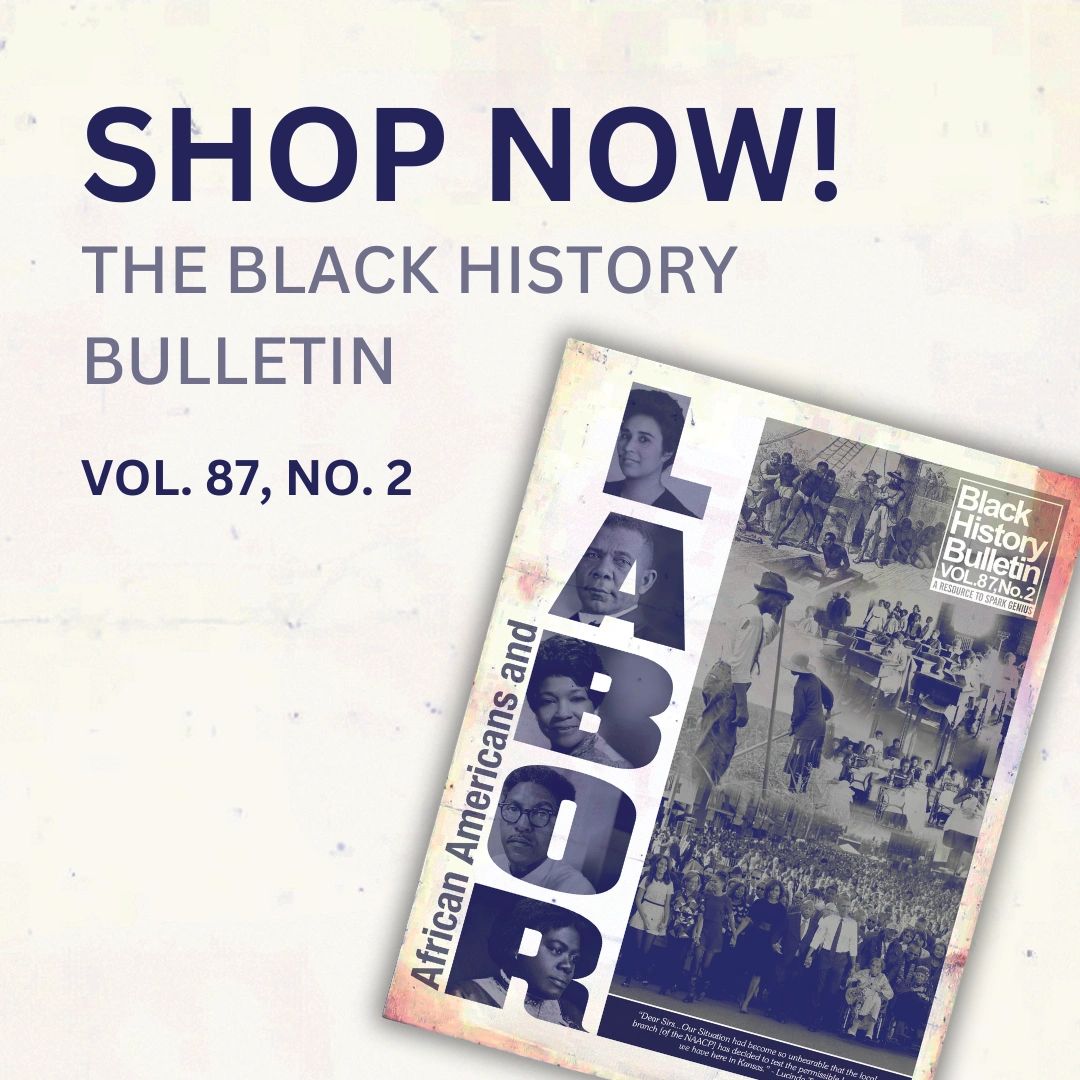
Today, 99 years later, the legacies of Carter G. Woodson and Mary McLeod Bethune continue through the work of the Association for the Study of African American History (ASALH) . This organization has chapters in every US state and territority and in several foreign countries. ASALH sets the theme for Black History Month. This years theme is African Americans and Labor. Below see the offical description of the theme.

2025 THEME
2025 – African Americans and Labor
The 2025 Black History Month theme, African Americans and Labor, focuses on the various and profound ways that work and working of all kinds – free and unfree, skilled, and unskilled, vocational and voluntary – intersect with the collective experiences of Black people. Indeed, work is at the very center of much of Black history and culture. Be it the traditional agricultural labor of enslaved Africans that fed Low Country colonies, debates among Black educators on the importance of vocational training, self-help strategies and entrepreneurship in Black communities, or organized labor’s role in fighting both economic and social injustice, Black people’s work has been transformational throughout the U.S., Africa, and the Diaspora. The 2025 Black History Month theme, “African Americans and Labor,” sets out to highlight and celebrate the potent impact of this work.
Considering Black people’s work through the widest perspectives provides versatile and insightful platforms for examining Black life and culture through time and space. In this instance, the notion of work constitutes compensated labor in factories, the military, government agencies, office buildings, public service, and private homes. But it also includes the community building of social justice activists, voluntary workers serving others, and institution building in churches, community groups, and social clubs and organizations. In each of these instances, the work Black people do and have done have been instrumental in shaping the lives, cultures, and histories of Black people and the societies in which they live. Understanding Black labor and its impact in all these multivariate settings is integral to understanding Black people and their histories, lives, and cultures.
Africans were brought to the Americas to be enslaved for their knowledge and serve as a workforce, which was superexploited by several European countries and then by the United States government. During enslavement, Black people labored for others, although some Black people were quasi-free and labored for themselves, but operated within a country that did not value Black life. After fighting for their freedom in the Civil War and in the country’s transition from an agricultural based economy to an industrial one, African Americans became sharecroppers, farm laborers, landowners, and then wage earners. Additionally, African Americans’ contributions to the built landscape can be found in every part of the nation as they constructed and designed some of the most iconic examples of architectural heritage in the country, specifically in the South.
Over the years to combat the superexploitation of Black labor, wage discrepancies, and employment discrimination based on race, sex, and gender, Black professionals (teachers, nurses, musicians, and lawyers, etc.) occupations (steel workers, washerwomen, dock workers, sex workers, sports, arts and sciences, etc.) organized for better working conditions and compensation. Black women such as Addie Wyatt also joined ranks of union work and leadership to advocate for job security, reproductive rights, and wage increases.
2025 marks the 100-year anniversary of the creation of Brotherhood of Sleeping Car Porters and Maids by labor organizer and civil rights activist A. Philip Randolph, which was the first Black union to receive a charter in the American Federation of Labor. Martin Luther King, Jr incorporated issues outlined by Randolph’s March on Washington Movement such as economic justice into the Poor People’s Campaign, which he established in 1967. For King, it was a priority for Black people to be considered full citizens.
The theme, “African Americans and Labor,” intends to encourage broad reflections on intersections between Black people’s work and their workplaces in all their iterations and key moments, themes, and events in Black history and culture across time and space and throughout the U.S., Africa, and the Diaspora. Like religion, social justice movements, and education, studying African Americans’ labor and labor struggles are important organizing foci for newinterpretations and reinterpretations of the Black past, present, and future. Such new considerations and reconsiderations are even more significant as the historical forces of racial oppression gather new and renewed strength in the 21st century.
Resources for Black History Month
Black History Month in the Age of Trump
History As A Communal Act: The History of Black History Month - AAIHS
We Are Still Running to the Fight! | ASALH - The Founders of Black History Month
Black History Month Digital Toolkit | National Museum of African American History and Culture
Black History Kits – ASALH Store
ASALH - The Founders of Black History Month | BLACK HISTORY THEMES
#AfricanAmericanHistory #BlackHistoryMonth #NegroHistoryWeek #ASNLH #ASALH #CarterG.Woodson #MaryMcLeodBethune #AfricanAmericansandLabor #BlackHistoryMatters #BlackHistoryWillNotBeErased #BlackHistoryCannotBeErased
Ask the Historian
Have a question about this story, or an idea for a future post? Send it here.