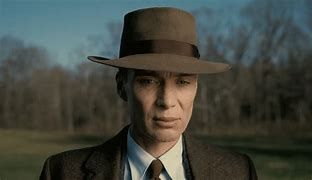
Christopher Nolan’s Oppenheimer opened to critical acclaim late last year. It details the work of J. Robert Oppenheimer. Widely regarded as the nation’s foremost theoretical physicists and father of the atomic bomb, Oppenheimer was born in New York and received his undergraduate training in Chemistry at Harvard University. He received a doctorate in physics from the University of Gottingen in in Germany in 1927. Afterwards, he joined the physics department at the University of California Berkeley becoming full professor in 1936. While at Berkeley he made significant contributions to theoretical physics, including quantum and nuclear physics, Born-Oppenheimer approximation for molecular waves, electrons and positrons, the Oppenheimer-Phillips process as well as work on quantum tunneling, neutron stars, black holes, quantum field theory and the interaction of cosmic rays. In 1942, he was recruited to the Manhattan Project. In 1943, he served as the Director of the Los Alamos Laboratory in Los Alamos, New Mexico. There he developed the nation’s first nuclear weapons and promoted atomic energy.
No less important than Oppenheimer were more than nineteen African American scientists, men and women, who also made important contributions to the development of atomic energy in the United States. They worked at the Oak Ridge in facility in Tennessee, and the Chicago Metallurgical Laboratory. Black laborers also worked at Oak Ridge and played a seminal role in the support work to produce the bomb. Its estimated that 7,000 Black laoborers worked at the site, although no more than 2,000 laborers worked there at any given time. These Black scientists, technicians and laborers played an important role in the work of developing the atomic bomb.
Historianspeaks is pleased to present this series, Beyond Oppenheimer: Black Scientists and the "Bomb," focused on African American participation in the creation on the atomic bomb. We will feature biographical information and discussion of the work of these scientists throughout Black History Month. We welcome your questions and comments.
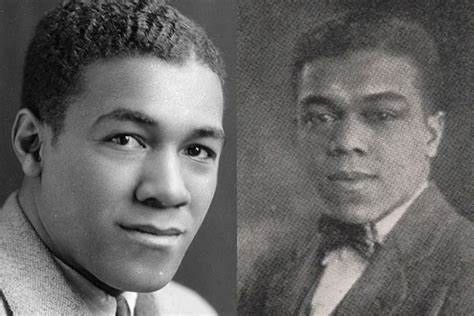
The third installment in this series focuses on William and Lawrence Knox who were chemist working at the Chicvago Met Lab and at Columbia University.
Black chemists played an important role in the Manhattan project Two of the most important scientists were the William and Lawrence Knox. William Jacob Knox in 1904 and Lawrence was born in 1906 and The Knox brothers were the grandsons of enslaved people. They were encouraged to use education as a tool for social mobility. Their father William Jacob was a postal worker. As a civil servant, he was able to provide a stable existence for the family. The Knox family consisted of two younger sisters and a younger brother Clinton E. Knox subsequently received a PhD in history from Harvard and worked as a diplomat. `
William graduated cum laude with a degree in organic chemistry from Harvard in 1925. He taught at Johnson C. Smith University in Charlotte, North Carolina for three years. William returned to Cambridge and entered MIT to study chemical engineering. He worked on vapor-phase esterification of acids He received his MS degree in chemical engineering in 1929.
After another stint teaching at Howard University, William returned to MIT and received his PhD. He successfully defended his dissertation, "The Absorption of Light by Nitrogen Tetroxide." His work at MIT resulted in two publications and unpublished contributions toward the solution of a difficult experimental problem: the 2NO2/N2O4 equilibrium, which was still under investigation 25 years after his graduation. Until WWII, William taught chemistry at HBCUs.
Lawrence graduated from Bates College in 1928. His senior honors thesis explored the reaction of Friedel-Crafts between aromatics and acid chlorides. He taught Chemistry briefly at Morehouse College. He then entered Stanford University and received a Master’s of Science in 1931. He taught at the North Carolina Central College for three years He began his PhD in physical chemistry in 1936 at Harvard University, on a Rockefeller-funded grant, after having. Lawrence was the most productive among t the fifteen lab employees. As a common chemical and biological activity, he examined the nucleophilic substitution mechanism in aliphatic molecules. He created a chemical that could not react using any of the two reaction paths that had only lately been presented. The conclusion that those were the only two avenues for nucleophilic substitution under typical circumstances was strongly supported by the fact that it proved inert even under demanding circumstances. The resulting study gained recognition as a physical organic chemistry clstaple . Lawrence's research, according to Bartlett, was the study that any research student has ever done that is both neat and attractive. Lawrence taught at North Carolina College after receiving his PhD in 1940.
William approached Willard Libby, a Columbia Professor who eventually won the Nobel Prize for developing radiocarbon dating, Libby was working to isolate pure U235. It was used to support the reactions of nuclear chain required for an atomic weapon. In 1943,William became a member of the unit and worked on corrosion issues for two and a half years. He was the Manhattan project’s sole African American supervisor when Libby subsequently designated him director of the unit.
Lawrence also made a contribution to the war effort by researching quinine at Columbia University's Division of War Research alongside William Doering. In field studies on the consequences of atomic bomb blasts, Lawrence's research on anti-malarial drug quinine was utilized.
William and Lawrence had very productive postwar careers. William became a research associate at the Eastman Kodak Company. He was the second chemist with a PhD hired by the company. He worked on developing wetting agents (surfacants) that would maximize the bonding power of film emulsions to improve the quality of manufacturing and assist in the production of clearer images. He also coauthored three journal articles and was granted more than 21 patents.
Lawrence accepted an offer to become Resident Director of the Hicknill Chemical Research Foundation. This was a private venture by Sylvan and Ruth Alice Weil, which focused on long-term speculative research. In the late 1950s, Lawrence took a position with Laboratorious Syntex SA working on the isolation of a sapogenin that could be transformed into progesterone. He was awarded over 40 patents and coauthored 10 papers.
The scientific contributors of the Knox brothers were legendary. They were pioneers in 20th century science. Not only contributors to the war effort, their were also instrumental in the postwar economy.
.
Ask the Historian
Have a question about this story, or an idea for a future post? Send it here.