
Stephanie McCurry, PhD is professor of history at Columbia University in NYC and author of Confederate Reckoning: Power and Politics in the Civil War South, 2010 and Women’s War: Fighting and Surviving the American Civil War(2019)
For more information: stephaniemccurry.com
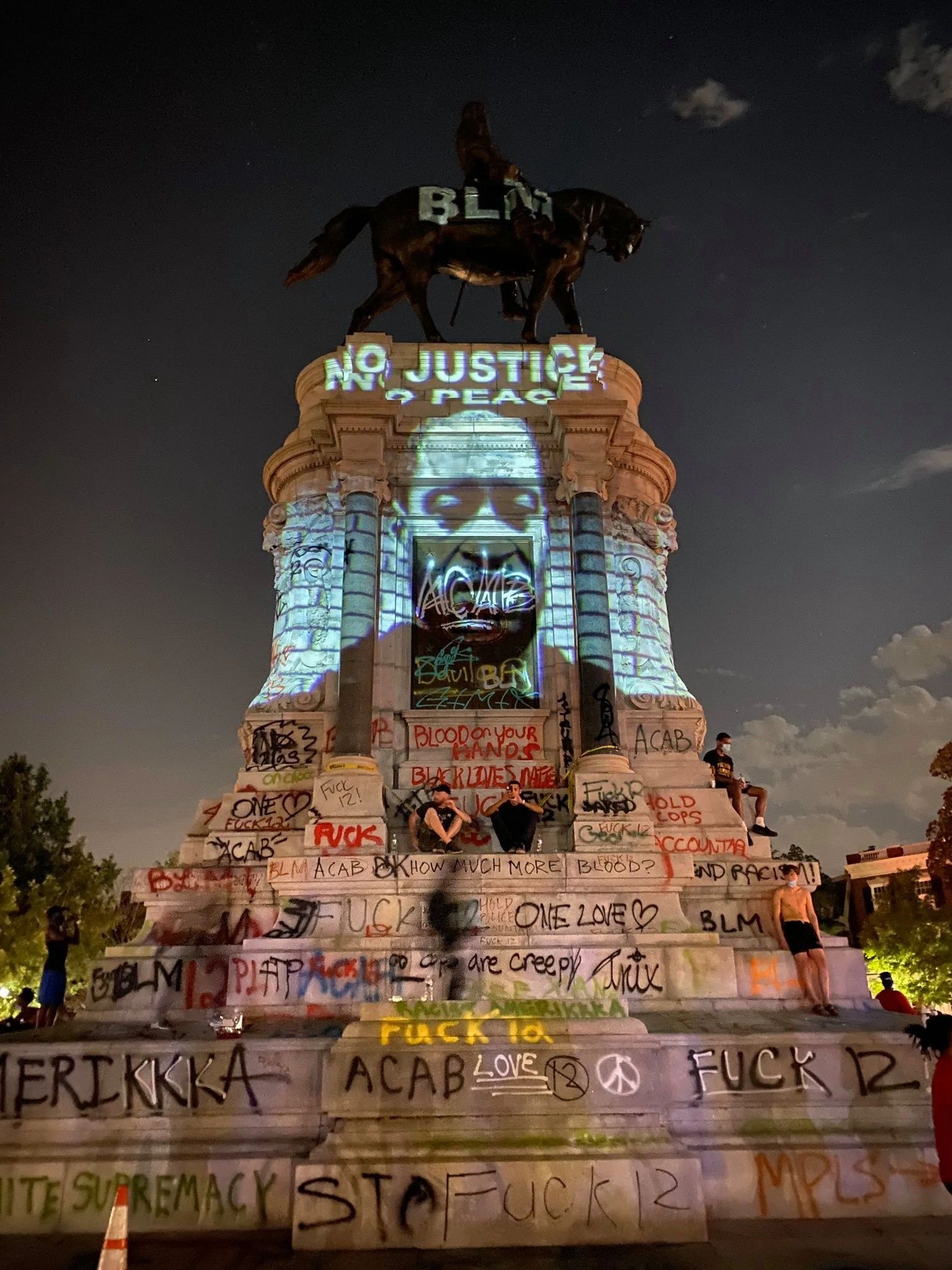
One of the riveting aspects of the current political struggle is the reckoning with history it has brought with it. Everywhere you look young Black protesters are targeting the symbols of slavery, initiating urgent conversations about the legacy of slavery in the white supremacist structures of contemporary life. In the United States right now, the Black Lives Matter protests triggered by the murder of George Floyd and the endemic problem of police violence quickly triggered connected movements in Europe. In the U.S. protestors tear down statues of Robert E. Lee, Jefferson Davis, John C. Calhoun, Andrew Jackson, and other slaveholders and Confederate leaders; In Bristol, England it is the prominent slave trader and city benefactor, Edward Colston; in Antwerp Belgium, King Leopold the Second, the brutal ruler of what was the Belgian Congo The movement is global because the history was: The map of protest mirrors the scope of the transatlantic slave trade, and systems of slavery and colonization European powers and the United States imposed across the globe from the fifteenth to twentieth centuries. In all those places it turns out, the attempt to make a new future requires a confrontation with the past.
One key part of that U.S. past now coming in for a reckoning is the history of the Confederacy. It poses the question, unavoidable now, about what all those statues, flags, and names on army bases, streets, schools and college dormitories actually commemorate. Amid intense public interest it can be difficult to know what the Confederate States of America really was, not as a symbol but as a nation. A century and a half of mythmaking – what W.E.B. DuBois called “The Propaganda of History” -- successfully obscured the Confederate cause and its bloody record. DuBois was blunt about the propaganda war white southerners’ and their allies waged to obscure the real meaning of slavery, the Civil War and Reconstruction in the late nineteenth century. He was especially explicit about “falsification of facts” in high school text books and scholarly books by white southerners and northerners, whose real commitment was not to the truth but, as he put it, to their belief in “negro inferiority.”
DuBois was one of the first historians to expose the Confederacy for what it was: a reactionary effort to hold onto political power by secession and with one objective: to ensure “the perpetuity of Negro slavery.” In Black Reconstruction in America, his magisterial history of the Civil War and Reconstruction, he punctured the pretensions of the southern planter class: its claims to honor, civilization, Christianity, superiority, and, especially, sexual morality. “Sexually they were lawless,” he wrote, “protecting elaborately …the virginity of a small class of women of their social clan, and keeping at command millions of poor women of the two [Black and White] laboring groups of the South.” As proof he pointed to the 5888,000 “mixed blood” people recorded in the 1860 census. He went on to document the political failure and military defeat of the Confederate cause in the Civil War. A war during which the enslaved themselves were at the center of the action, mounting what he called “a general strike” which destroyed Confederate capacity, and allying themselves with the Union Army as laborers and soldiers. All of this, he makes clear, despite Confederates belief “that Negroes would never revolt.”
The records from the time confirm the essentials of the case: southern states declarations of secession which cite slavery as the cause; the explicitly proslavery constitution they wrote for their new proslavery state; the Vice-President Alexander Stephen’s very public admission that slavery was the cornerstone of the new nation; the policies the government adopted and resistance they faced from poor whites angry at the “rich man’s war, poor man’s fight” to which they were subjected; and, above all, the resolute opposition of the enslaved, who turned themselves into a fifth column and the war to save the Union into a war for their own liberation. These documents leave no doubt about what the Confederate national project was - readers can see for themselves – and why it failed. In Confederate Reckoning, my 2010 book on the subject, I lay it out the evidence and argument in detail with access to records DuBois was denied.
DuBois offered his take-no-prisoners account of the Confederacy in 1936, at the height of Jim Crow and the global color line. He intended it as a direct challenge to the prevalent, well-tended myth of the Old South and slavery as a genteel culture of benevolent planters and happy slaves. DuBois also wished to destroy the false perception of the Civil War, stripped of its proslavery white supremacist cause, as an honorable effort to defend conservative states’ rights government against federal tyranny. He offered it after the violent overthrow of Black democracy in Reconstruction, after a wave of lynching of Black people that accompanied the so-called “redemption,” of the South, after the film Birth of a Nation lionized the Ku Klux Klan as the saviors of white civilization, and after a campaign of Confederate statue building led by the United Daughters of the Confederacy captured public space for white supremacy. He wrote it when the pro-Confederate version of history dominated the universities North and South.
At that time, in 1935, not too many white people in the U.S. were listening to what DuBois had to say. Because of BLM, they are now. Now the old argument that the statues are about “heritage not hate” is completely worn out. The mask is off, and they are seen for what they are – symbols of an original proslavery nation and of white peoples’ power over Black people/to keep Black people in subjection. To talk about Confederate statues is to confront the legacy of slavery. To keep them up is to say that white people still have that power, to say that there is no commitment to racial justice for Black people in the United States today. If you know anything about the Confederacy – and now you do – then you know what they stand for and why they must come down.
Ask the Historian
Have a question about this story, or an idea for a future post? Send it here.