
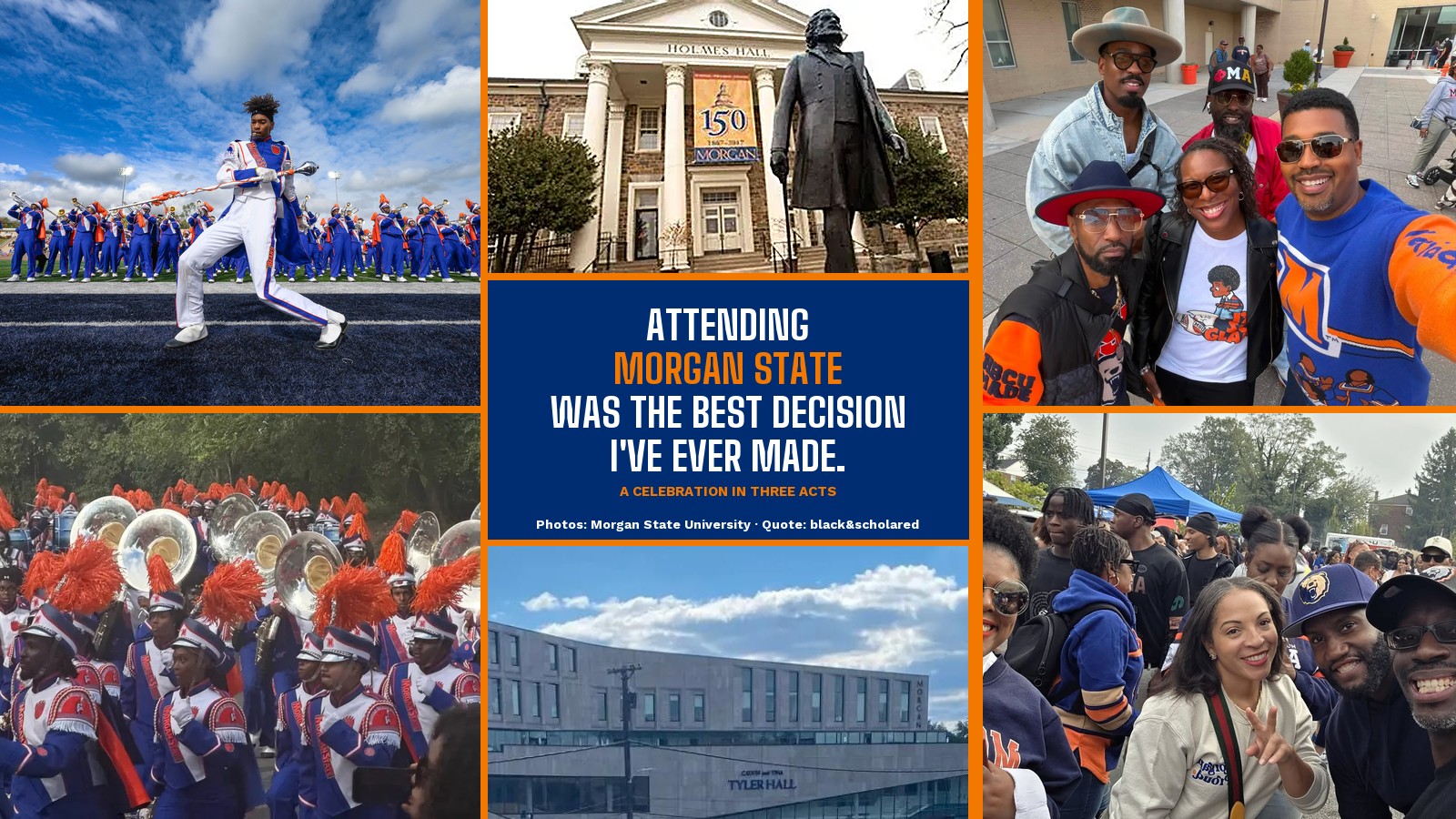
Homecoming at a historically Black college is never just a football game. It is a family reunion, a fashion show, a parade, and a living archive all at once. On Saturday, October 10, 2026, Morgan State University brought that tradition back to the streets of northeast Baltimore, and the week unfolded in three acts: a coronation, a parade, and a long afternoon on the yard.
Coronation of the Homecoming King and Queen
Homecoming week opened on Monday, October 5, 2026, with the Mister and Miss Morgan State University Coronation in Gilliam Concert Hall at the Murphy Fine Arts Center, followed by a coronation ball in the University Student Center ballroom. This year's theme was "Morgan: The World Tour." Jordan Gipson was crowned the 39th Mister Morgan State University, and Ciara Osoba the 82nd Miss Morgan State University.
Those numbers tell their own story: the Miss Morgan title has been handed down for more than eight decades. The university describes the coronation as a celebration of scholarship, service, leadership, and the Morgan legacy. Student organizations, modeling troupes, dancers, and performers shared the stage, turning a crowning into a showcase of campus culture. Where the band later carried Morgan into the streets, the court carried it into the concert hall, and together they framed the week.
The Marching Band Takes the Street
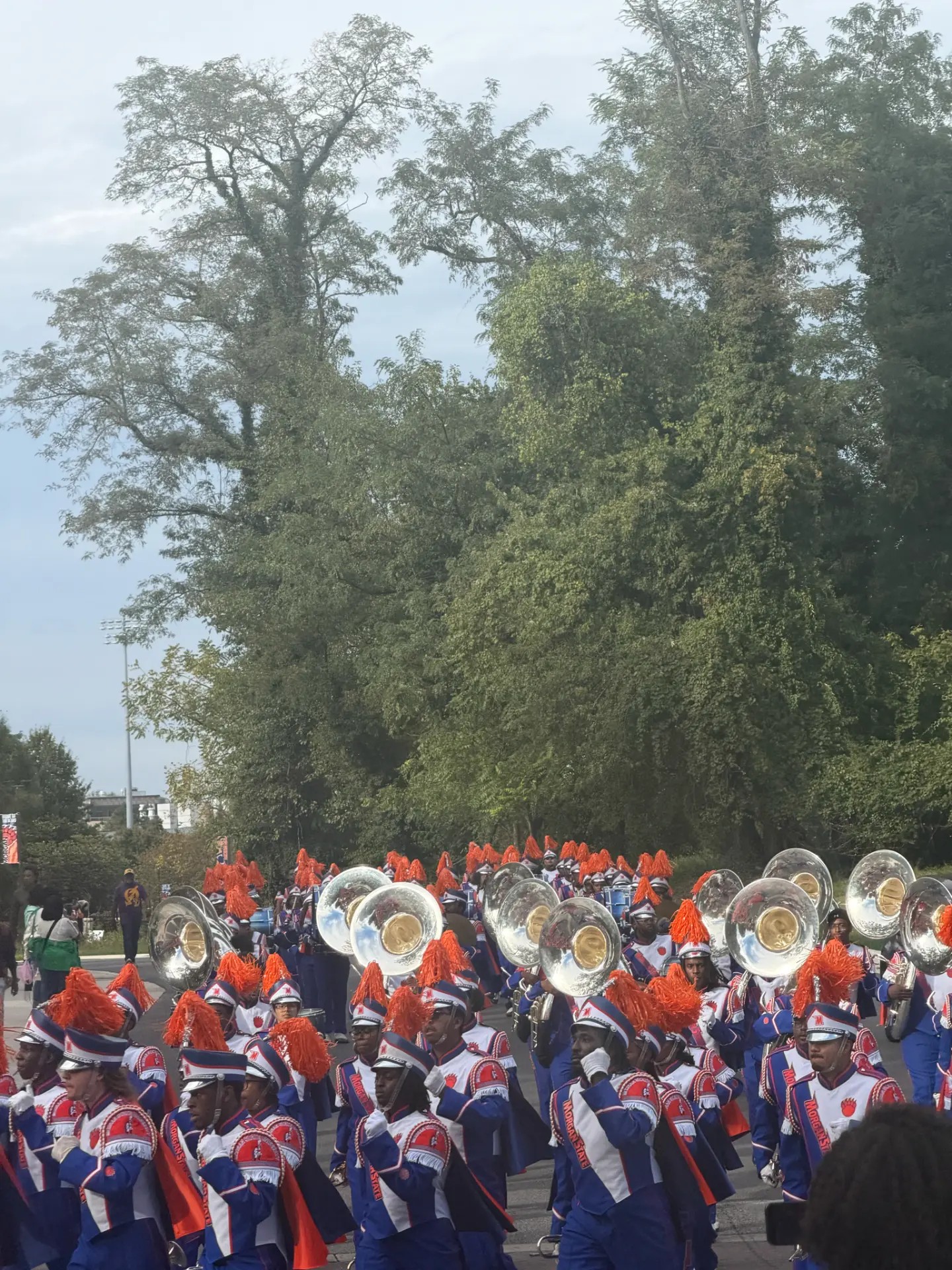
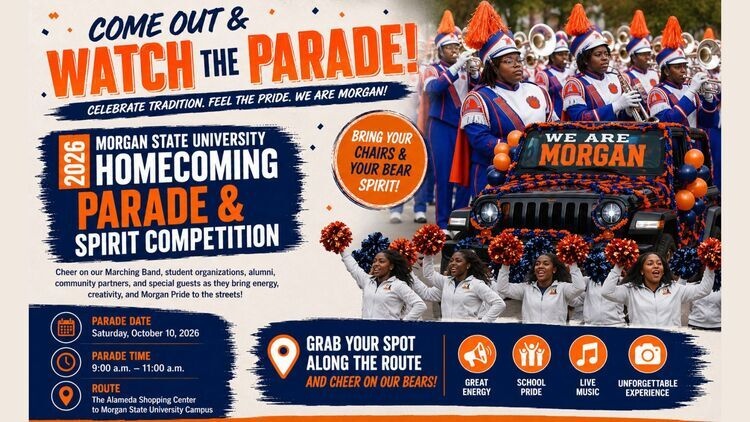
The parade stepped off at 8:30 a.m. from The Alameda Shopping Center and wound toward campus ahead of the Bears' noon game against Robert Morris University at Hughes Memorial Stadium.
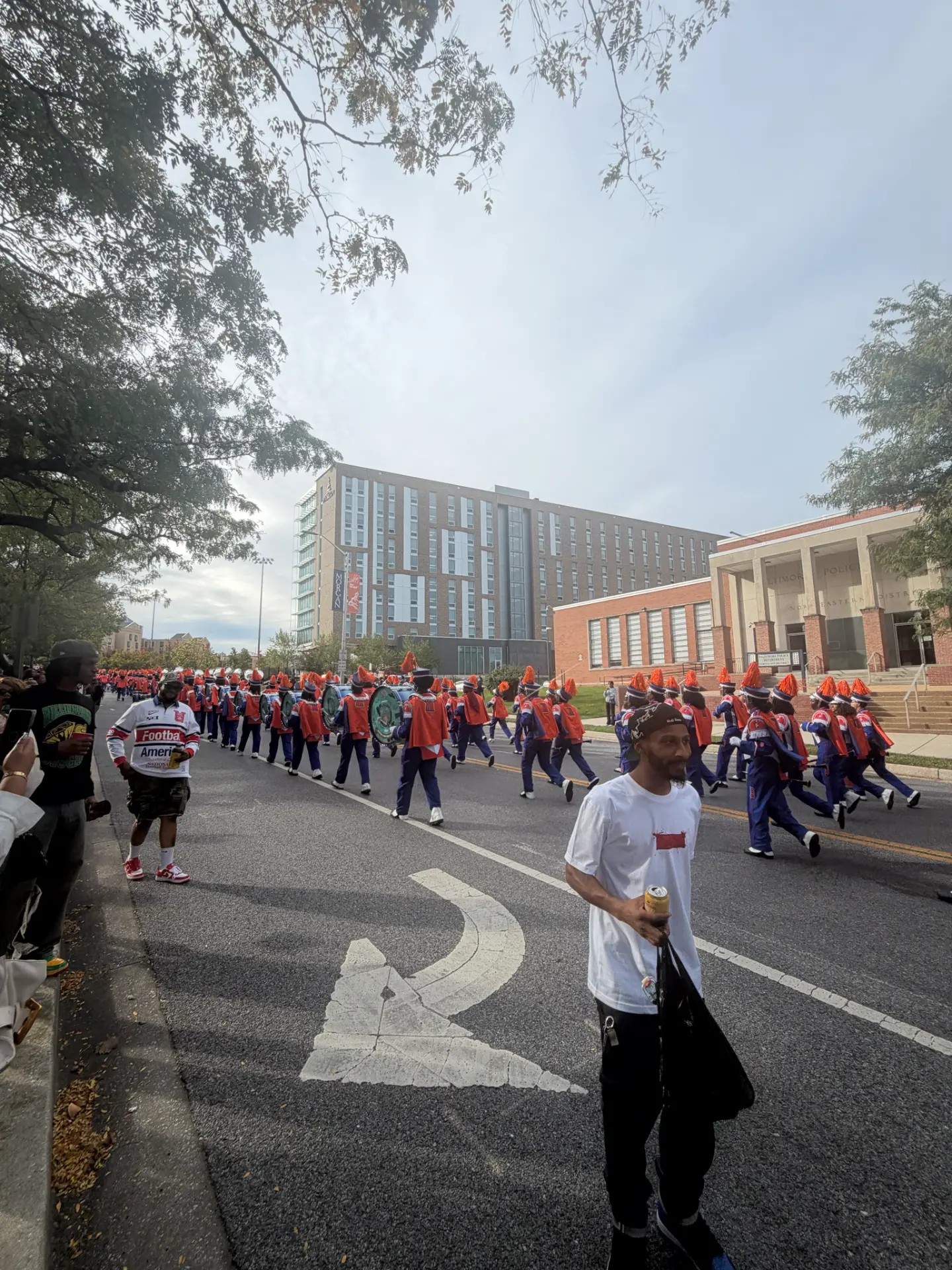
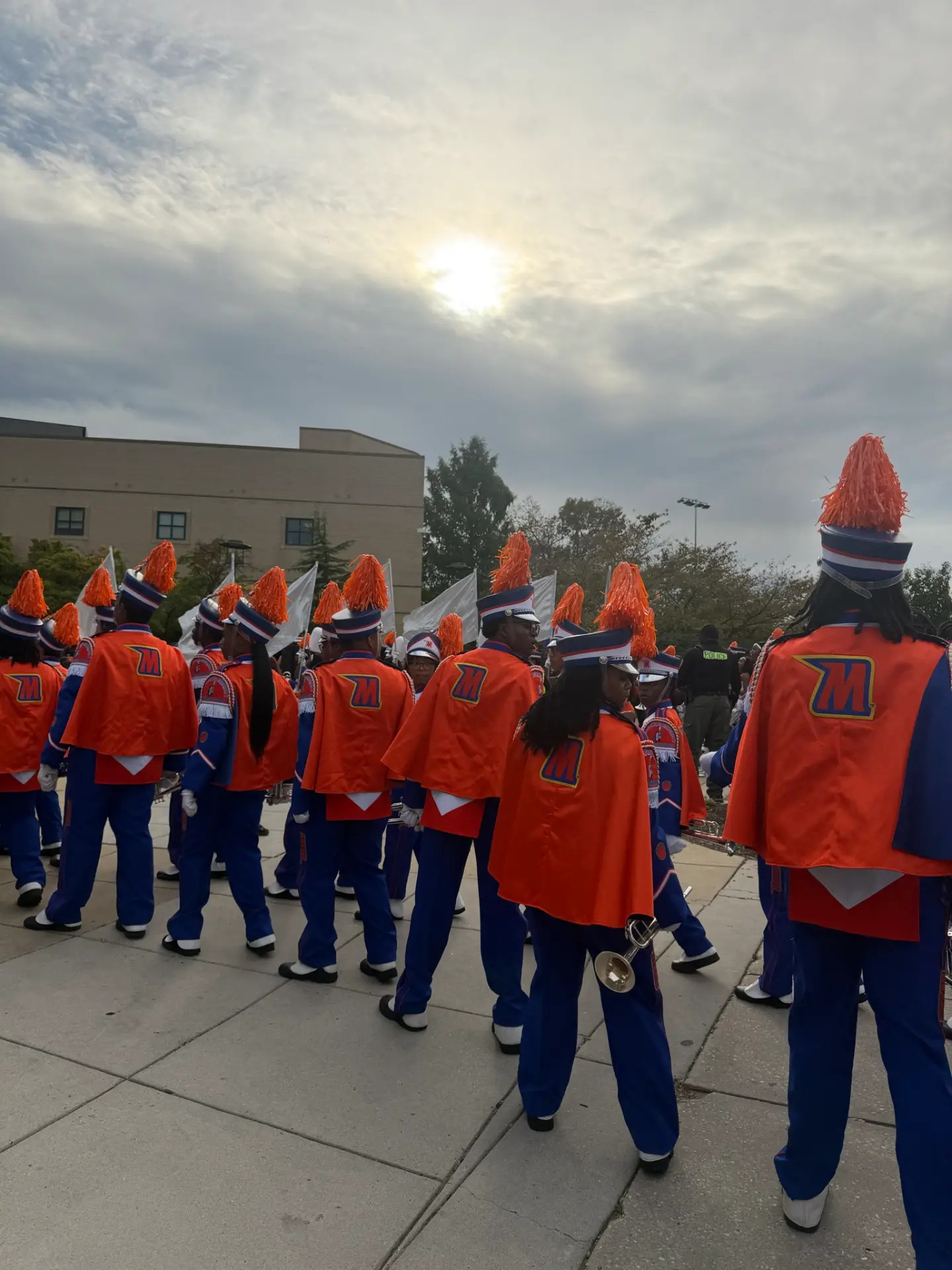
The band stepped off in Morgan blue and orange: white-fronted jackets, capes, and tall orange plumes bobbing above a wall of silver sousaphones. Spectators lined the curb with phones raised, and alumni in fraternity and sorority colors followed along the route.
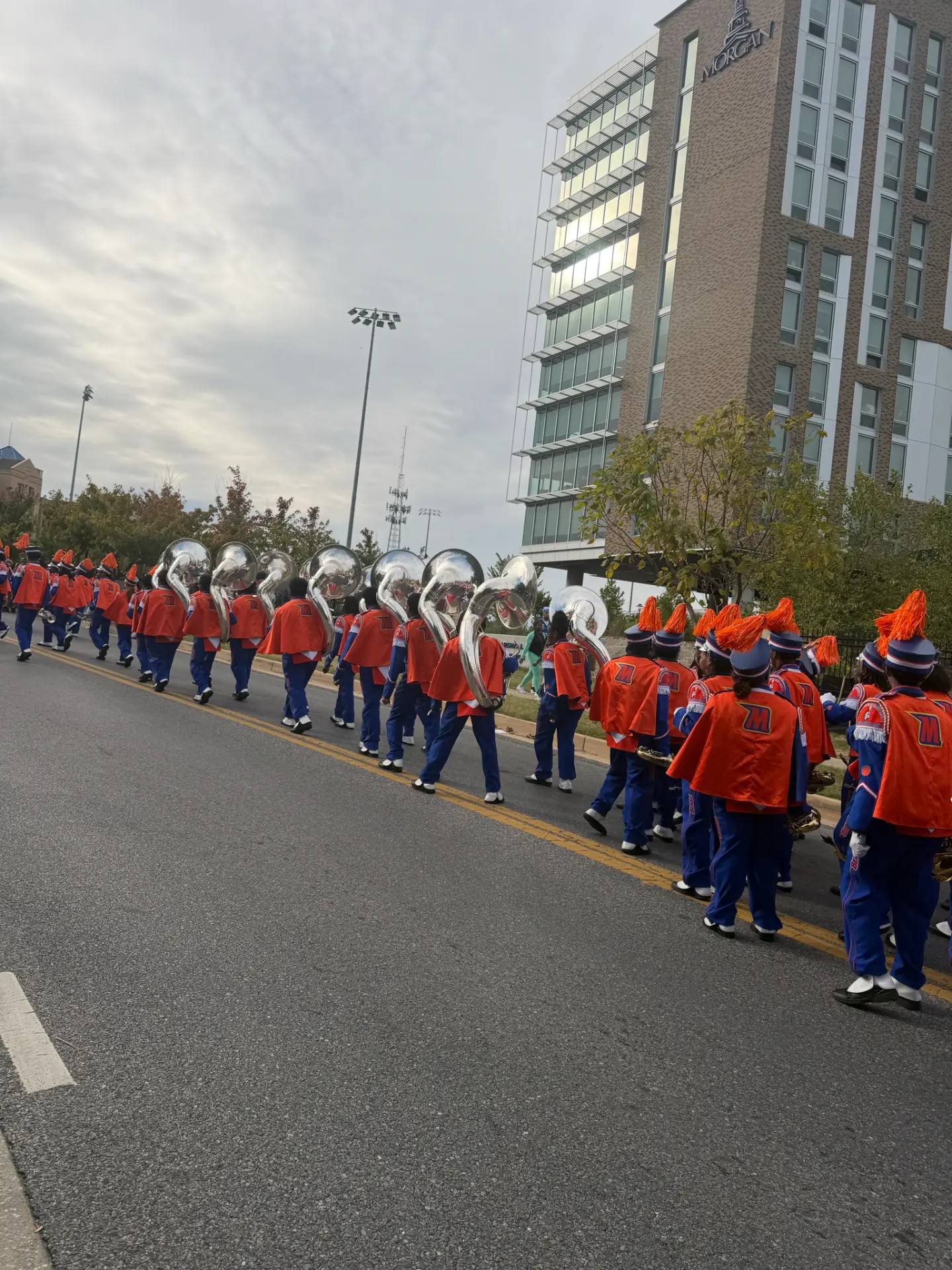
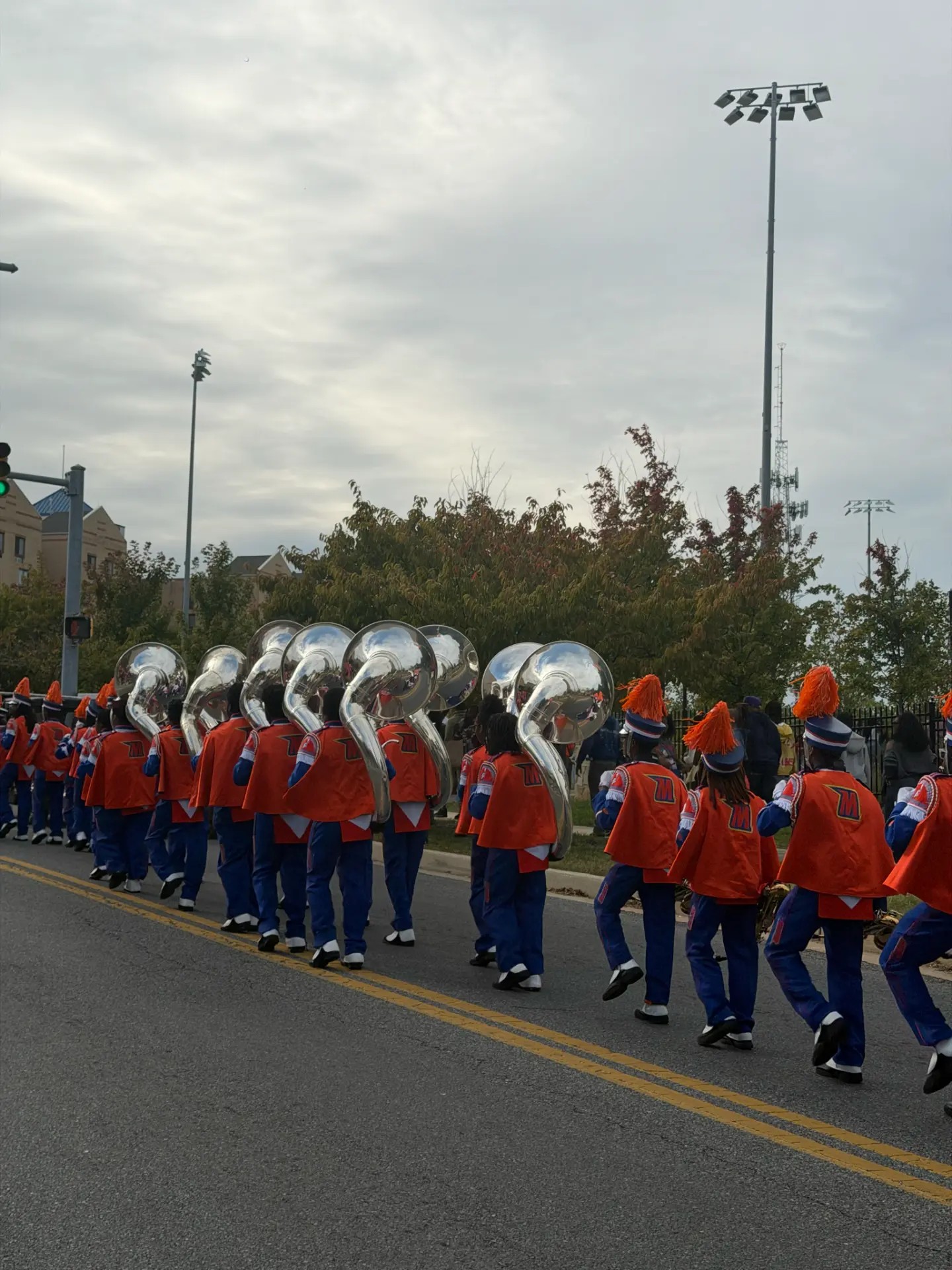


HBCU marching bands occupy a special place in Black cultural life. Their high-stepping, show-style tradition turns music into choreography and turns a parade route into a stage. For many fans, the band is the main event, and the game is the intermission.


On the Yard: Black Alums Reconnect
By early afternoon the parade route emptied and the campus filled. The yard — that is what everyone calls it, the paved and grassed heart of the campus between the buildings — became the real event. Alumni came in families, three and four generations at a time, and for a few hours the campus worked the way a family reunion does: somebody's child, somebody's classmate, somebody's old roommate, all at once.


Homecoming is the one weekend when old friends and former classmates are all in the same place at the same time, and the yard makes the reunion easy. People drift in from Baltimore, from the D.C. corridor, from the South and from much farther, and the first question is always the same one: whatever happened to so-and-so?

The returning alumni also see a campus that keeps changing. Morgan reported 11,559 students for the 2025–26 academic year, its fifth consecutive enrollment record, and told the community in August 2026 that it expected more than 12,000 students in the fall after nearly 40,000 applications — a sixth straight record. The university now stands as the third largest HBCU in the country.

The improvements are visible and priced. A new Science and Research Center is rising, part of what President David K. Wilson described in his welcome to the 2026–27 community as transformation in motion, with cranes in the sky and shovels in the ground. In May 2026 the Board of Regents and the Maryland Board of Public Works approved housing agreements adding 314 student beds to meet the demand.
A medical school is in the planning stages. With a two-year, $1.75-million grant from the Robert Wood Johnson Foundation announced in August 2025, Morgan is developing plans for a public, nonprofit Doctor of Medicine program — the first at a public HBCU in the country. And Morgan is still pressing toward Carnegie R1 status, the classification for very high research activity that its strategic plan targets by 2030; sponsored research reached $104.4 million in fiscal 2025, the first time the university crossed $100 million in a single year. Howard University became the first and so far only HBCU to hold R1 in February 2025. Morgan wants to be next.
Why it matters
Morgan was founded in 1867 as the Centenary Biblical Institute, just two years after the Civil War, to educate formerly enslaved people and their children. It has grown into Maryland's designated public urban research university. Homecoming connects those generations: students marching today pass buildings that carry the names of the educators who built the institution, including Martin D. Jenkins, whose long presidency we profiled in Martin Jenkins, Educator, Researcher, President of Morgan State College.
Moments like this are easy to treat as simple celebration, and they are. They are also history in motion. HBCU homecomings preserve rituals of pride and belonging that Black Americans built when the doors of most other institutions were closed to them. Every plume, cape, and drumline cadence carries that memory forward — and so does a photograph taken on the yard with people you have not seen in twenty years.
Ask the Historian
Have a question about this story, or an idea for a future post? Send it here.