
Colleen Wessel-McCoy holds a PhD in Christian Social Ethics from Union Theological Seminary. She is part of The Kairos Center for Religions, Rights, and Social Justice and the Poor People’s Campaign: A National Call for Moral Revival. She is the author of the forthcoming book, Freedom Church of the Poor: Martin Luther King Jr’ Poor People’s Campaign (Lexington/Fortress Academic).
This blog is Part II of our two part series on the meanings of freedom for African Americans. The theme is particularly important given the recent establishment of Juneteenth as a national holiday and the nation's celebration of July 4th. This blog examines Martin Luther King's last act--The Poor People's Campaign. Here King imagined "freedom church of the poor" to galvanize the conscience of America in addressing poverty, racism and war.
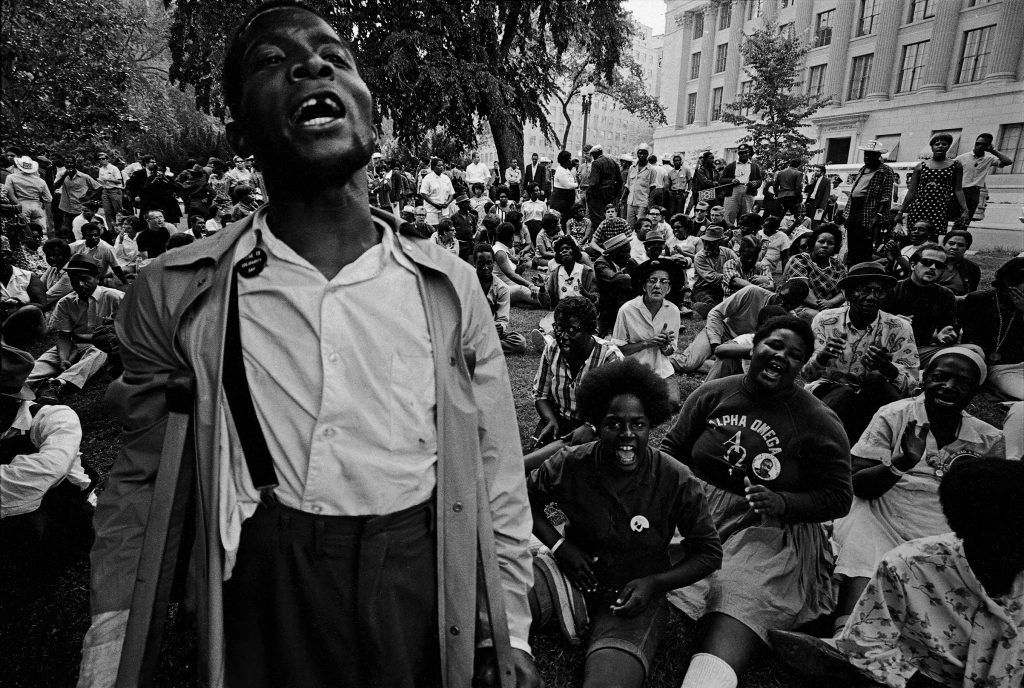
In his last years, after the landmark victories of the Civil Rights Movement were won, Martin Luther King argued that the coming era would require a human rights movement. When he tried to determine how we would get there, he called together the poor of all races and ethnicities to lead the way. This dream of the poor taking action together was a strategic vision for building a movement capable of tackling the intertwined evils of racism, poverty and militarism. Its first step was the Poor People’s Campaign, and this is what he spent his last months organizing. Just a few weeks after the assassination, thousands of poor families caravanned to Washington, D.C., occupied the capital, and made clear that the poor would not allow their families to be crushed by of poverty, racism, and war.
King called the poor coming together in a campaign to end poverty, racism, and war a “freedom church of the poor,” a reference to the abolitionist black church tradition. King believed the task of religious leadership is to nurture consciousness of one’s own human dignity, of the kingdom of God within us, and to make the kingdom of God real. This leadership role is shared by both individuals and the freedom church of the poor as a whole..
When King was trying to win the staff of the SCLC to the significance of the Poor People’s Campaign he said, “I would hope that we at SCLC are the custodians of hope. And I’m talking about a kind of realistic hope now. I’m not talking about some kind of superficial optimism which is little more than magic. I’m talking about that kind of hope that has an ‘in spite of’ quality…the final refusal to give up.” King elaborated that what we hope for is already here. “It is already present in the sense that it is a power which drives us to fulfill that that we hope for…That hope involves hoping for something that is not here and yet it is here in the sense that it is a power within you that drives you to fulfill the hope.
The hope of the campaign has been passed down and reignited by community and religious leaders today who are responding to the devastating crises of inequality today. Among them is the National Welfare Rights Union, whose leaders include powerful women who helped make the 1968 Poor People’s Campaign successful and continue to organize for the right to clean, affordable, public water utilities and against child separation from poor families. Also carrying the flame of King’s vision for a campaign of the poor is the Poor People’s Campaign: A National Call for Moral Revival, co-chaired by Rev. Dr. William J. Barber II and Rev. Dr. Liz Theoharis. With organizing committees in over forty states, the campaign is building the power of poor and low wealth people across lines of division to change what is politically possible in our country.
Bio: l.
Ask the Historian
Have a question about this story, or an idea for a future post? Send it here.