
Keith Griffler is Associate Professor of African American History in the Department of Africana and American Studies at SUNY Buffalo. He is the author of Front Line of Freedom: African Americans and the Forging of the Underground Railroad in the Ohio Valley and has been actively involved in the public history of the Underground Railroad.
This blog is Part I of our two part series on the meanings of freedom for African Americans. This theme is particularly important given the recent establishment of Juneteenth as a national holiday and the nation's celebration of July 4th. This blog addresses freedom through the dual lenses of 19th and 20th century conceptualizations of freedom using Marin Luther King's 20th century usage of the 19th century abolitionist understanding of Canada as a land of freedom.
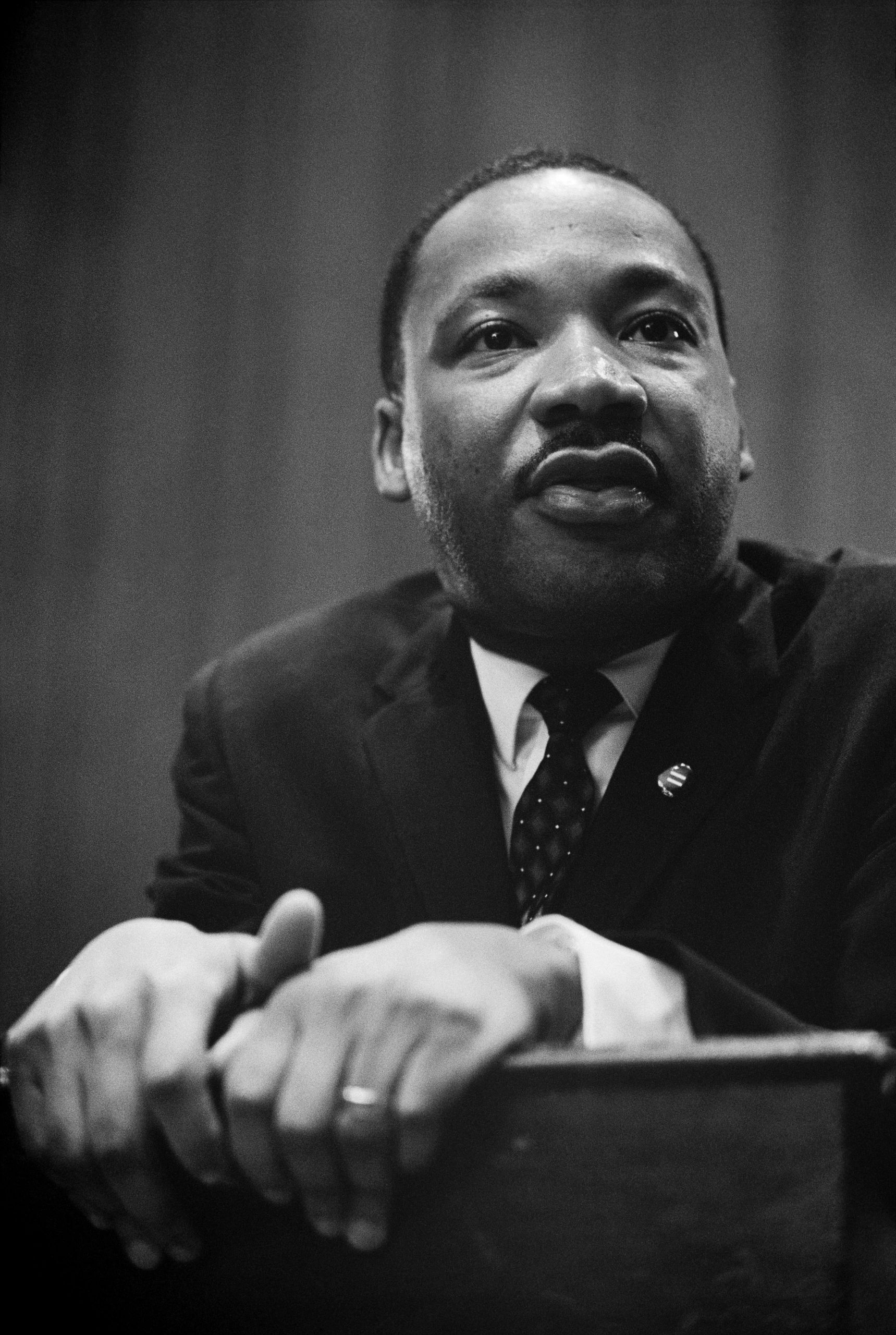
“Deep in our history of struggle for freedom Canada was the north star,” Dr. Martin Luther King, Jr. reminded his listeners in 1967. “The Negro slave, denied education, dehumanized, imprisoned on cruel plantations, knew that far to the north a land existed where a fugitive slave if he survived the horrors of the journey could find freedom.” Canada as destination of the Underground Railroad invested that land with such political resonance that Dr. King could still invoke it a century later and be confident of being understood by his audience.
We think of the U.S. as a country to which people come seeking freedom. For freedom seekers from slavery, it was the opposite. Canada was a primary destination of the Underground Railroad. For tens of thousands, their unquenchable desire for freedom lay behind their willingness—even eagerness—to go into political exile as the condition of realizing their personal liberty. Other African Americans who were not themselves runaways followed those refugees from slavery to their Canada destination in order to, expand the scope of their antislavery and antiracist work, as Dr. King would more than a hundred years later. The organized network to freedom of which they formed the Canadian branch was a product of the constant stream of freedom seekers from slavery who made their way north. It gave rise to a sweeping vision of freedom that forever changed America.
Dr. King had that set of principles in mind when in August, 1967, he spoke to the tenth annual meeting of the Southern Christian Leadership Conference. “We still have a long, long way to go before we reach the promised land of freedom,” he exhorted. “We need some North Star to guide us into a future shrouded with impenetrable uncertainties.” Even after the iconic civil rights achievements of the movement he helped lead, there remained intractable problems: the need to eliminate poverty, for African American political power, and “the question of restructuring the whole of American society.” Dr. King concluded, “What I’m saying today is that we must go from this convention and say, ‘America, you must be born again!’”
A few months later Dr. King himself resorted to traveling to Canada to give voice to words aimed at influencing politics at home. He did so as a figure under attack from the mainstream American media for his increasingly controversial views of freedom. In seeking temporary refuge north of the border, he was following in the footsteps of a large and influential group of his nineteenth century freedom struggle predecessors. For those who escaped slavery, seeking freedom did not end upon making it to the North. There was, first, the lack of liberty even on American free soil that compelled so many to become exiles. There was no group more completely excluded from the American polity than freedom seekers from slavery. Not only their disfranchisement from all rights and liberties but the very legal obligation of the state to hunt them down was written into the Constitution. For them, their freedom also meant every bit as much securing it for family, friends and all of those enslaved in the South. There was, in addition, the need to win civil rights in the North, the absence of which pushed African Americans into political exile across America’s northern border. Freedom seekers who went into Canadian exile recognized, as Dr. King would later put it, that America needed to be “born again.” The nation could not be safe for them without a rewriting of the Constitution along principles of an inclusive democracy and an expansive conception of freedom of the kind Dr. King would later call for.
Freedom seekers’ understanding of freedom exposed the need as nothing else for an entire overhaul of the politics of the nation. Until suitably rewritten, the Constitution would continue to serve as a tool of their oppression. In carrying on a political struggle from Canadian exile, African Americans in concert with other oppressed groups including Native Americans helped work out the principles of an inclusive democracy to replace the inadequate set America was born with. The freedom seekers who became Canadian exiles bequeathed the political legacy that Dr. King later highlighted that would in time transform the nation’s very understanding of freedom. If we are getting closer to realizing Dr. King’s vision for that reborn America, no one understood better than he how much of that progress owes to freedom seekers. They bravely but resolutely embraced political exile in Canada as a base from which to advance the cause of transforming the land of their birth. Their legacy remains as worthy of recognition, celebration, and careful study today as it was half a century ago.
Ask the Historian
Have a question about this story, or an idea for a future post? Send it here.