

A Pioneer’s Light: Understanding Mary McLeod Bethune’s Enduring Influence
Before civil rights movements gained national momentum, one woman laid the foundation for educational equity and Black empowerment through unwavering determination and visionary leadership. Mary McLeod Bethune wasn’t just an educator—she was a nation builder who understood that true liberation begins with knowledge. Born in 1875 to formerly enslaved parents in South Carolina, she overcame poverty and systemic racism to found Bethune-Cookman University, one of the first schools dedicated to advancing Black education in the South. Her journey exemplifies how purpose-driven leadership can transform barriers into pathways.
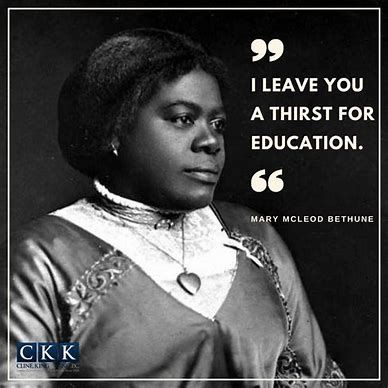
Roots of Resilience: The Early Life of Mary McLeod Bethune
Mary McLeod Bethune’s journey began not in privilege, but in perseverance—born in 1875 to formerly enslaved parents in Mayesville, South Carolina. As the first member of her family to be born free, she faced the harsh realities of post-Reconstruction poverty and racial injustice. From an early age, she displayed a fierce determination to learn, walking miles each day to attend a mission school that accepted Black students. This pursuit of education wasn’t just personal—it became a lifelong mission to uplift entire communities.
Growing up in the rural South, Bethune witnessed how limited access to quality education perpetuated cycles of disenfranchisement. Yet, her parents instilled strong values: faith, hard work, and the belief that knowledge was liberation. These early lessons shaped her vision for a school where Black girls could receive rigorous academic and moral training—something nearly nonexistent at the time.
From Vision to Institution: 5 Key Lessons from Mary McLeod Bethune’s Educational Legacy
Mary McLeod Bethune didn’t just open a school—she ignited a transformation in educational access for Black girls in the segregated South. Her founding of the Daytona Educational and Industrial Training School for Negro Girls in 1904 laid the groundwork for what would become Bethune-Cookman University, a lasting beacon of academic excellence and empowerment. Her approach offers timeless insights for educators, institutions, and mission-driven organizations today—especially those focused on equity and community impact.
- Start Small, Lead with Purpose
- Bethune launched her school with just $1.50 and five students, operating out of a rented home. Her determination to provide quality education despite limited resources is a powerful model for launching impactful initiatives with minimal capital. For modern educational programs in Columbus, Ohio, and similar communities, this underscores the value of vision over venture funding—authentic mission-aligned work gains traction through persistence, not just investment.
- Embed Empowerment into Curriculum
- She believed education should go beyond academics—it should instill confidence, leadership, and civic responsibility. Her holistic philosophy blended industrial training with liberal arts and moral development. Today’s institutions can mirror this by designing culturally responsive curricula that prepare students not just for jobs, but for lifelong agency and community leadership.
- Leverage Community Partnerships for Growth
- Bethune built alliances with local churches, Black women’s clubs, and philanthropists across the country. These relationships amplified her reach and sustainability.
- Champion Access for Underrepresented Groups
- She removed financial and social barriers by offering flexible enrollment, work-study programs, and scholarships.
- Build Institutions, Not Just Programs
- Her relentless focus on institutional longevity turned a modest school into an accredited university. For today’s changemakers, this means planning for succession, accreditation, and sustainable infrastructure from the start. A legacy isn’t made overnight—it’s built through consistency, quality, and deep community roots.
A National Force for Change: Bethune’s Influence Beyond the Classroom
Mary McLeod Bethune didn’t confine her leadership to the campus of Bethune-Cookman University—she leveraged her platform to shape national policy and uplift Black women across America. As a key advisor during the New Deal era, she became the only Black woman in FDR’s informal “Black Cabinet,” advocating for equitable inclusion of African Americans in federal programs. Her strategic influence ensured that relief efforts, job training initiatives, and youth programs like the National Youth Administration extended opportunities to Black communities—many of whom had been historically excluded from economic support systems.
In 1935, she founded the National Council of Negro Women (NCNW), uniting 28 organizations to amplify the voices of Black women in civil rights, education, and workforce development. This coalition became a powerful engine for policy advocacy, voter engagement, and community empowerment.
Bethune proved that education, advocacy, and policy are interwoven—and that representation at the highest levels drives systemic change.
A Living Legacy: How Bethune’s Vision Shapes Modern Change
Mary McLeod Bethune’s influence extends far beyond the classroom—her unwavering commitment to education, civil rights, and mentorship continues to fuel contemporary social movements and community-based initiatives. At a time when access to quality education was deeply unequal, she founded Bethune-Cookman University, proving that historically marginalized communities could build and sustain institutions of excellence.
Frequently Asked Questions About Mary McLeod Bethune’s Life and Impact
Who was Mary McLeod Bethune and why is she important in American history? Mary McLeod Bethune was a pioneering educator, civil rights leader, and advisor to multiple U.S. presidents. Born in 1875 in South Carolina, she rose from poverty to found the Daytona Educational and Industrial Training School for Negro Girls, which later evolved into Bethune-Cookman University. Her leadership helped shape national policies on African American education and empowerment, making her a key figure in 20th-century social progress.
What were her major achievements in education? Bethune believed education was the foundation of equality. She built a school with only $1.50, eventually growing it into a full-fledged college. Her model combined academic rigor with moral and civic training, emphasizing self-reliance and community service.
How did she influence civil rights and government policy? As a member of President Franklin D. Roosevelt’s “Black Cabinet,” she advocated for African Americans in New Deal programs. She fought for desegregation, voting rights, and equal access to public services, using her platform to amplify marginalized voices long before the modern civil rights movement.
Why is her legacy relevant for today’s community programs? Her life proves that leadership rooted in service, resilience, and cultural pride can drive lasting change—especially in underserved urban centers.
A Legacy That Continues to Ignite Change
Mary McLeod Bethune’s impact stretches far beyond her lifetime, serving as a living blueprint for empowerment, education, and community advancement. Her unwavering belief in the transformative power of knowledge laid the foundation for generations of leaders, particularly in communities where access to quality education and economic opportunity remains a critical priority. By founding a school that evolved into a respected institution, she demonstrated how targeted action can create ripple effects—turning individual progress into collective uplift.
Ask the Historian
Have a question about this story, or an idea for a future post? Send it here.