

For Black Americans, political labels have never been an academic argument. Words like socialist and communist have been tools of self-description for labor leaders and freedom fighters, and weapons in the hands of those who wanted to stop them. That history is the right place to start reading the 2026 results, because the voters most fluent in it are also the voters the labels most often misdescribe.
A Tradition That Named Itself
A. Philip Randolph called himself a socialist when he founded the Brotherhood of Sleeping Car Porters in 1925, and he built the most important Black labor union in American history on the idea that freedom required a paycheck as well as a ballot. Bayard Rustin, W.E.B. Du Bois, Claudia Jones and, late in his life, Martin Luther King Jr. each argued in different ways that civil rights without economic power would stay unfinished. The goal was not foreign doctrine. It was jobs, wages, housing and dignity.

A. Philip Randolph, founder of the Brotherhood of Sleeping Car Porters and director of the 1963 March on Washington. HistorianSpeaks archive.
Defenders of Jim Crow answered with a label. On August 13, 1963, two weeks before the March on Washington, Sen. Strom Thurmond of South Carolina rose on the Senate floor to attack Rustin, the march's chief organizer, as a communist. Rustin had briefly joined the Young Communist League in the 1930s and broke with it in 1941. By 1963 he was a committed democratic socialist and an open opponent of the Soviet model. The charge was never really about Rustin's beliefs. It was meant to discredit a demand for "Jobs and Freedom." Segregationists said the same of the NAACP, and the FBI surveilled King on the same theory.
Rustin and Randolph answered with a plan. Their 1966 Freedom Budget for All Americans called for full employment, a guaranteed income, decent housing and health care, at a cost of $185 billion over 10 years. Opponents called it socialist. Today much of it reads like an ordinary Democratic platform. Our earlier piece, Not the Same Word, traces how the same label was aimed at Randolph, Paul Robeson, Claudia Jones and King.
The Voters Who Kept the Word
That tradition did not disappear. In 2026 exit polls by CNN and NBC, 31 percent of Black voters called themselves democratic socialists, more than any other group, along with 23 percent of Hispanic voters, in line with a New York Times survey in September. Among Black voters who embraced the label, 99 percent voted Democratic. Among those who did not, 86 percent did. The most reliable bloc in the Democratic coalition is not frightened of the word. Many of its members use it for themselves, in a line that runs from Randolph's porters to the Poor People's Campaign, and what they mean by it is concrete: health care, rent they can afford, wages they can live on and schools that are fully funded.

Gallup's long-running question shows how ordinary the word has become among Democratic voters: 66% viewed socialism positively in 2025, while 42% said the same about capitalism. Chart: HistorianSpeaks, from Gallup data.
Start there, and the rest of the 2026 story looks different. The labels that bent coverage of this election are the same kind that were bent around Black politics for a century.
Swing Left, or Swing Toward Prices?
The morning after the midterms, the Associated Press summed up one of the biggest stories of the night in four words: Latino voters "swing left." The numbers behind that headline are real. The label on top of them is the problem. Voters did not move toward a political theory. They moved toward Democratic candidates who ran on grocery prices, government corruption and an immigration crackdown that had reached into their own families.
The AP's own reporting shows what voters were choosing. About seven in 10 Hispanic Texans backed James Talarico for the U.S. Senate, after splitting evenly in 2024. Democrats won every House district touching the U.S.–Mexico border for the first time since 2008. The winners included a sheriff's deputy in a new San Antonio-area seat, a Houston-area candidate in a district Republicans had redrawn for themselves, and a Colorado candidate who told reporters that voters trusted him because he grew up in a family that struggled to pay bills. Democrats, the AP wrote, "capitalized on voters' angst over rising prices and government corruption."
None of that is a march toward the far end of anything. Allentown Mayor Matt Tuerk put it best: Latino voters "saw betrayal from Trump after they gave him a chance in 2024," and now Democrats are "on probation." That is a verdict on performance. A label that turns it into ideology tells readers the electorate has become radical, when it has mostly become impatient.
A Ruler Bent at Both Ends
American political labels work like a ruler that has been bent at both ends. On one end, mainstream Democrats are called "the left," even when they campaign on lower costs, safer streets and border enforcement. On the other end, democratic socialists are called the "extreme left" or the "far left," as if a city council member who wants more public housing belongs in the same category as an armed revolutionary.
Look at the rest of the world and the ruler straightens out. Nearly every other wealthy democracy guarantees health coverage to its citizens. In Britain, the National Health Service was built by a Labour government in 1948 and has been run by Conservative governments for most of the years since. Ideas that American campaign ads call radical, such as universal health care, free public college or strong union protections, are the ordinary business of center-right and center-left parties across Europe and Canada.
What Democratic Socialists Actually Propose
The Democratic Socialists of America was founded in 1982, when Michael Harrington, whose book The Other America helped inspire the War on Poverty, brought two smaller groups together. Its candidates run in Democratic primaries, campaign door to door and win or lose at the ballot box. Their platforms center on rent, wages, transit, health care and public services.

Nithya Raman, Los Angeles mayor-elect. Photo: Office of Nithya Raman, via Wikimedia Commons; public domain.
That is the record of the democratic socialists we have covered this fall, from Nithya Raman in Los Angeles to the organizers behind Janeese Lewis George in Washington, D.C. You can agree or disagree with their plans. But a program of elections, legislation and city budgets is not "extreme." It is democratic politics, and describing it accurately is the minimum readers deserve.
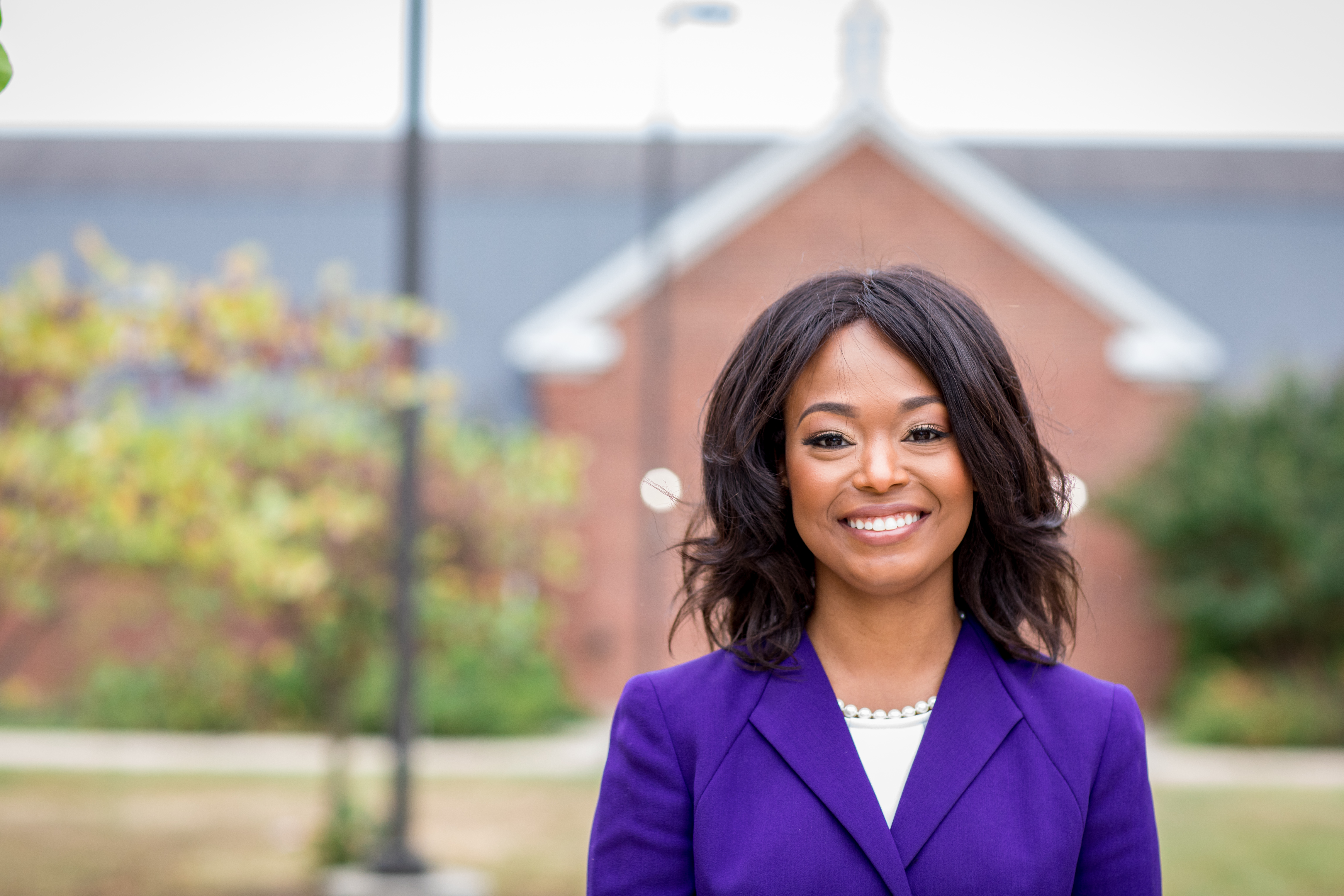
Janeese Lewis George, October 2019. Photo: Aimee Custis/Janeese4DC, via Wikimedia Commons; [CC BY 2.0](https://creativecommons.org/licenses/by/2.0/).
The Oldest Smear, Updated
The Republican habit of calling socialists "communists" is not a slip of the tongue. In June 2025, President Trump called Zohran Mamdani, then the Democratic nominee for mayor of New York, a "100% Communist Lunatic." Communism, as practiced in the Soviet Union and its allies, meant one-party rule and state ownership of nearly everything. Democratic socialists compete in elections they can lose and serve terms that end. Blurring the two is intellectually dishonest, and it is literally false. It is also the same move Thurmond made against Rustin in 1963, aimed at a new generation.
When the Label Does the Arguing
Labels matter because they do the arguing before the argument starts. If a centrist winner is "the left," then voters who wanted lower prices become a radical bloc that can be dismissed. If a democratic socialist is "extreme," then rent control and public health become fringe ideas no matter how many people support them. And if every socialist is a "communist," then the long Black tradition of economic justice, from Randolph's porters to the Freedom Budget, gets recast as something foreign and dangerous.
The fix is simple, and it is the standard we hold ourselves to. Describe what candidates actually propose. Name the coalition that elected them. Save the spectrum labels for when they explain something, and check them against the record before they go to print. The 2026 electorate deserves to be described as it is: practical, impatient, multiracial and very much in the democratic mainstream.
We are actively building HistorianSpeaks, and we need your direct support.
Real historical scholarship, deep archival investigation and unapologetic Black analysis cannot survive on corporate algorithms or polite foundations. We answer only to our readers, and sustaining this work requires readers who invest in it directly.
When you step up as a Founding Member today at $9.99 a month, locked in for life, you secure:
- Permanent recognition: your name honored on the Founding 50 dedication page in Black Thread.
- Early access: read every new issue of Black Thread 48 hours before other members.
- Founders-only bonus essays: an exclusive monthly research essay delivered to your inbox.
- Complete digital access: every investigative series, guide and subscriber dossier.
[Claim your founding membership](/founders)
Related Reading on HistorianSpeaks
- Not the Same Word: Socialism, Red-Baiting, and the Black Freedom Struggle
- The Socialist Mayors: Janeese Lewis George, Nithya Raman and Why Bowser and Bass Leave Differently
- From Moncrief to the Senate Race: Angie Nixon and the Black Socialist Tradition
- Discredit, Disrupt, Destroy: What the FBI Files Reveal About the War on Black Leadership
Why your support matters
Track Black politics past and present. One dispatch a week, free.
HistorianSpeaks is independent and reader-supported. No corporate owners, no paywall on the daily history. Every member keeps stories like this one coming.
Free
Newsletter
The weekly dispatch in your inbox.
Founding member
$9.99/month
Price locked for life, founder recognition and full Black Thread magazine access.
Become a founderAsk the Historian
Have a question about this story, or an idea for a future post? Send it here.