
Ciana daCosta, a recent graduate from Norfolk State University and Historianspeaks staff reporter, holds a deep-seated passion for history that has shaped her worldview since an early age. With an unwavering commitment to education, she endeavors to enlighten individuals about the intrinsic significance of history. Ciana seeks to ignite a fiery appreciation for history's transformative potential, propelling us towards a future where knowledge of our roots fuels the flames of progress and equity.
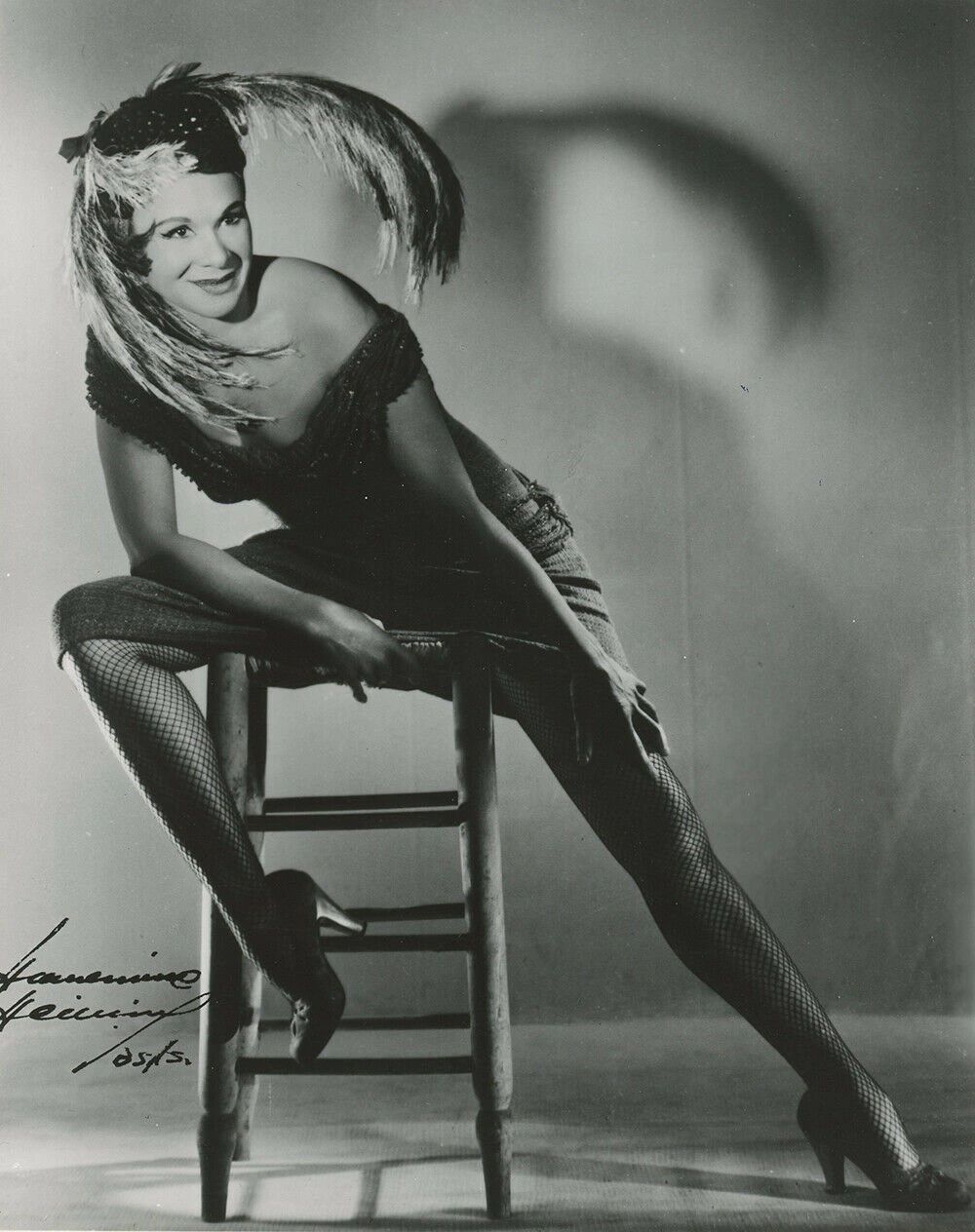
By tracing the origins of black dance and performance and translating them into meaningful creative choreography, Katherine Dunham forever transformed American dance. Dunham, an American dancer and choreographer, is known for fusing African, Caribbean, traditional ballet, African-American rhythms, South American movement forms and themes to create the Dunham Technique. Dunham has long been acknowledged as a significant presence in American dance and is referred to as the “Matriarch of Black Dance.” In addition to her trailblazing work in the world of dance, Dunham built a school and humanitarian legacy that embraced multicultural values decades before the phrase was popular in the broader community.
Dunham was born in 1909, to a French-Canadian mother, Fanny June Taylor, and her African-American father, Albert Millard Dunham, in Glen Ellyn, Illinois. When Dunham was four years old, her mother passed away, prompting her father to move the family, inlcuding her brother, Albert to Joliet, Illinois. Although passionate about dance throughout her childhood, her college studies in anthropology at the University of Chicago nurtured her love of dance. At Chicago, she was exposed to the idea of dance as a cultural symbol with deep meaning. This idea prompted her to begin seriously studying different dance forms, specifically those with roots in African culture and Black dance expressions in South America and the Caribbean.
Chicago was an ideal location for Dunham’s work. The city’s prominient Black population helping to shape the culture and theater of the 1920s Jazz Age. Dunham was exposed to a wide range of Black performance. Shortly afterward, in 1934, Katherine Dunham started her first dance company, the Ballet Negre (the Negro Dance Company), which performed at the Chicago World’s Fair and with the Chicago Civic Opera. Dunham researched Caribbean dance styles for her master’s thesis. She visited Jamaica, Trinidad, Martinique, and Haiti for 16 months to study dance. Her itinerary took her to Jamaica where she studied in a maroon village. This experience became the basis for her first book, Journey to Accompong. She eventually spent nine months in Haiti. Her Haitian research led to the publication of two books: Island Possessed and her thesis, “The Dance of Haiti: Their Social Organization, Classification, Form, and Function.” These groundbreaking dance/anthropology works were important early developments in the developing field of dance anthropology.
Upon her return to the United States in 1938, Dunham created the Katherine Dunham Dance Company and incorporated her unique anthropological lens into her choreography. Her dance company toured from 1938-1965. The company was one of the select few American dance companies to be internationally recognized and tour six countries. She presented her work in different forms and venues, including Broadway, feature films, and worldwide tours made possible by Sol Hurok. Dunham’s choreographic process included choosing movement themes and reinterpreting them as her creative statements. She also frequently drew inspiration from ritualistic activities. Her company’s performances often incorporated elaborate costumes, vibrant music, and dynamic choreography that showcased her unique fusion of dance styles.
In addition to touring with her dance company, Dunham created The Katherine Dunham School of Arts and Research in New York City in 1946 which grew to become The Katherine Dunham School of Cultural Arts in 1952. It was at this school that the Katherine Dunham Technique was started. This was a comprehensive dance training method that combined elements of ballet, modern dance, and traditional African and Caribbean dance. The technique emphasized the use of isolations, rhythmic movements, and an understanding of cultural contexts to convey stories and emotions through dance. Through her teaching and choreography, she aimed to break down racial barriers in the dance world and create a space for dancers of all backgrounds to learn and collaborate. She created a ground-breaking and distinctive multidisciplinary curriculum for the school that covered topics including psychology, anthropology, ballet, modern dance, dance notation, theater history, and folklore from the Caribbean. The certificates received by graduates from her school were even accredited by Columbia University.
More than a dancer and instructor, Dunham was also a scholar and humanitarian. Throughout her life she lectured at Yale and the Royal Anthropological Society in Brussels and London. Dunham used the technique and the philosophy underlying it to help the Black community of East St. Louis. She believed her philosophy could change people’s lives and created the Performing Arts Training Center (PATC) in East St. Louis in the 1960s based on that belief. Now her belief lives on in the Katherine Dunham Center for the Arts and Humanities (KDCAH) which is a non-profit organization that oversees the work and institutions Dunham started in Southern Illinois; the PATC; the Institute for Intercultural Communication; the Katherine Dunham Children’s Workshop; and the Katherine Dunham Museum. One of her most notable humanitarian acts was when she led a 47-day hunger strike to stand up for Haitian refugees who experienced political persecution and deportation in 1992.
The legacy of Dunham includes choreographic works, technique and instruction, production and performance, anthropological examination of African diasporic dance and ritual, international activism and human rights leadership. The Matriarch of Black Dance’s legacy lives on in all that she created to help her community, the fusion of dance and ritual she created, and her belief that her philosophy of dance as a way of life could improve lives.
Beow please find several videos which illustrate some of Katherine Dunham's key contributions.
Ask the Historian
Have a question about this story, or an idea for a future post? Send it here.