
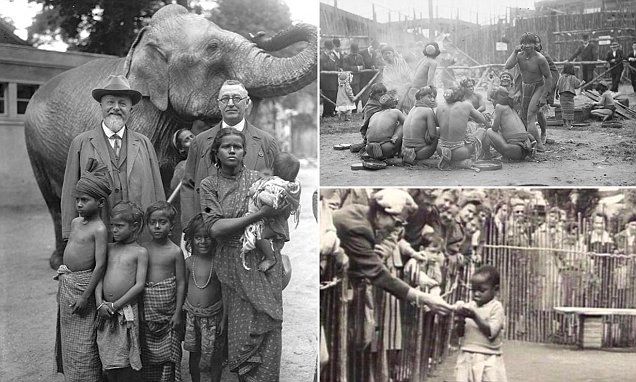
On 17 April 1958, Belgium opened the world's fair, which included a ‘human zoo' displaying Black men, women, and children in their supposed 'native conditions' found in the Congo, then a Belgian colony.
The people used were abused and taunted by white spectators, who threw money and bananas over the bamboo fence to try to provoke a reaction. One Belgian journalist reported on how, on one occasion, a white woman threw half a candy bar over the fence to a young Congolese boy, who promptly threw it back at her "without even looking up, with an air of noble contempt."The Congolese people in the exhibit, as well as Congolese workers in the fair, were housed in an isolated building, in cramped accommodation with restrictions on receiving visitors or being able to leave.
The exhibition was widely praised in Belgium at the time, with even socialist newspaper Le Peuple declaring that its "story… [was] in complete agreement with historical truth", and showed how Congolese people had been brought from "the night of prehistory to the light of civilisation".
Authorities intended for the exhibit to continue until October, however, they were forced to return the Congolese inhabitants home in July due to them resisting their inhumane treatment, and not tolerating it any further.
Racist human zoos took place in many countries, including the US, UK, Germany, and Norway, with the last one we are aware of being held in France in 1994.
Belgian colonialism in Congo is estimated to have killed eight to 15 million people.
Belgian human zoo - WCH | Stories
#Belgium #RacialZoos #HumanZoos #BelgianCongo
Ask the Historian
Have a question about this story, or an idea for a future post? Send it here.