
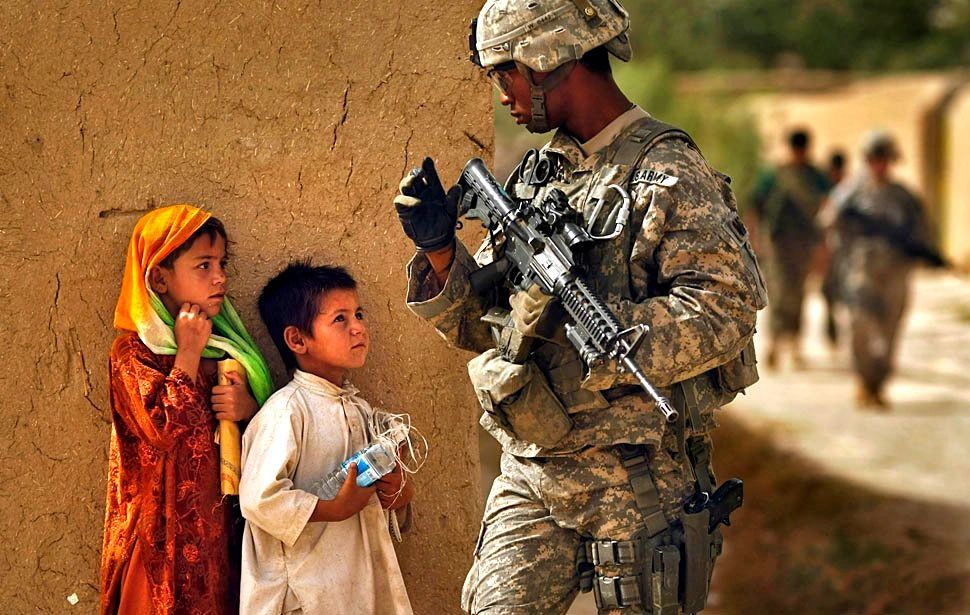
The Afghanistan War has ended after 20 years of U.S. occupation. The war began after 9/11. Viewed as the opening salvo in the 21stcentury War on Terror, the US invasion drove the Taliban from power. The invasion and occupation, however, came at a great cost. The US expended over two trillion during the conflict. In the face of the recent complete US withdrawal from the country, the Afghan National Army and government collapsed. The country’s president Ashraf Ghani fled to the United Arab Emirates. The rapid collapse of the national government and the Taliban’s return to power threatens modernization,, especially the gains of Afghan girls and women. In addition to the financial and human right costs, the military has borne the brunt of the conflict, especially African American soldiers .
One of the best measurements of war’s impact is the casualty rate, American forces suffered a casualty rate which exceeded 2500 soldiers and 23,000 wounded. Afghan casualties were 150,000. Of the soldiers killed in the conflict, African Americans accounted for a substantial number. Blacks comprise 43% of the enlisted personnel,19.1 percent of the active duty force and 24 percent of the army. African American participation in the army pales in comparison to their percentage of the general population, which is 13 percent.
Systematic discrimination against African Americans is rampant in US society, similar problems exist in the armed forces. While overly represented in the enlisted ranks, African Americans make up only 2 of 41 senior ranking military officers. Black soldiers are likely to be reprimanded harshly and more frequently than soldiers of other races. An Air Force report showed that Black personnel were 71% more likely to face court martial and non-judicial punishment. The mistreatment of Black soldiers is the result of an old military mantra that Black soldiers are not capable of leadership and require sterner treatment.
Despite massive spending during the Afghanistan War, for Black soldiers it is minimal. are . A study shows that 25% of Black soldiers faced severe food insecurity and lacked basic sustenance for their families. The risk factors contributing to soldiers' food insecurity include inadequate governmental income, minority status, and high incidence of mental illness among Black veterans. Additionally, the added cost of healthcare caused by injuries incurred during wartime increases veteran food insecurity by a factor of 10 . T. Black veterans comprise 33% of the homeless veterans population. They are twice as likelyto experience poverty compared to white soldiers. Black veterans also have trouble securing employment.
The treatment of Black soldiers in the “fight for democracy” in Afghanistan is compounded by the myriad economic challenges they face. The enormous price tag of the war continues to mount in the lived experiences of African American soldiers As Martin Luther King said at time of the Vietnam War, war "is an enemy of the poor". The Afghanistan War has also produced uneven economic outcomes forAfrican American soldiers.
The victims of the Afghan War are many and cannot simply be measured in body counts. As the consequences of this war are evaluated, we must acknowledge the suffering of Black soldiers. We must also ask ourselves how to create more equitable outcomes. Increased opportunities for advancement and better care for Black veterans in terms of food security, healthcare and employment opportunities are important first steps in improving this dismal situation. Doing so honors our commitment to support our troops and their service.
Ask the Historian
Have a question about this story, or an idea for a future post? Send it here.