
Travis Armstrong, Ed.D
Dr. Travis Armstrong is the community outreach coordinator of the Foot Soldier’s Journey organization led by his cousin, Thomas Armstrong, who is an original Mississippi Freedom Rider of 1961. The organization’s purpose is to provide civic education and engagement to educate organizations about the lessons of the civil rights movement era and to inform on the contemporary civil rights issues of today. Dr. Armstrong also serves on several committees including the Mississippi Department of Archives and History and the Prentiss (MS) Normal and Industrial Institute Partnership Team. Armstrong retired from the United States Air Force in 2014 after 23 years of active duty service and served in Operations Southern Watch, Enduring Freedom, Iraqi Freedom and in Europe, Asia, and the continental United States. He specialized in combat troop deployment services and designed, produced, and implemented instructional development programs for the Air Force Human Resources career field, serving over 44,000 personnel.
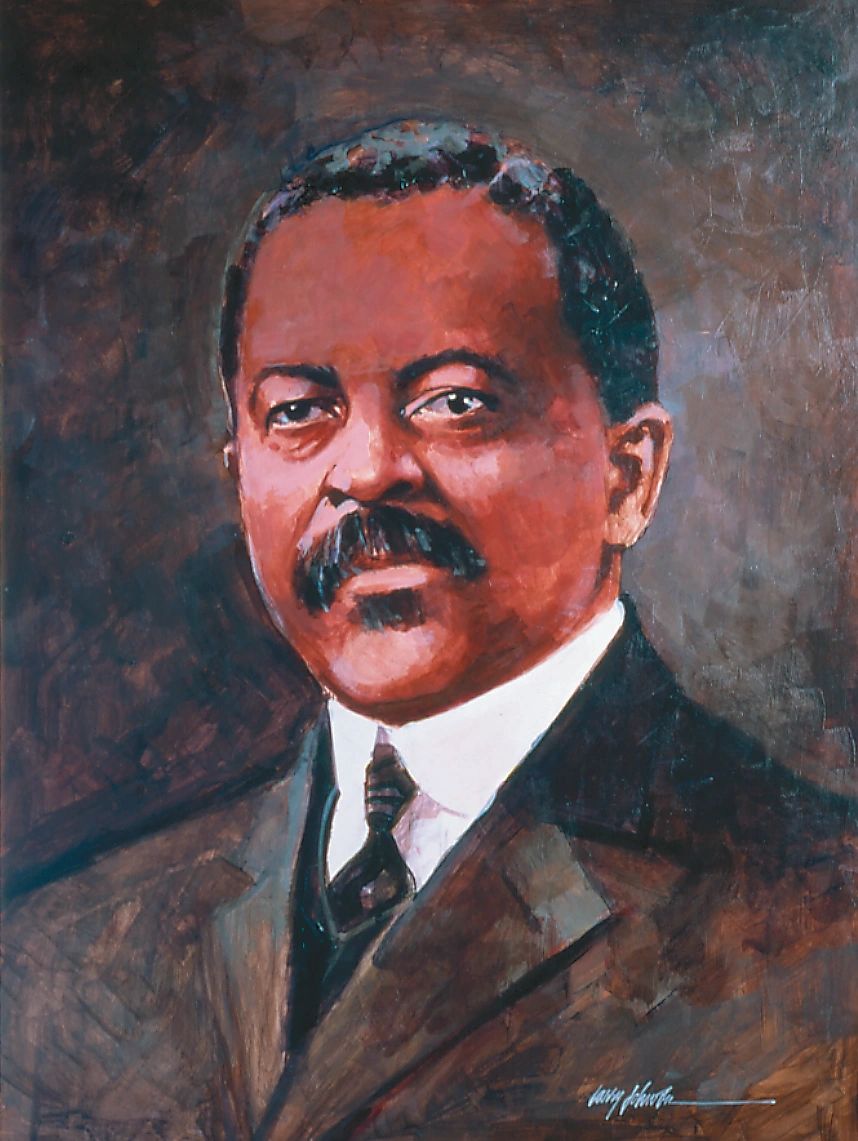
For more than two centuries, the Black Press has been the mouthpiece of the Black community. Freedom’s Journal, the first Black newspaper published in the United States, was founded by Samuel E. Cornish and John Russwurm in 1827. In 1847, Frederick Douglass and Martin Delany co-edited The North Star newspaper foregrounding Black uplift as its central theme. William Monroe Trotter, an imposing figure in the annals of the Black newspaper industry, continued that tradition. Armed with a no-holds barred mentality, Trotter believed “the burden of agitation and organization was dropped upon him by the desertion of others.” He utilized this spirit to launch a lifelong journalism career and fight for Black rights.
William Monroe Trotter was born to previously enslaved parents on Isaac’s Farm in Springfield, Ohio on April 7, 1872. His father, James Trotter, was born the son of an enslaved woman named Letitia and Richard Monroe Trotter, a white man who human trafficked her. William excelled in academics and entered Harvard College in Fall 1891. Following graduation in 1895, he began a career in real estate. In November 1901, Trotter and his business associate, George W. Forbes established The Guardian, in Boston, Massachusetts, a weekly newspaper. Trotter said the Guardian “would be an organ to voice intelligently the needs and aspirations of the colored American.” Trotter later collaborated with W.E.B. DuBois and others to establish the Niagara Movement in 1905. The Niagara Movement was the forerunner of the National Association for the Advancement of Colored People (NAACP), established in 1909. Trotter subsequently created his own independent organization known as the National Equal Rights League.
Trotter utilized the power of the press to call attention to the oppressive racial economic and labor environment that Blacks endured across the country. He criticized Booker T. Washington's accomodationist views. Washington, the founder of Tuskegee Institute, whose chief philosophy for Black labor was working with the “head, heart, and hands.” Washington was one of the preeminent Black leaders of the early twentieth century. He modeled his philosophy on the work of Samuel C. Armstrong, his mentor and founder of Hampton Institute. Washington traveled the country soliciting funding from whites and championing the need for Black vocational education. Trotter opposed Washington’s ideology and authored scathing articles to counter Tuskegee’s editorial machine. He obtained support from W.E.B. DuBois (his former roommate at Harvard) and Ida B. Wells, the antilynching crusader and fellow journalist, in attacking Washington's views.
Trotter was not afraid to confront the white establishment. He targeted the President of the United States himself, Woodrow Wilson. Trotter's Guardian endorsed Wilson for President in 1912. In 1914, Trotter and a delegation of the National Equal Rights League attended a meeting at the White House. There the group expressed their opposition to Wilson's policies and called for an immediate end to racial segregation in the federal bureaucracy. The meeting got heated. Wilson refused their requests, and the group was expelled from the White House. This explusion did not deter Trotter who held a press conference on the White House grounds. There he recited his version of the encounter and called the President’s view on segregation “contentious and entirely disappointing.” The incident made the front page of the New York Times which further angered Wilson. DuBois praised Trotter’s news coverage stating, “in the Guardian...Negro people can expect strong, staunch advocacy for fundamental principles of freedom and justice.” A year later, Wilson viewed the controversial movie Birth of a Nation in the White House and is reported to have said its "History written with lightning.” This so angered Trotter that he pushed the NAACP to initiate a censorship campaign against the movie. In 1921, he worked with the Knights of Columbus to successfully oppose showings in Boston. In 1929, Trotter took on the segregated Boston City Hospital. His fight led to the admission of two Black women to the nursing program and the hospital's first Black intern in 1931. Unfortunately, Trotter’s premature death in April 1934 left a void in the ranks of Black media. Kelly Miller of the New York Amsterdam News described Trotter as “perhaps the only Negro of education and privilege who has deliberately undergone self-sacrifice for his race.”
Newspapers are a very vital part of Black life. Today they are one of the most important instruments in the fight against white nationalist attempts to whitewash our history. The community is hungry for authentic, timely, and truthful means of communication pertinent to our specific needs. This sentiment is very much in line with the sentiments of the founders of Freedom's Journal in 1827: “We wish to plead our own cause. Too long have others spoken for us.” Trotter understood this maxim. He utilized his platform for the advancement of the race, and spared no one. While still an important medium to produce and consume, the Black press has drastically changed since Trotter’s days. The need to speak out and advocate for change is as urgent as ever. Gone are the days of powerhouse news distributors like John H. Johnson who founded traditional magazine press such as Ebony, Jet, and Black Enterprise. These magazines have either ceased to exist or have transitioned to digital media, ending the time-honored tradition of occupying a weekly or monthly physical space in millions of Black households. These changes do not bode well for the Black press. This reality is even more challenging given the regressive times we are currently experiencing. We need more progressive forces in the Black press to take up the mantle of their predecessors like William Monroe Trotter and fearlessly speak truth to power.
#WilliamMonroeTrotter #BostonGuardian #NiagaraMovement #BlackPress
Ask the Historian
Have a question about this story, or an idea for a future post? Send it here.