
The investigation into the murder of Haitian President Jovenel Moise continues at fever pitch. The latest developments implicate Dr. Emanuel Sanon as one of the chief conspirators. One of the most puzzling issues surrounding the assassination is understanding the involvement of more than 28 Colombian nationals in the plot The total number of people detained in the plot has reached 44. Police and intelligence organizations in the United States and Colombia are involved in trying to figure out the complex linkages between their countries and the tragic events in Haiti.
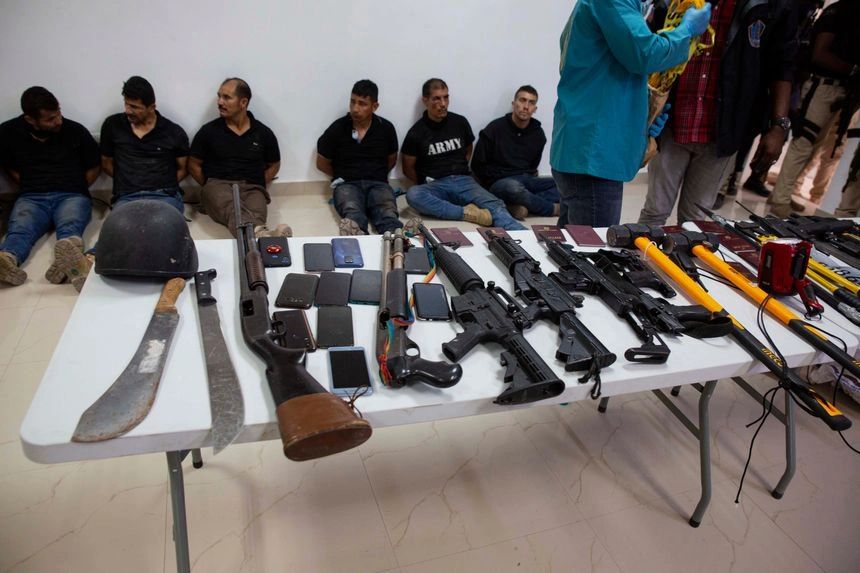
At the outset of the investigation, police presented suspects to the media, along with Colombian passports and firearms that they had recovered. As part of the international investigation into the assassination, Haiti's National Police chief, Leon Charles, promised to track down any surviving gunmen. Weapons, passports, and bulletproof vests were stacked high on the table in front of the suspects for the media and interested parties. Nearby, soldiers in black balaclavas stood watch; guns were drawn. Haitian officials believe the Colombians captured and killed were mercenaries retained for the purpose of assassinating the president and instituting regime change in Haiti.
Twenty-six Columbians were involved in the attack. Eighteen Colombians have been detained in connection with the July 7 killing. Thirteen were retired Columbian military officers. Three people were killed in the aftermath of the incident, and five others are still on the loose. Two Haitian Americans, one of whom was a former US government agent, surrendered hours after the attack. They claimed to be interpreters employed to assist in the arrest and transport of the president to the presidential palace. Their mission, they maintain, was not to assassinate the president.
The secrecy surrounding the Colombians' activities in Haiti has grown in the nearly three weeks since their detention. At least seven suspected assassins received training from the American military during their service careers. Others served as informants for the Drug Enforcement Administration (DEA) and the Federal Bureau of Investigation (FBI). According to a US source, the troops were trained in Colombia and the United States between 2001 and 2015. They received specialized training in military counter narcotics and counterterrorism. Experts on Latin American security point out that the US has provided more than 107,640 training courses for Colombian security officers in the last two years. The presence of Colombians in Haiti has provided a rare glimpse into a shadowy private security work that stretches from the United States to Latin America and the Caribbean. The soldiers involved in the plot are known as “paramilitaries,” “private military,” or “security contractors” Their activity highlights the outsized role that Colombian security forces veterans play in the global mercenary sector.
The participation of ex-Colombian troops in the killing of Haiti's president poses a dilemma for Colombian security forces. The Columbian military was already grappling with concerns about a harsh response to protests earlier this year. The military is also responding to a court finding from Colombia Jurisdiction for Peace (JEP) that soldiers killed innocent people and classified them as rebels combat casualties to raise body counts.
The assassination of Moise has generated debate over who is now the rightful leader of Haiti, "The killing has created a political and institutional vacuum at the highest level of the state," said Andre Michel, a Haitian opposition lawmaker. "The Constitution does not cover this unique scenario."
Ask the Historian
Have a question about this story, or an idea for a future post? Send it here.