
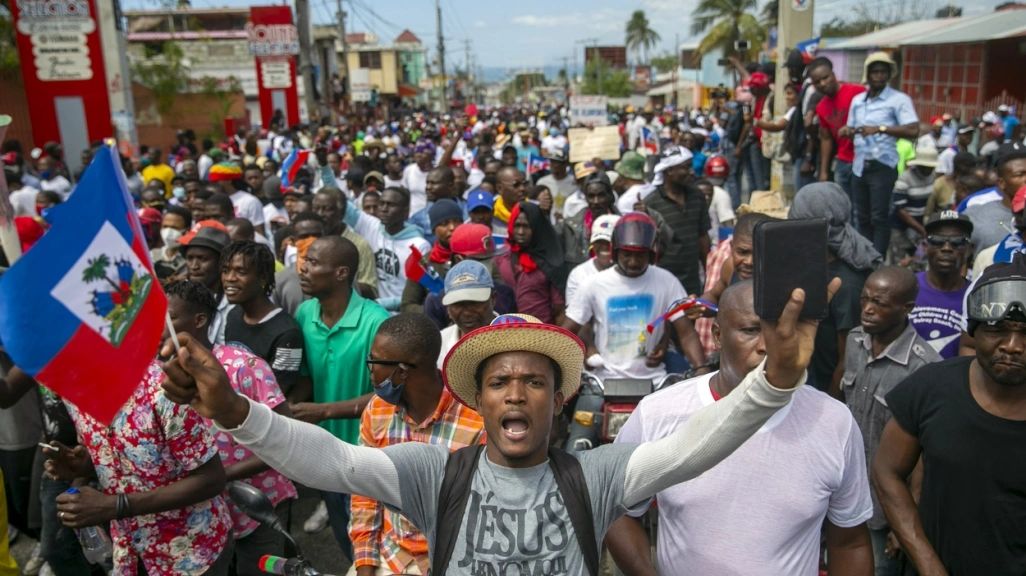
The recent death of Randall Robinson, former president of TransAfrica Forum and a stalwart supporter of the Haitian sovereignty, makes the situation in Haiti even more troubling. Haiti is awash is a perpetual sea of troubles. The country is currently facing a humanitarian crisis due to political instability, economic challenges, and natural disasters. The assassination of President Jovenel Moise in July 2021 further worsened the situation, leading to a power vacuum and increased violence. The country is also struggling with COVID-19 and a lack of access to basic services.
Haiti, a Caribbean nation known for its tumultuous history, has been plunged into further chaos following the assassination of President Jovenel Moise in July 2021. Interim Prime Minister, Ariel Henry is tasked with navigating Haiti through this difficult period. However, his effectiveness has been called into question. One of the major challenges facing the country is the rise of armed gangs in the capital city of Port-au-Prince. These gangs, some of which are linked to the country's wealthy elite, have been accused of carrying out violent attacks and extortion schemes against ordinary citizens. These gangs are known for their violent tactics, including kidnapping for ransom, extortion, and killings. Some of the most prominent gangs in the capital include the G9 (Gang 9) alliance, which consists of nine powerful gangs, and the "400 Mawozo" gang, "Ti Bwa" gang, and "Zo Wezo" gang. These gangs are named after the areas in which they operate. The situation remains volatile, and there are ongoing concerns about the security and stability of the country. The collusion between the gangs and the wealthy has only served to exacerbate Haiti's already stark inequality and insecurity. The security forces, including the police and army, have been unable to address these issues effectively. Reports of corruption and human rights abuses among the security forces have only served to erode public trust in these institutions. The police force has been particularly ineffective, and there have been reports of officers being killed or kidnapped by the gangs. The army, on the other hand, is seen as a force for stability, but its role in addressing the crisis has been limited.
The investigation into the assassination of President Moise is ongoing, and many questions remain unanswered. The international community has called for a transparent investigation, and the Haitian government has requested assistance from foreign investigators. However, progress has been slow, and there are concerns that those responsible for the assassination may not be held accountable. The national and international response to the crisis in Haiti has been mixed.
The United Nations has been deliberating on the possibility of sending a strike force to Haiti to help stabilize the situation, but there is no clear consensus on the best course of action. Several countries have expressed interest in helping Haiti with its political and security situation, including the United States, Canada, and France. The United Nations has also been involved in providing support to Haiti. The situation in Haiti remains complex and fluid, and the country faces significant challenges as it seeks to stabilize its government and address longstanding issues such as poverty and corruption.
Some have argued that foreign intervention is necessary to protect the Haitian people from the violence and instability, while others argue that Haiti's problems can only be solved through domestic solutions. In the meantime, the situation in Haiti continues to deteriorate. The country is facing a dire humanitarian crisis, with thousands of people displaced by the violence and insecurity. Hospitals are overwhelmed, and there are shortages of essential supplies such as food and fuel. The current crisis in Haiti is a result of many factors, including political instability, corruption, inequality, and violence. Addressing these issues will require a concerted effort from the Haitian government, civil society, and the international community. The Haitian government must take immediate steps to restore public trust in the security forces and address the root causes of the violence and insecurity. The international community must provide the necessary support to Haiti, including financial assistance and technical expertise, to help the country overcome its many challenges.
As of March 2023, the security situation in Haiti remains complex and unstable. Haiti is facing a complex and challenging situation that requires urgent attention and action. The leadership vacuum, armed gangs, collusion of the wealthy with the gangs, ineffective security forces, and on-going investigation into the death of the former president are all contributing to the country's current crisis. The national and international response to this crisis will be critical in determining the country's future trajectory.
Ask the Historian
Have a question about this story, or an idea for a future post? Send it here.