

This is Part 2 of a four-part HistorianSpeaks series for UK Black History Month 2026: (1) Before Windrush, (2) Windrush, (3) Brixton, Peckham, and Scarman, and (4) Black Britain today.
On June 22, 1948, Empire Windrush docked at Tilbury, and its arrival became the founding image of postwar Black Britain. In Part 1 of this series, we saw that Black people had lived in Britain for centuries before that ship came. This part asks a different question: why did Britain need Caribbean workers after the Second World War, what were they promised, and how did the state that invited them later fail them so badly that a scandal bears the ship’s name?
Windrush: why Britain needed Caribbean workers
Britain emerged from the Second World War victorious but battered. Bombing had destroyed or damaged hundreds of thousands of homes, the country carried enormous war debts, and government planners faced severe labor shortages just as they launched ambitious rebuilding programs. The National Health Service opened on July 5, 1948—only weeks after Empire Windrush docked—and it, the railways, buses, factories, and foundries all needed workers. Caribbean nurses became central to the new service, yet recruits were often steered toward the less prestigious State Enrolled Nurse grade rather than full registered training—an early sign that welcome and equality were not the same thing. Caribbean people were already part of this story: thousands had served in the Royal Air Force and other forces during the war, and many knew Britain firsthand.
Conditions in the Caribbean pushed in the same direction. Colonial economies offered high unemployment and low wages, and the labor rebellions that swept the region in the 1930s had exposed deep poverty. The United States had also narrowed its doors with the McCarran-Walter Act of 1952, making Britain a more likely destination for those seeking work.
The law reinforced the invitation implied by empire. The British Nationality Act of 1948 created a shared status—Citizen of the United Kingdom and Colonies—that gave people across the empire the right to enter, live, and work in Britain. Recruitment followed: London Transport began recruiting directly in Barbados in 1956, and the British Hotels and Restaurants Association and hospital managers also sought Caribbean staff.
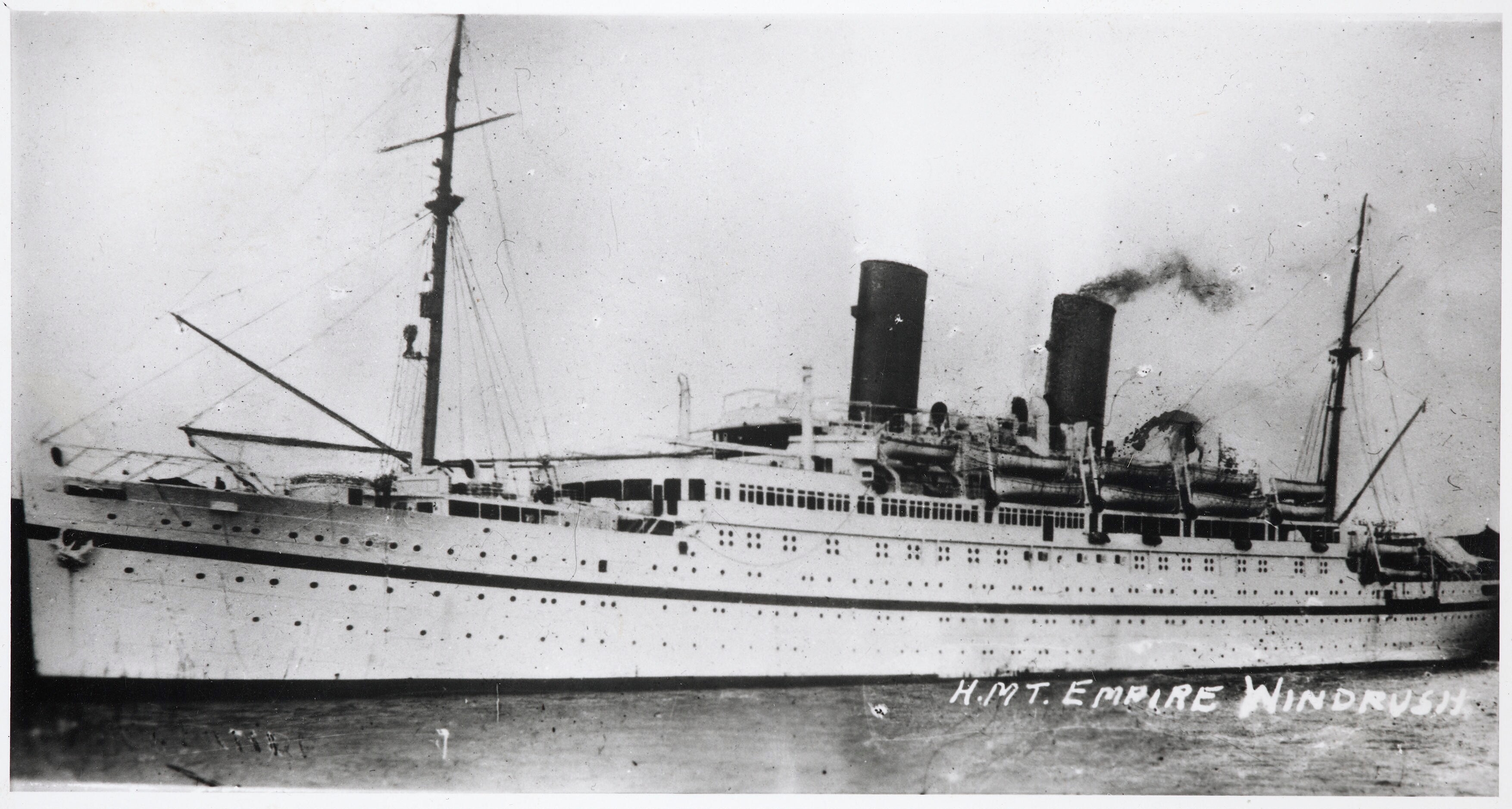
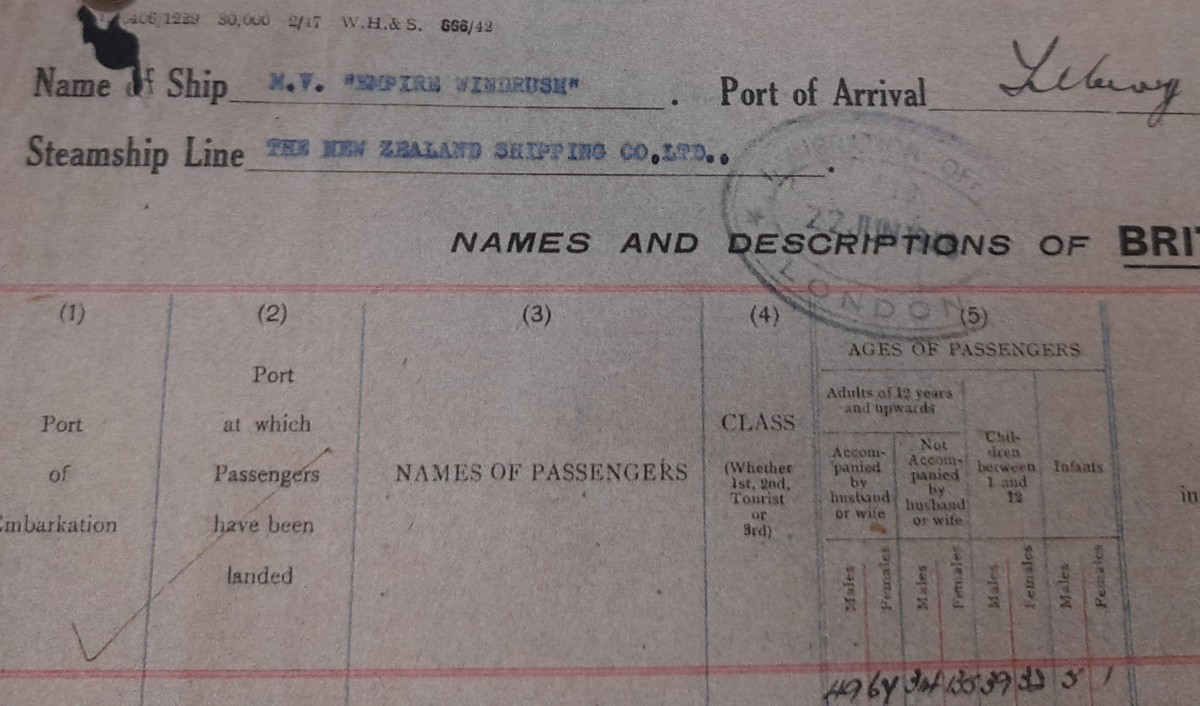
Empire Windrush arrived at Tilbury on June 22, 1948, carrying more than a thousand passengers, most of them from the Caribbean. They arrived as British subjects, not as foreigners. Many had been taught in colonial schools to regard Britain as the “mother country,” and they expected to be received as its citizens. It is nevertheless too simple to say that every passenger had been individually invited by the government: the voyage brought together people with different plans and circumstances.
Windrush: promises and hardships
The promise of citizenship collided with everyday racism. Caribbean migrants staffed hospitals, drove buses, and worked in industry, yet many found that their qualifications were ignored and that they were steered into the lowest-paid jobs. Housing was the sharpest barrier. Some landlords posted signs refusing Black tenants, and newcomers were often forced into overcrowded, overpriced rooms; in Notting Hill, the landlord Peter Rachman became a byword for exploitation. This “color bar” was legal: Britain had no race-relations law until 1965, and the 1968 act was the first to outlaw discrimination in housing and employment.
Violence followed. In August and September 1958, white mobs attacked Black residents in Nottingham and in Notting Hill, where gangs of “Teddy boys” roamed the streets. In 1959, Antiguan carpenter Kelso Cochrane was murdered in Notting Hill; no one was ever convicted. His funeral drew a large crowd of mourners, and the killing became a lasting symbol of the era's racial violence. Communities answered with institutions of their own. Claudia Jones organized an indoor Caribbean carnival in 1959, part of the cultural history from which today’s Notting Hill Carnival developed. Caribbean families also built churches, pardner savings schemes, and supplementary Saturday schools for children poorly served by local schools. The West Indian Gazette, founded by Claudia Jones in 1958, gave the community a national campaigning voice. In Bristol, the 1963 bus boycott challenged the bus company’s refusal to employ Black and Asian crews and helped build support for the first race-relations law.
Opposition to migration hardened into politics. In the 1964 general election, the Conservative candidate in Smethwick, in the West Midlands, won the seat after a campaign remembered for an openly racist slogan. Four years later, the Conservative shadow minister Enoch Powell delivered his “Rivers of Blood” speech in Birmingham, predicting racial conflict and urging repatriation. Powell was dismissed from the shadow cabinet, but dockworkers and meat porters marched in his support, and the Labour government responded to the pressure with the Commonwealth Immigrants Act of 1968, rushed through to restrict entry by British passport holders fleeing discrimination in Kenya. The lesson many politicians drew was that hostility to Black and Asian settlement could win votes; the lesson communities drew was that they would have to defend themselves.
Meanwhile, Parliament began withdrawing the welcome. The Commonwealth Immigrants Act of 1962 restricted entry for the first time, and the Immigration Act of 1971 replaced the old shared citizenship with a narrower “right of abode.” Those already settled before January 1, 1973, were allowed to stay—but the government gave many of them no paperwork to prove it. Children who had traveled on their parents’ passports grew up British in every practical sense, often without any document showing their status. That gap, created by the state itself, set the stage for the scandal that followed decades later.
Windrush citizenship: rights without usable proof
The promises of 1948 and the paperwork gap of 1971 came together in the 2010s. Successive governments built what ministers called a “hostile environment” for undocumented migrants, requiring landlords, employers, banks, and hospitals to check immigration status. The Home Office had also destroyed landing-card records in 2010. The Windrush scandal, exposed largely through Amelia Gentleman’s reporting in the Guardian in 2017 and 2018, showed how fragile recognition could become. Long-settled residents with lawful status were required to produce evidence the state had not reliably ensured they possessed. People lost work, housing, access to services, and security; some were detained or removed. The problem was not that their lives lacked legitimacy, but that bureaucracy treated missing documentation as grounds to deny it.
Wendy Williams’s 2020 Windrush Lessons Learned Review examined the Home Office failures behind the scandal. Restoring documents and offering compensation are different tasks: one establishes usable proof of status, while the other addresses damage already done. Neither should be confused with suggesting that every affected person had exactly the same citizenship history.
The fight continues through demands for accessible redress and accountability. In June 2025, Reverend Clive Foster was appointed the first Windrush Commissioner. In January 2026, the Home Office expanded compensation eligibility for pension losses and introduced priority allocation for claimants aged seventy-five and older. Those are documented reforms, not proof that every survivor has obtained justice. Their very necessity shows how the consequences extend into retirement, health, and family security.
This series continues. Part 3, "Brixton, Peckham, and Scarman," publishes Friday morning. Part 4, "Still Rising: Black Britain's Global Resilience," is the featured preview of the first issue of Black Thread. It opens Friday, October 16. Become a founding member for $9.99 a month — that price holds for life — or subscribe free to our newsletter.
Ask the Historian
Have a question about this story, or an idea for a future post? Send it here.