
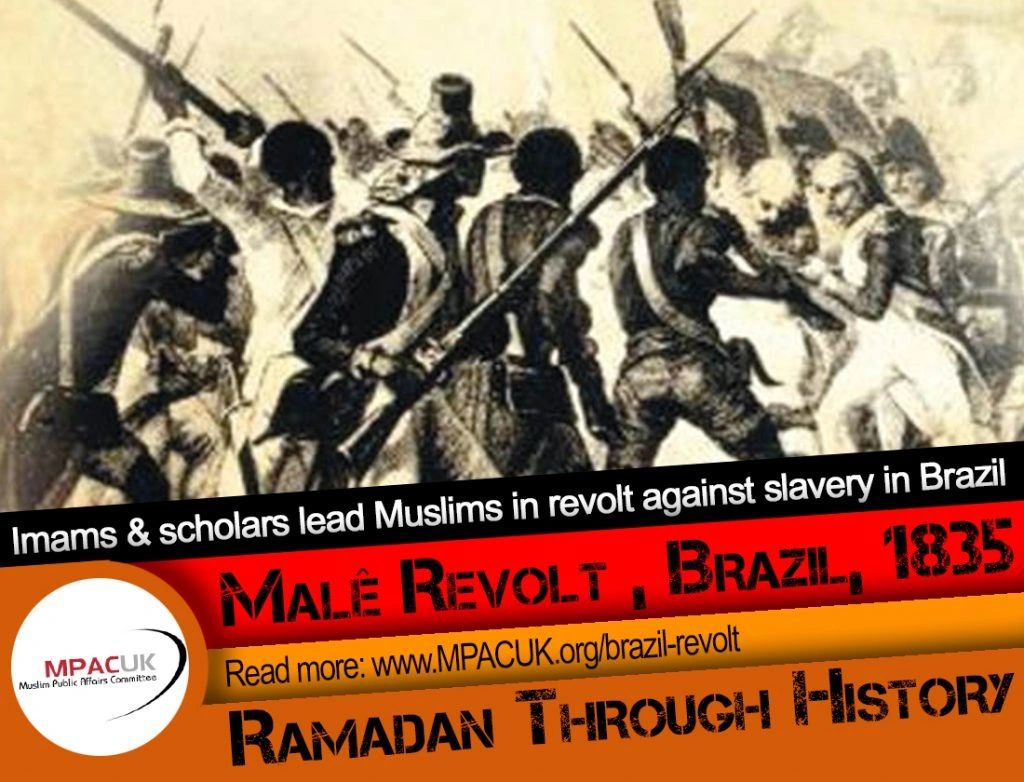
On 25 January 1835, many Black enslaved people and Freedmen protested against the racist systems of power in Salvador da Bahía (Brazil) after being inspired by Muslim teachers.
This action would happen after three centuries after the formal commencement of the Transatlantic slave trade but would be the last major rebellion of enslaved people in Brazilian history. The protesters were from a variety of ethnic and religious groups but what connected them was the racial injustice and social inequity that they faced. Their social solidarity was an act of defiance against the city police, army and the slave hunters.
At 11pm on January 24, word about the rebellion spread to enslavers, so only the people who had escaped beforehand could partake in the revolt. From 1am onwards, about 600 rebels fought and vandalised municipal buildings; several people were injured and two Africans were killed. Once reinforcements arrived, the enslaved people attacked and took more weapons from nearby soldiers.
Then they head to Cabrioto, to meet up with enslaved people from plantations, however they had to pass cavalry barracks. The rebels, who numbered between 50 and 60 now, were met with fire from the barracks and a cavalry charge. With hope, the rebels tried to attack and take the barracks but this proved futile. After one last cavalry charge, the enslaved people quickly fled.
Many of the leaders were whipped, deported or even murdered. One leader of the rebellion, Tomás, a Nago (from present-day Nigeria) was sentenced to 800 lashes on June 20. This was followed with more death sentences, deportations and executions. Many of the Bahían Muslims carried Quranic passages on their bodies and were nicknamed as the “Walking Qurans”. Muslim activity and Arabic documents were criminalised, leaving only the struggle for freedom remaining.
Slavery was eventually abolished in Brazil in 1888.
#MaleRebellion #SalvadorDaBahia #Tomas #WalkingQurans
Ask the Historian
Have a question about this story, or an idea for a future post? Send it here.