
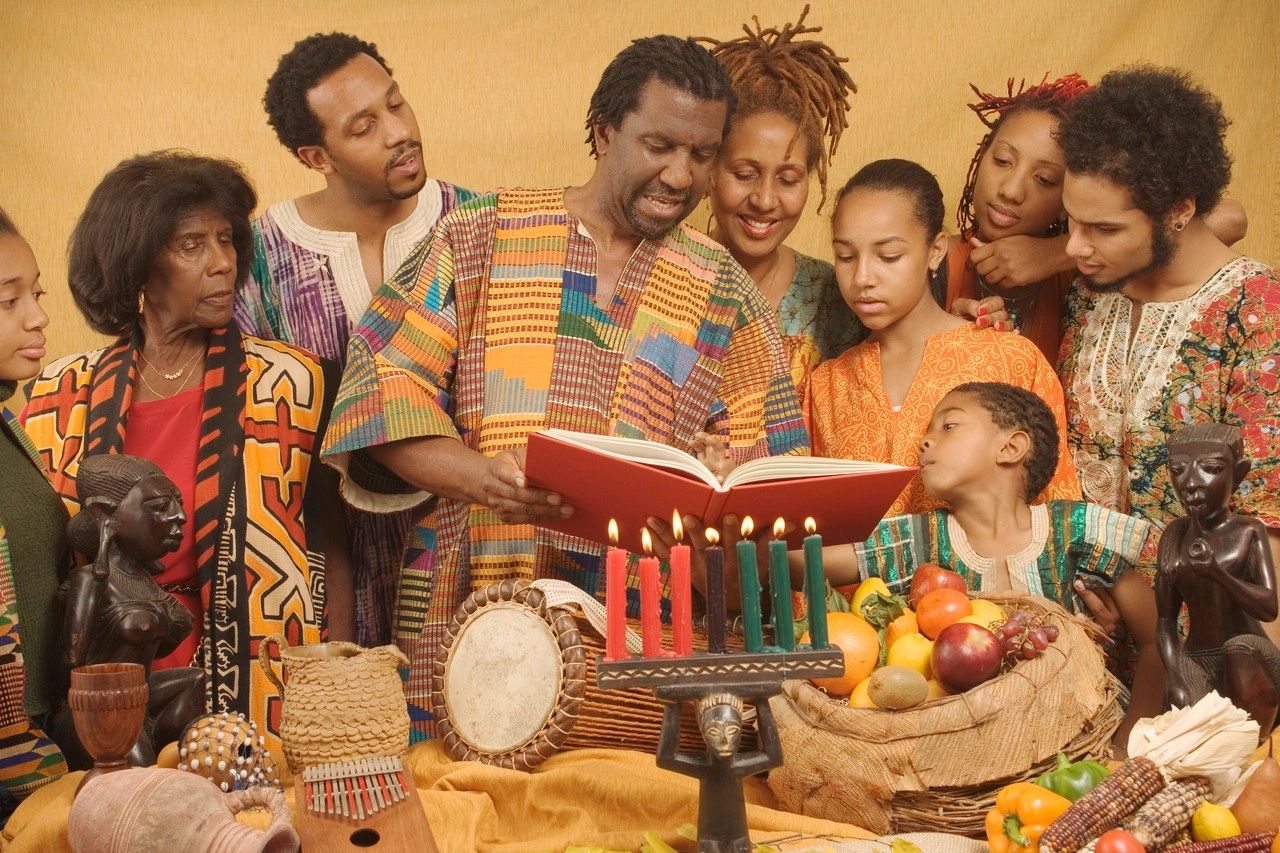
On 26 December 1966, the first Kwanzaa holiday was held in the United States. It was thought up by Maulana Karenga, a leading figure in the US Organisation, a Black nationalist group, as an alternative to Christmas celebrating West African culture. The celebration has grow both nationally and internationally since 1966.
Kwanzaa means 'first fruits" and celebrates the principles of the Nguza Sabo, which include seven principles: Umoja (Faith); Kujichagulia (Self-Determination); Ujima (Collective work and responsibility); Ujamaa (Cooperative Economics); Nia (Purpose); Kuumba (Creativity) and Imani (Faith).
The celebration spans seven days from January 26th to January 1st. Families and friends gather to celebrate the principles and enjoy fellowship and food.
Kwanzaa has grown in popularity in the decades since its founding. Former Presidents Bill Clinton, George W. Bush and Barack Obama all released statements commemorating the holiday, and in 1997 the U.S. Postal Service began issuing Kwanzaa stamps.
#MaulanaKarenga #Kwanzaa #FirstFruits #NguzaSabo #SevenPrinciples #Kinara #SevenDays
Ask the Historian
Have a question about this story, or an idea for a future post? Send it here.