
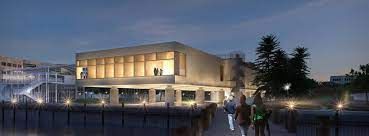
The opening of the International African American Museum (IAAM) in Charleston, South Carolina is a major accomplishment. The museum will open in January 2023. Originally conceived in 2000 by Charleston’s former mayor Joseph P Riley, Jr., the museum has taken 23 years to finally complete. The principal challenges in bringing the IAAM to fruition involved finding the best site, obtaining resources, building a team, and planning details. The facility will be more than 150,000 square feet. It will be located near the former site of Gadsden’s Wharf.
Gadsden’s wharf was the site of the largest disembarkation point for enslaved people in the United States. It is estimated that more than 100,000 enslaved Africans disembarked here during the wharf’s operational years. The history of the wharf is further not complicated by its troubled history as an arrival point, but an historical occurrence that reflects the disregard for human life that characterized the slave trade, During the winter of 1807, 800 enslaved Africans were quarantined and subsequently died. They were eventually thrown into a mass grave. Efforts to shed light on these inhumane events has become a community priority.
The museum’s mission is “to honor the untold story of the African American journey at one of America’s most sacred sites and the long-awaited institution is poised to take the next step in delivering on this promise.” The IAAM will include exhibition, learning, and interpretative spaces. The museum will look unflinchingly at the nation’s slave past. Located on the Charleston harbor facing the Atlantic Ocean, the museum’s design includes the African Ancestors Memorial Garden. The gardens will include art installations, live plantings and an infinity reflection pool.
The museum’s design was conceived by landscape architect Walter Hood. Hood, a landscape architect by training, is best known for his community based architecture. His other notable work projects include Splash Pad Park, a converted traffic island alongside Interstate 580 in Oakland, California and his design of an archaeological garden within the context of the South Lawn project at the University of Virginia. In 2014, Hood was commissioned to create Witness Walls, a commemorative sculpture focusing on He is also the author of Urban Diaries and Blues and Jazz Landscape Improvisations
In addition to the Museum, the site will contain a Center for Family History. This will be one of the largest and the most comprehensive genealogical databases in the country. This feat was heralded by James Clyburn, former House Whip, and the museum’s first board chair. The museum also has created a number of partnerships and pathways for generating continental partnerships and programming. More information will be released shortly about speakers and events.
The proliferation of museums dedicated to the African American past is an important development. Efforts to think more critically about the past and rethink the nation’s tortured racial past is an important step forward. These efforts also compliment the important work of the National African American Museum and Cultural Center in Washington, D.C. These museums reflect a long history of community engagement with the Black past.
Ask the Historian
Have a question about this story, or an idea for a future post? Send it here.