
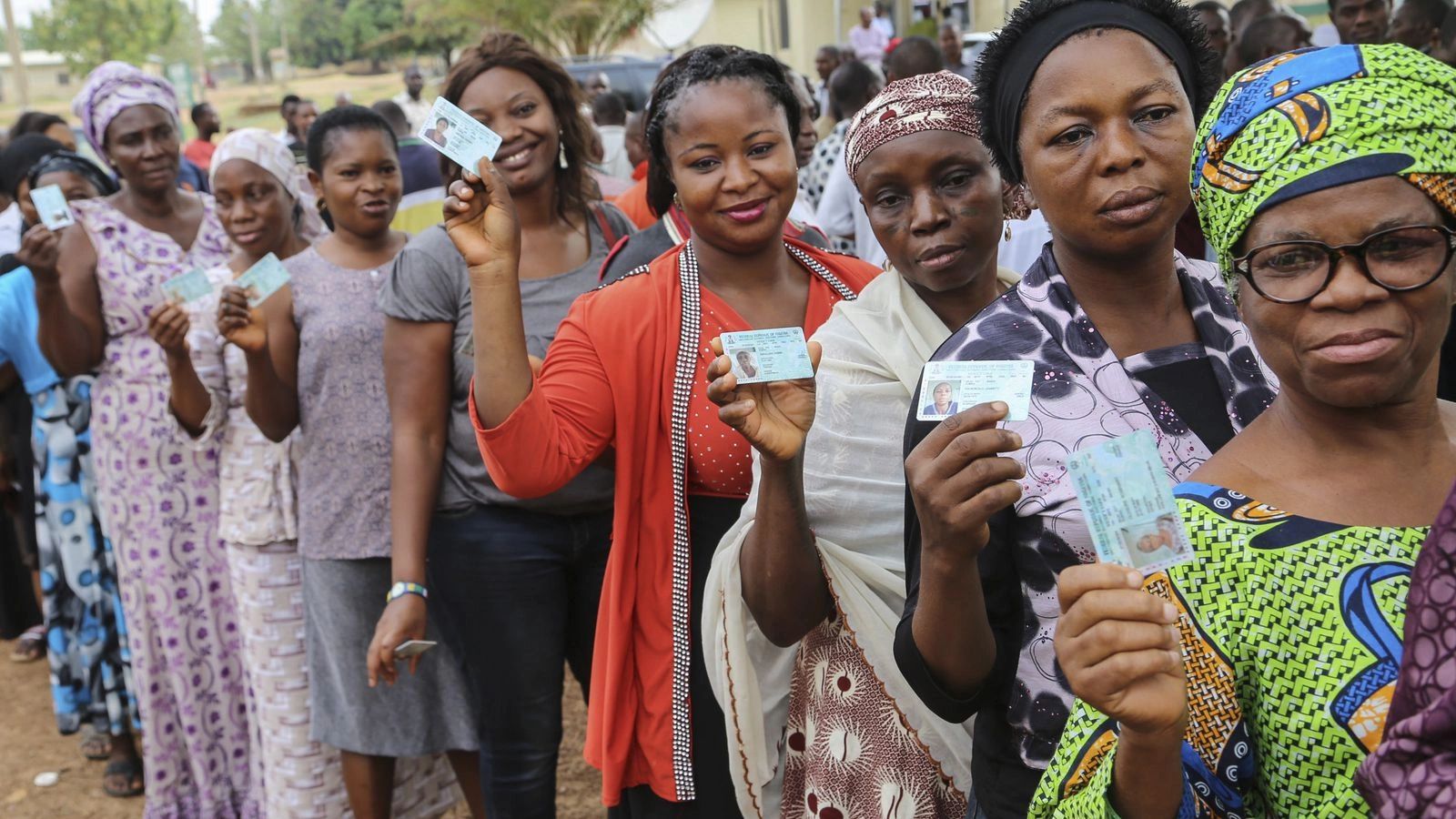
Nigeria concluded its first phase of the 2023 general elections held on February 25, 2023, amidst allegations of irregularities and fraudulent practices. Nigerians questioned the efficiency and transparency of the presidential and parliamentary elections. The Independent National Election Commission (INEC), through its chair, Mahmood Yakubu, announced the ruling party’s APC candidate, Bola Tinubu, as the duly elected president. Tinubu garnered 8.8 million votes of the total 24.9 million votes cast, as per the Premium Times, Nigeria. Surprisingly, these elections recorded the lowest voter turnout since this most populated country in Africa got its independence.
Here is a short analysis and key highlights of some of the major factors that affected how Nigeria’s 2023 elections were carried out and their subsequent outcome:
In most cases, technology revolutionizes and improves outcomes but this was not the case in Nigeria. The opposition claimed that the Bimodal Voter Accreditation Systems (BVAS) machines used during the voting process were faulty and experienced technical difficulties, which led to delays in the results upload. In short, this made the whole process questionable and did not come anywhere close to being a free and fair exercise.
Due to the aforementioned technicalities and several other irregularities, the opposition, comprised of Labor Party and People’s Democratic Party (PDP) candidates and officials, sought legal redress in the federal appeals court. Although there was a countersuit from INEC stating that it was necessary for them to reconfigure the BVAS machines, the court ruling favored the opposition. However, they were allowed to inspect the data of the disputed elections, which will be backed up on a backend server.
The credibility of the country's 2023 elections hangs in the balance due to ongoing lawsuits that have already been filed. As of right now, the final round of the governor and state assembly elections scheduled for March 11, 2023, have been moved up a week to March 18.
According to the Voice of Africa News, the postponement of these elections is to give the INEC time to reconfigure the BVAS machines in time for the remaining elections. As the people of Nigeria continue to wait to accomplish their constitutional mandate, the opposition leaders have threatened to hold mass actions and protests if they are denied access to the backend server.
The 2023 elections in Nigeria will be a good indicator of the country’s maturity as far as democracy is concerned. Although it is the largest democracy and the largest economy in Africa, Nigeria is also the youngest democracy. It gained its independence in 1999. Tinubu will have an uphill task of ensuring that democracy is not only read in speeches but also felt on the ground by the local citizens.
As reported by Vox, the president-elect will also have a myriad of issues to deal with as soon as he assumes office from his predecessor, Muhammadu Buhari. Currently, the country is struggling with a cash crisis after old banknotes were recalled by the central bank of Nigeria. This move created a serious cash shortage. Despite being the largest economy and enjoying a conducive business environment, Nigerian youth, and trained professionals are seeking better work opportunities in developed countries all over the world. This is leading to a substantial brain drain that could affect the country's economy negatively if not addressed.
Insecurity is also an important issue that Tinubu will have directly address. Organized crime and terrorism, from bandits in the form of conflict between herders and farmers to separatist and militant groups that fight for a stake in national resources, are on the rise. The president-elect also needs to curb corruption and nepotism.
Despite the shortcomings of Nigeria’s 2023 elections, the successful completion of this process will mean a great deal not only for the country but for the African continent as a whole. It will send a strong message to the whole world that Africa is becoming more democratic and is capable of self-correction. In sum, as media, civil society, and the general public continue demanding change and transparency combined with ideal election reforms, elections will improve. With time, people will consider competency and service over wealth, entitlement, and seniority when choosing their leaders. They will expect their leaders and the government in general to address unemployment, poverty, and inequality, which are some of the basic functions of any democracy.
Ask the Historian
Have a question about this story, or an idea for a future post? Send it here.