
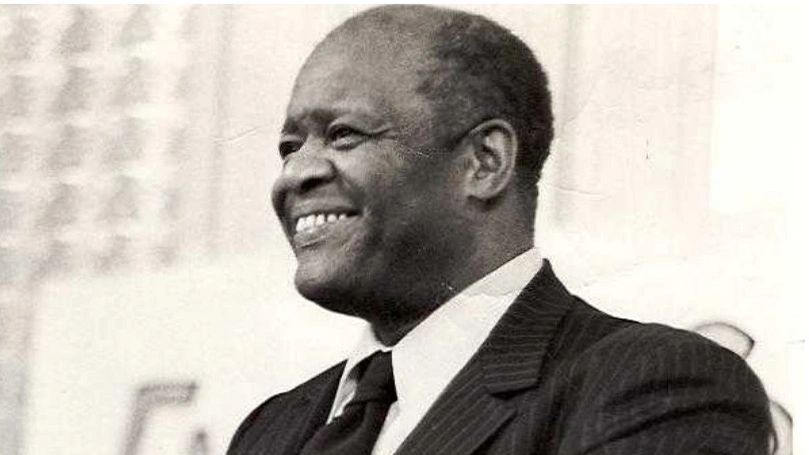
Henry Winston lived a heroic life. Born in Hattiesburg, Miss., into a poor working-class family in 1912, Winston at a young age became active in the unemployed movement during the early years of the Great Depression. It was then that he joined the Young Communist League and was soon elected as a national leader. Winston helped in the building of the 3-million-member American Youth Congress, the Southern Negro Youth Congress and the Abraham Lincoln Brigade whose members fought fascism in Spain.
Winston served in the armed forces, which were segregated, during World War II. Upon his honorable discharge, he became national organization secretary of the Communist Party. In 1948, despite his service to his country, he was among the first 12 leaders of the CPUSA who were indicted for their political beliefs under the unconstitutional Smith Act. Winston spent seven years in jail under this infamous thought control act, and became blind due to the racist negligence of his jailers and the Jim Crow prison system. In 1966 he was elected national chairman of the CPUSA, a position he held until his death in 1986.
Winston made profound theoretical contributions to the class and democratic struggles of the United States. His book, Strategy for a Black Agenda, which first came out in 1973 “remains a fundamental contribution to the struggle,” says Tyner. Winston focused on the unity of the class and “national questions,” stressing the need for the “Black liberation movement to come to grips with the long-term economic crisis faced by our community, and to direct the struggle against racism toward a broader struggle against the power of monopoly capitalism and imperialism,” Tyner says.
In addition, Winston was active in the struggles for Black liberation, black-white and working class unity, and among the American pioneers in building solidarity with peoples of Africa, in particular the struggles against apartheid in southern Africa.
Tyner says the celebration of Winston’s life is relevant for 2012 and the elections, especially the struggle against racism. “I think Winston’s legacy is still very powerful for today. Much has changed since Winston’s time, and today holds its own complexities, but we are still confronting racism, economic injustice and reactionary political forces.”
Celebrating the life of Henry Winston
Note: This blog was reprinted with the permission of Abdul Akailmat, PhD (with the exception of the intro and cover media)
Bio https://en.wikipedia.org/wiki/Henry_Winston
Documentary film https://www.youtube.com/watch?v=RcWgId1CPAM
Interview https://www.youtube.com/watch?v=mcfwS3aOFtA https://www.youtube.com/watch?v=dBmNFfZ69eE
On the CPUSA https://www.youtube.com/watch?v=k62z89gWjPg https://www.youtube.com/watch?v=OhCL4UAXeQQ
On the Southern Negro Youth Congress https://www.youtube.com/watch?v=utiDegOtOFs
Publications https://archive.org/details/WhatItMeansToBeACommunist_400 https://archive.org/details/NegroLiberationAGoalForAllAmericans/page/n5/mode/2up https://archive.org/details/NegroLiberationAGoalForAllAmericans_464
Henry Winston Centennial https://archive.org/details/HenryWinstonCentennial https://www.youtube.com/watch?v=HcV80acXx8k https://www.youtube.com/watch?v=GydwtrNPO5A
Symposium https://www.youtube.com/watch?v=k-reZREJIzY
US Commentary https://www.youtube.com/watch?v=V5eAFj7QI_k https://www.peoplesworld.org/article/charlene-mitchell-remembers-henry-winston-communist-and-black-liberation-leader/
Soviet Commentary https://www.marxists.org/subject/africa/winston-bio.pdf
#HenryWinston #BlackCommunist #SouthernNegroYouthCongress
Ask the Historian
Have a question about this story, or an idea for a future post? Send it here.