
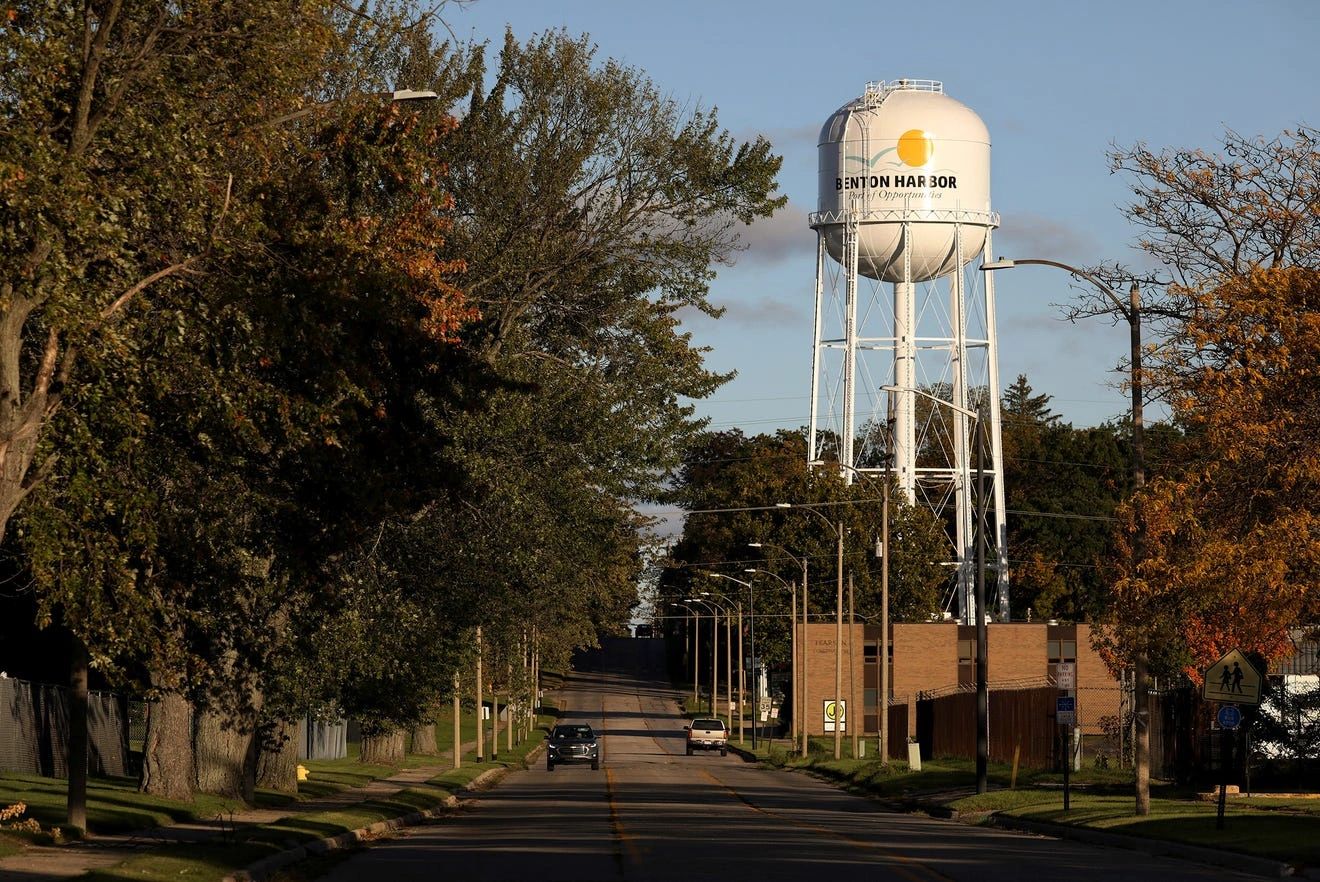
Environmental hazards are becoming more common in American cities. One of the most dramatic examples is the Flint, Michigan Water Crisis. The same scenario is recurring in Benton Harbor, Michigan. Corroded water pipelines are causing elevated levels of lead in the city’s water supply. Not unlike r in Flint, Benton Harbor, whose population is predominantly African American, residents suffer from higher levels of poverty and lower incomes as well as disinvestment related to infrastructure and community engagement, they are currently using bottled water to mitigate health risks. State officials have supplied the city with truckloads of free bottled water. At the outset of the crisis in September up through the end of October officials distributed 71,000cases of water to residents.
According to the Michigan Department of Environment, Great Lakes, and Energy, Benton Harbor’s water system has exceeded the EPA standards for lead contamination since 2018. The last six times the tap water was tested occurred over a six-month period. The lead levels were above 15 parts per billion. Reverend Edward Pinkney, president of the Benton Harbor Community Water Council, along with a coalition of community and environmental groups, filed an emergency petition asking the Environmental Protection Agency (EPA) to address water contamination in Benton Harbor citing a “persistent, widespread and severe public health crisis.”
Th emergency petition was followed by swift action at the state level. Governor Gretchen Whittmer provided free bottled water, filters, and premixed baby formula to residents. The state vowed to replace all lead pipes in the city. The project estimates currently stand at $30 million.
The speed of the state’s response led the Michigan House of Representatives oversight to hold a hearing in October. The committee characterized the state’s response as scaling up quickly from zero to 100. The problem of aging infrastructure and problems with waterlines has existed and persisted for years. The state, as part of their response, is calling for a review of all current drinking water rules, ways to reduce lead levels and ensure community input.
The state’s actions have not prevented a lawsuit. In November, a class action lawsuit was filed in federal court against Michigan and Benton Harbor officials. The lawsuit alleges, among other things, thousands were exposed to lead contamination. The lawsuit was filed shortly after findings from the EPA citing a variety of violations at the Benton Harbor Plant and the city’s communication with residents regarding water problems.
"You still have to pay for the water you can't drink, you can't brush your teeth with you can't cook with, or bathe with it," said Rev. Edward Pinkney, "No city in this country should have to go through what Benton Harbor went through for the past three years." Recently, activists and local officials are questioning the water samples.
Despite the state’s reaction, the crisis continues. According to the Michigan Department of Health and Human Services (MDHHS), more than 200,000 bottles of drinking water have been distributed. The U.S. Centers for Medicare and Medicaid Services approved a request through the federal Children’s Health Insurance Program to provide health insurance for low-income children. The state plans to replace all lead pipes in Benton Harbor. Residents, however, must complete the Water Service Line Replacement Agreement online. The state estimates it will take 18 months to replace all lead pipes in Benton Harbor.
Ask the Historian
Have a question about this story, or an idea for a future post? Send it here.