
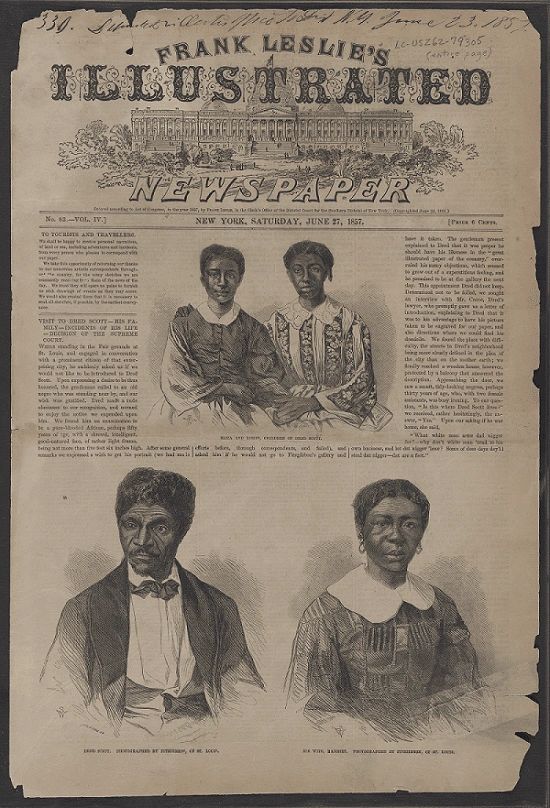
Dred Scott v, Sanford, known as the Dred Scott decision, has proven to be one of the most consequential decisions in American consititutional law. The case held that African Americans had "no rights that a white man was bound to respect." In short, the guarantees of citizenship did not extend to African Americans and those privileges were not conferred upon them by the Constitution. This case fueled the final stages of the abolitionist struggle against slavery and demonstrated the persistient themes in U.S, consititutional law, which largely ignored the rights of African Americans.
Background
Dred Scott was a slave owned by John Emerson of Missouri. Emerson, as a military member, traveled to various slave and free states with Scott. During this period, Scott met and married Harriet Robinson. Emerson died. Scott then attempted to purchase Harriet's freedom from Emerson's widow. She refused the sale. Scott , then, enlisted the asssitance of several antislavery lawyers. Scott and Robinson filed individual lawsuits for their freedom. Scott's case moved forward with the understanding that the final ruling would impact Harriet's case too.
Emerson's widow relinquished her late husband's estate to her brother John A. Sanford. Scott's lawyers filed a case agianst Sanford in federal court, which was not successful. The case eventually made it to the Supreme Court and was known as Dred Scott v. Sanford in 1857.
#DredScottDecision #Scottv.Sanford #HarrietRobinsonScott #ChiefJusticeTaney
Ask the Historian
Have a question about this story, or an idea for a future post? Send it here.