
Note: Ke'Shunta Drake is a Assistant Editor at Historianspeaks.org. She is a graduate student at Michigan State University where she is completing studies in English literature.
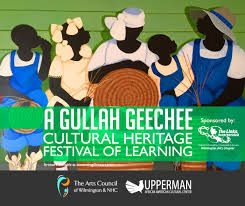
“Oonuh ent kno weh oonuh dah gwine. Oonuh should know weh oonuh come f’um.” A famous Gullah proverb states: “If you don’t know where you’re going. You should know where you come from.” This saying embodies the spirit and resiliency of the Gullah Geechee people who have preserved their heritage for more than five hundred years. October is Gullah Geechee Heritage month. In 2014, October was declared Gullah Geechee Heritage month in four states: North Carolina, South Carolina, Georgia, and Florida. This month-long celebration includes festivals, conferences, island tours, and workshops. These events attract people from all over the world providing an important introduction to the heritage of the Gullah Geechee. Who are the Gullah Geechee? The Gullah people are the descendants of enslaved Central and West Africans who worked on rice plantations in the 18th and 19th centuries and lived along the coastline of South Carolina, Georgia, and Florida. Isolated on sea islands and separated from the mainland, they developed a Creole culture which preserved their linguistic and cultural heritage. They also created an English based Creole language known as “Geechee” or “Gullah.” The Gullah language is a significant component of the culture; it is the language spoken at their celebrations.
At the center of cultural celebrations of Gullah culture is dress and craft culture. Attendees and participants dress alike in traditional African garments. In addition, the Gullah people exhibit cultural crafts, including handwoven items. The sweetgrass baskets come directly from West Africa. Sweetgrass baskets are a major craft tradition among the Gullah. Sweetgrass baskets were used in processing of rice. These baskets are made of moist grass or pine needles coiled and wrapped with stems of palm frond. They were used to carry food, store food, fan rice, and sift grains. The fanning and sifting of rice are a part of the processing of rice. Sifting rice is the traditional method of ridding the rice grains of empty husks. Today, sweetgrass basket production is primarily viewed as art.
Although dress and craft traditions are important among the Gullah, food traditions are equally important. Okra soup and red rice are two famous Gullah dishes that originated in West Africa. Red rice resembles the West African dish “jollof rice.” Okra soup is a dish that also comes directly from West Africa. Many of these cuisines are passed down from generation to generation. Crafts and food are not the only cultural practices on display at these festivals.
Music and folklore are also highlighted during Gullah Geechee month. Traditional Gullah music, also known as Gullah spirituals, are prominently displayed throughout the festivals. Many of these spirituals originated in Africa. Spirituals are communal songs that are performed as a call and response during religious ceremonies. Animated storytellers perform African folklore tales, such as, Brer Rabbit and Anansi. Many of the tales are about animals and how the small animal outsmarts the larger one. For example, Brer Rabbit and Anansi are both trickster figures in the tales.. Storytelling is another highlight of the festivals. The storytelling segment of the event is the most popular. Many people gather with anticipation to listen to the Gullah stories. The festivals showcase events that detail the elaborate history of the Gullah Geechee people, their cultural resilience and efforts in land preservation.
The Gullah Geechee were among the first enslaved Africans to purchaseland in America and establish an institute in the South for formerly enslaved individuals. This institute is a National Historic Landmark known as the Penn Center, which is in Hilton Head, South Carolina. Hilton Head, SC was at one-point Black owned land; however, due to property disagreements among heirs, it has now become a resort destination for tourists. Heirs’ property passes down from generation to generation. Because there are multiple owners, one owner can force the others to sale, especially if they do not have enough money to purchase the other person’s share. Organizations and individuals like The Gullah Society and Theresa White are joining forces to help the Gullah people to preserve their land.
The history of the Gullah Geechee is significant because it connects the history of African American’s past with the present and future. The Gullah people are resilient, they continue to fight to preserve their history and culture. Their rich culture, music, cuisines, and folklore reminds us of their determination to resist slavery and preserve a culture which outlasted the institution. The Gullah people are one of the most prominent examples of a group of African Americans who maintained their connection to West Africa. Gullah Geechee Heritage Month exemplifies the importance of knowing where you come from, and the significance of preserving one’s culture, history, and identity.
Ask the Historian
Have a question about this story, or an idea for a future post? Send it here.