
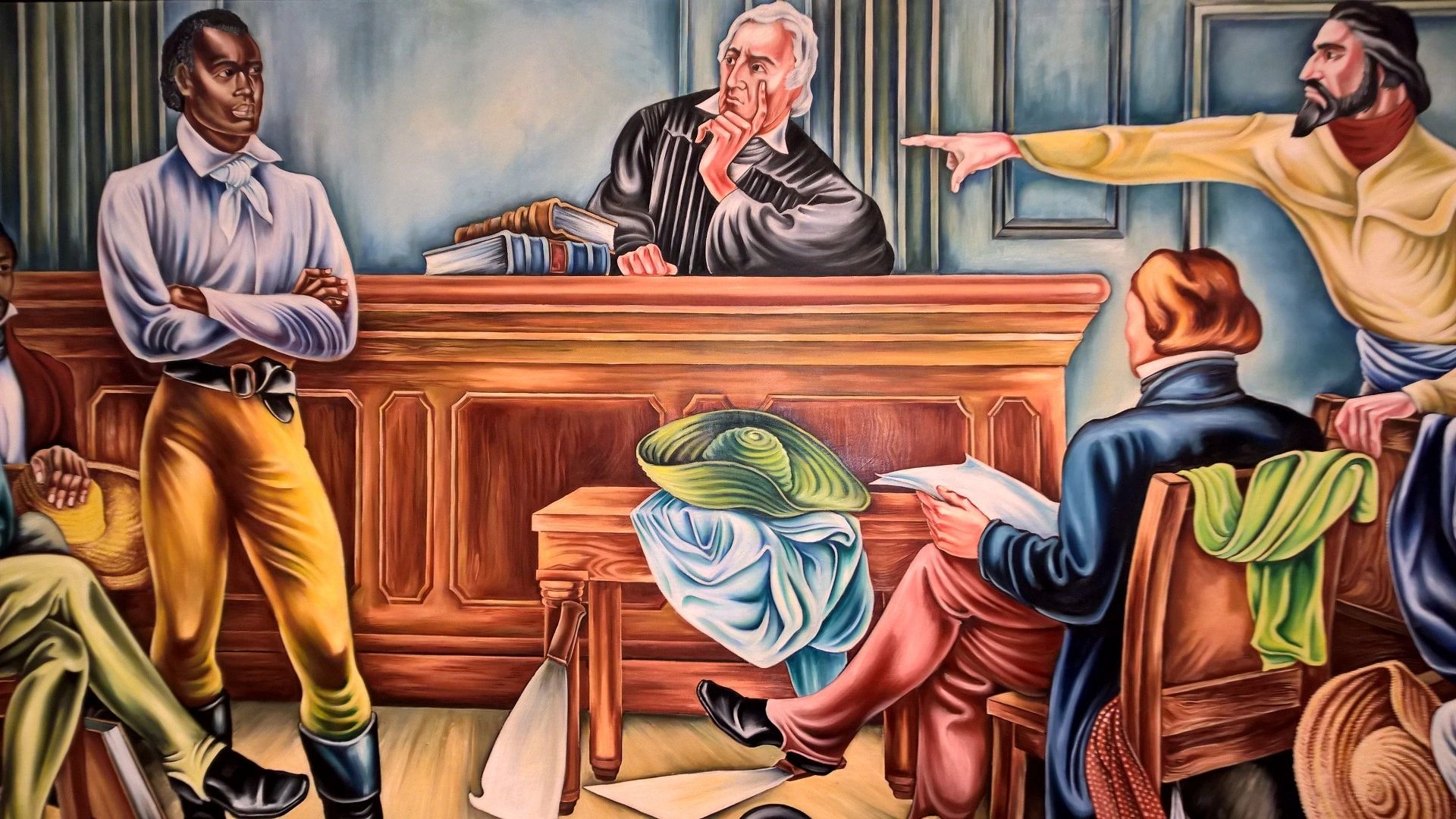
On 2 July 1839 enslaved people aboard the Spanish schooner Amistad rebelled off the coast of Cuba. The mutiny was led by Sengbe Pieh, also known as Joseph Cinqué, a Mende man from what is now Sierra Leone aged approximately 25.
The Amistad was sailing from Havana to Puerto Príncipe in Cuba with 53 people who had recently been kidnapped from Africa. The Africans were mistreated and tortured on board, particularly by the sadistic cook.
Before daybreak on July 2, the enslaved people got together and escaped their chains, killed the cook and the captain, and ordered the navigator to sail them back to Sierra Leone. But that night, the remaining Spanish crew secretly changed course and headed north-west, hoping to be rescued.
Eventually, on August 26 by Long Island, they came across a US Navy vessel, who quickly freed the Spaniards and imprisoned the rebels in Connecticut, which was still a slave state at that time. There followed a high-profile legal battle, with former president John Quincy Adams offering to defend the Africans.
After 18 months of imprisonment, the Supreme Court eventually upheld a ruling of a lower court ruling that the Africans had been taken to Cuba illegally and therefore were not legally enslaved, and set them free.
The abolitionist movement then set about raising funds to take the men home. Two of the rebels were killed in the mutiny, some died in the subsequent journey and one died of possible suicide. In November 1841 the 35 survivors finally boarded a ship back to Sierra Leone.
Amistad rebellion - WCH | Stories
#Amistad #JosephCinque #Havanna #AmistadTrial
Ask the Historian
Have a question about this story, or an idea for a future post? Send it here.