
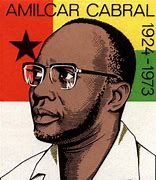
On 20 January 1973, Amílcar Cabral, one of Africa's foremost anti-colonial leaders, was assassinated in Conakry, Guinea..
While an agronomy student in Lisbon, Portugal, Cabral founded student movements dedicated to opposing the ruling dictatorship of Portugal and promoting the cause of independence for the Portuguese colonies in Africa. When he came back to Africa, he led the anti-colonial movement of Guinea-Bissau and Cape Verde Islands and the ensuing war of independence in Guinea-Bissau.
From 1963 to his assassination in 1973, Cabral led the PAIGC's guerrilla movement (in Portuguese Guinea) against the Portuguese government, which evolved into one of the most successful wars of independence in modern African history. After setting training camps, he taught his troops to teach local crop growers better farming techniques, so that they could increase productivity and be able to feed their own family and tribe, as well as the revolutionary soldiers.
He was deeply influenced by Marxism, and adapted it to Guinea-Bissau's social and economic realities, and became an inspiration to revolutionary socialists and national independence movements worldwide.
The fight against colonialism in Portugal's colonies eventually led to revolution in Portugal and the downfall of the decades-long dictatorship.
Amílcar Cabral assassinated - WCH | Stories
#AmilcarCabral #PAIGC #Guinea-Bissau #CapeVerdeIslands #Marxism
Ask the Historian
Have a question about this story, or an idea for a future post? Send it here.