
If an individual were to look at any major news outlet, they would conclude that the momentous protests against social injustice, white supremacy and racism have subsided and disappeared. Nothing could be further from the truth. The protests not only persist but are gaining momentum. This reality is best illustrated by the ongoing quest for justice for Breonna Taylor. Murdered during the height of the pandemic in Louisville because of a no-knock warrant search gone awry. The song, “Ain’t No Stopping Us n"ow, We’re on the Move,” best describes the ongoing struggle to obtain justice. It captures both the outrage and determination to continue resisting injustice until a satisfactory resolution is reached. These words represent the determination to “let nothing stand in your way,” but to continue against all obstacles to achieve a goal. This type of determination and resilience is not new. It informs the nature of Black protest in this country from the Anti-Slavery Movement in the 18thcentury up through Black Lives Matter movement in the 21st century. Over the past 10 weeks and for the last 70 days, protestors have continued to do just that: agitate for change until officers involved in the murder of Breonna Taylor are brought to justice.
The protests, like others on the national and international stage, involve a wide array of participants: mothers, fathers, ministers, football coaches and farmers. Gardeners recently marched with wheelbarrows through the streets of Louisville. On July 25th, the No F****** Around Coalition (NFAC), a National Black militia marched in Downtown Louisville. Previously, NFAC appeared at a rally in Brunswick, Georgia to protest the murder of Ahmaud Arbery. NFAC’s Louisville appearance coincided with a planned march by the Three Percenters, a far-right militia movement and paramilitary group devoted to the promotion of gun ownership rights and contesting the involvement of the federal government’s involvement in local affairs.
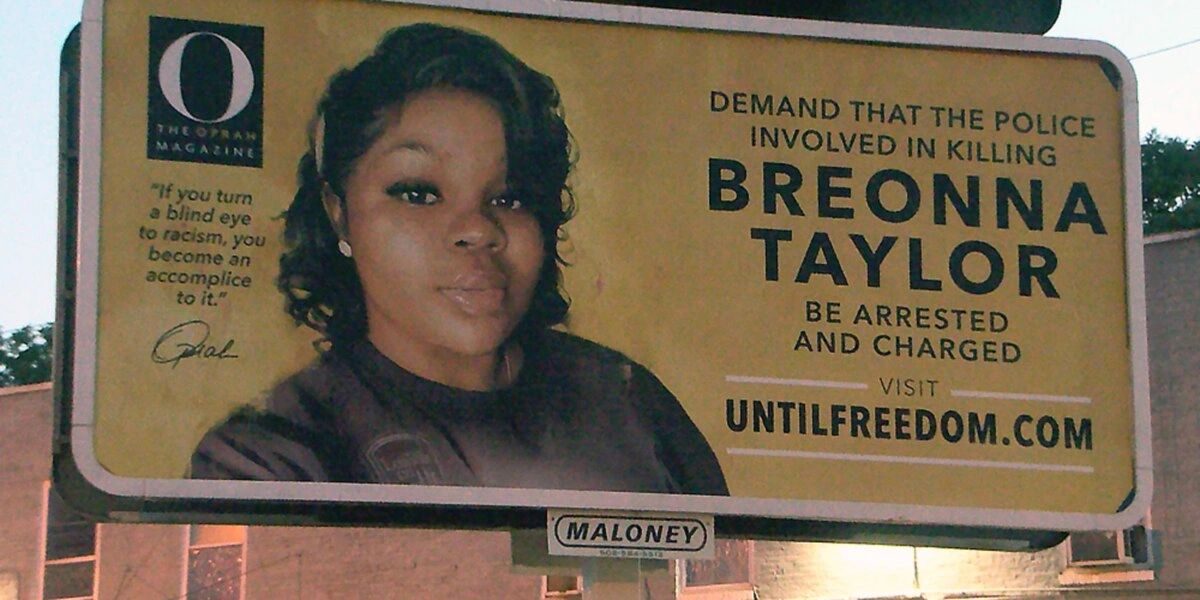
Taylor’s case has taken on new dimensions in Louisville. Protestors have aggressively petitioned at the homes of Mayor Greg Fischer and Attorney General Daniel Cameron. UltraViolet, a Women’s rights group, and Color of Change, a Civil Rights organization, collaborated to fund a television commercial to bring attention to the Breonna Taylor case. Angel McCoughtry, a former standout basketball player at the University of Louisville, obtained permission from WNBA to allow players to wear customized jerseys showcasing Breonna Taylor’s name. Oprah Winfrey has prominently placed Breonna Taylor’s picture on the cover of O Magazine and commissioned 26 billboards in collaboration with Until Freedom to advocate for a just resolution in the case.
Other social justice groups have joined the struggle. Until Freedom, the national social justice Organization, has vowed to remain in Kentucky on a permanent basis until there is justice for Breonna Taylor. The group plans to stage a rally on Saturday, August 8th titled “From Michael Brown to Breonna Taylor.”The rally will commemorate the sixth anniversary of the shooting of Mike Brown in Ferguson, Missouri. The murder that sparked the Black Lives Maters Movement.
The fact that there has been so little sustained national media attention to the Taylor case is a great travesty. The murder of Black Women is taken less seriously than those of Black Men. Black women are the most vulnerable and underrepresented group in America. It is extremely important to #SayHerName.The tendency to see police brutality through the gendered lenses of masculinity obscures its impact on Black women. It is common for activists and advocates to cite the names of Black men killed due to police brutality. It is less common to include Black women in the increasing number of African Americans killed by police. In fact, most people would be surprised to learn that systematic violence against Black women is even more commonplace than that perpetuated against Black men. This reality is compounded by the fact that state violence against women strikes at the core of Black communities. Black women have often been in the forefront of civil and social justice struggles in this country and have been targets of the anti-democratic and anti-progressive forces. Moreover, they contribute socially, politically, and economically to communities of color. Their absence hinders these communities immensely in terms of achieving their potential. Their death often means that societal and familial institutions suffer, and communities deteriorate. Lastly, in a patriarchal and misogynistic society, the lives of women are valued less than male lives. This way of thinking often sidelines and obscures the importance of addressing violence and marginalization against them.
The Louisville community is not only defying these stereotypes, but also reimagining how to stage protests around the issues of violence against Black Women. By refusing to stop, the movement continues to gather steam. Its insistence that protest is a viable tool to galvanize public opinion and put pressure on lawmakers is undeniable. The movement centralizes the importance of Black Women’s Lives. The need to continue protesting until justice comes takes on an added urgency: Ain’t No Stopping Us Now, Were On The Move.”
Ask the Historian
Have a question about this story, or an idea for a future post? Send it here.