
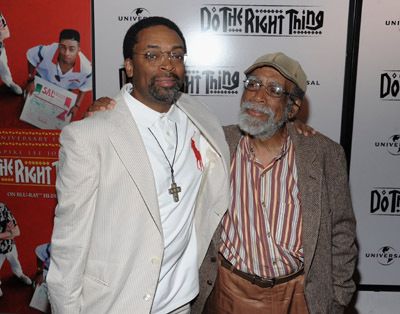
In the realm of music, the name William James Edward Lee III, also known Bill Lee stands as a testament to creativity, innovation, and an unwavering passion for the arts. His death in May left a void in the musical world. A prominent bassist and composer, Lee's contributions to the world of music have left an indelible mark. His musical contributions to the work of his son Spike Lee are only a small portion of this legacy. Yet is is clear the elder Lee's accomplishments paved the way foundation his son's success while providing an even larger stage for Bill Lee's work to receive the recognition it so rightfully deserves.
Bill Lee's musical journey began long before he collaborated with his son, Spike. Born in 1928 in Snow Hill, Alabama, Lee was exposed to music at an early age.This exposure led to his subsequent work in the industry. His exposure to the rich and diverse sounds of his time laid the foundation for his exceptional musical prowess. His mastery of the bass guitar was unmatched, and his ability to infuse soul, rhythm, and depth into every note he played set him apart as a true virtuoso. In a career that spanned six decades, he did live performances in the thousands and left 250+ record albums. His enthusiastic and mellow string bass was accompanied by many music stars, including Duke Elington, Billie Holiday, Harry Belefonte, Simon and Art Garfunkel, Woody Guthrie and many others, He also colloborated with Bob Dylan, Aretha Franklin and Max Roach.
Lee’s meticulously crafted compositions breathed life into scenes, enhancing emotional resonance and narrative depth. The harmonies and melodies he orchestrated served as an auditory bridge between the audience and the characters, amplifying the impact of storytelling. Lee's compositions celebrated the richness of cultures and traditions. This commitment was notably evident in his work on Spike Lee's films, where he artfully blended genres and styles to create soundtracks that mirrored the complexity of the human experience. He scored Joe Bed-Stuy Barbershop: We Cut Heads (1983); She's Gotta Have It (1986); School Daze (1988); Do the Right Thing (1989); and Mo' Better Blues (1990). Lee also made guest appearances in his son's films as well.
Bill Lee's influence reverberates through generations of musicians and composers who draw inspiration from his remarkable body of work. His story serves as a reminder that true artistry knows no bounds and that the pursuit of creative excellence is a lifelong journey. His compositions serve as a testament to the power of music in shaping emotions, narratives, and cultural conversations. Through his art, he has gifted the world with a symphony of emotions, memories, and reflections that will remain etched in the annals of musical history.
Ask the Historian
Have a question about this story, or an idea for a future post? Send it here.